
 Australia’s potential World Cup knockout path if they defeat Egypt
KillBait - News highlights delivered clearly and responsibly—no clickbait, no sensationalism
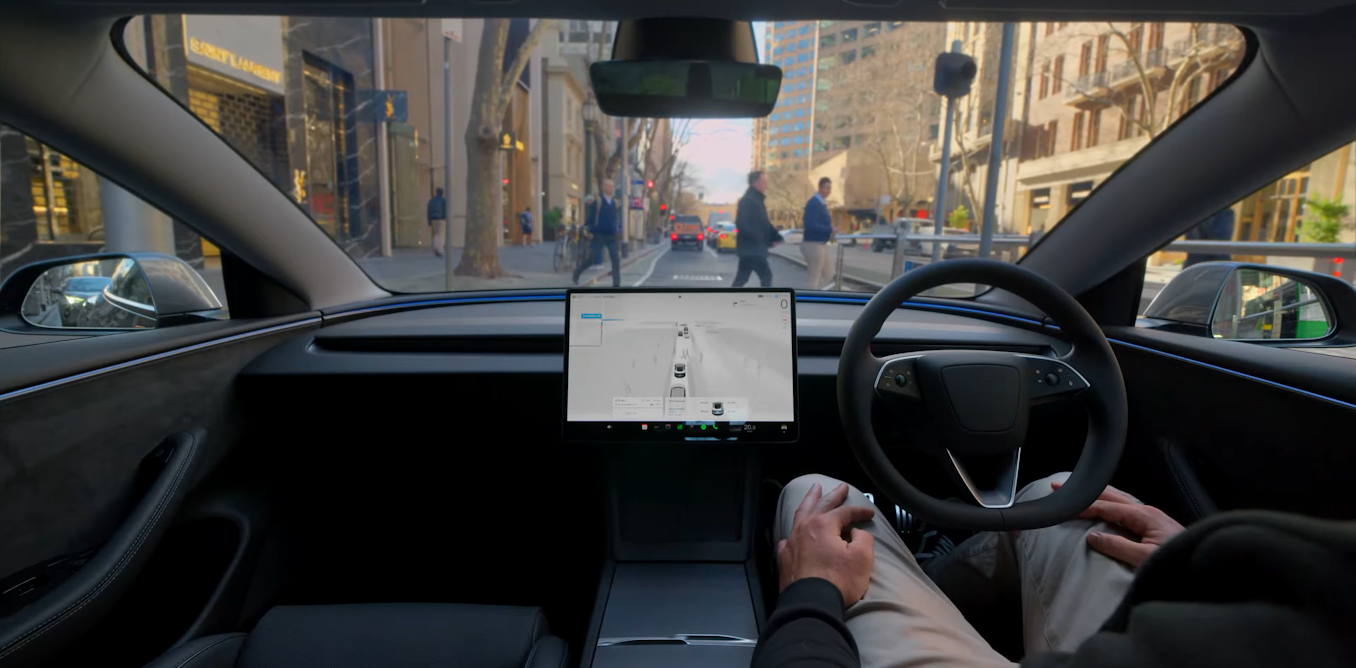
Photo: The Conversation
2026-07-03 12:30 Artificial intelligence 10 


100-day real-world test reveals persistent limitations in self-driving car systems on Australian roads
Researchers conducted an extensive real-world study using a Tesla Model Y equipped with Full Self-Driving (FSD) software over more than 100 days on Queensland roads in Australia.
Across this period, they recorded over 500 safety-critical events requiring human intervention or revealing significant limitations in the system’s perception and decision-making abilities.
While the technology demonstrated impressive capabilities in many routine driving scenarios—often matching or exceeding human precision—it also showed consistent weaknesses in common and complex traffic environments.
Key problem areas included confusion at small bridges, misinterpretation of time-restricted speed zones such as school areas, and unsafe handling near railway crossings where the system failed to adequately anticipate risk.Complex urban conditions such as roundabouts, poorly marked streets, and interactions with cyclists or e-scooter users also frequently led to errors.Weather conditions that obscured lane markings further reduced system reliability.
Notably, none of the test journeys were completed without at least one human intervention, highlighting that current systems are not yet fully autonomous in real-world Australian conditions.The study argues that the challenge is not solely technological but also infrastructural.
Many road features designed for human interpretation—such as inconsistent signage, faded markings, and ambiguous intersections—contribute to machine errors.
The researchers suggest that improving road infrastructure, standardising signage, and enhancing lane clarity could significantly improve autonomous vehicle performance.
They also propose a complementary role for autonomous vehicles as mobile sensing platforms capable of detecting potholes, damaged signage, and congestion patterns in real time.
Rather than viewing autonomous vehicles as entirely independent systems, the study advocates for a hybrid approach in which smarter vehicles and smarter infrastructure evolve together.
The findings highlight that widespread deployment of autonomous driving in Australia will require coordinated improvements in both vehicle intelligence and road system design.
Full reading at The Conversation
2186
Original title: We took a self-driving car on the road for 100 days to see how it handled itself – these are the mistakes it kept making
The AI system has determined that this news is not clickbait/sensationalist: : The original title is descriptive and accurately reflects the study’s content, outlining both the duration of testing and the key finding regarding driving mistakes. It does not use sensational language or exaggeration, so it is not clickbait. This has coincided with the opinion of the majority of users.
You may also be interested in...
Australia’s potential World Cup knockout path if they defeat Egypt
 Mixed critical reception for Melbourne theatre and opera productions in recent reviews
 Rethinking work after redundancy: balancing financial stability and personal meaning