
 Color Photographs Document Daily Life, Growth, and Tourism in 1950s Florida
KillBait - News highlights delivered clearly and responsibly—no clickbait, no sensationalism

Photo: Historias de la Historia
2026-06-09 15:20 History 13 


A Historical Look at Cryptography, Espionage Techniques, and Modern Online Privacy
This article explores the long history of protecting sensitive information and preventing others from accessing private communications.It begins with ancient Rome and the famous Caesar cipher, attributed to Julius Caesar during the Gallic Wars.
By shifting letters in the alphabet, Caesar created one of the earliest known encryption methods to keep military messages secret if they fell into enemy hands.
The article then moves to the eighteenth century, when diplomats allegedly used invisible ink, sometimes made from bodily fluids, to conceal messages that could only be revealed with heat.One of the most colorful anecdotes involves the Duchess of Orleans during the French Revolution.According to the story, she employed a man named Richebourg, noted for his exceptional memory and very short stature, as an unconventional spy.Disguised as an infant and transported in a baby carriage, he supposedly overheard military conversations and later relayed the information.
The narrative next turns to World War II and the German Enigma machine, whose encrypted communications were famously deciphered by codebreakers at Bletchley Park, including Alan Turing and his colleagues.
The article uses these historical examples to illustrate a recurring theme: throughout history, people have continually developed methods to protect secrets, while others have worked to uncover them.
Finally, it draws a parallel to the modern digital age, arguing that public Wi-Fi networks can expose users to interception risks similar to those faced in earlier eras.The piece concludes by recommending the use of VPN technology as a practical way to protect online privacy and secure internet communications.
Full reading at Historias de la Historia
2241
Original title: Criptografía, espías en pañales y el arte de que no te pillen
The AI system has determined that this news is not clickbait/sensationalist: : The title is attention-grabbing and humorous, but it accurately reflects the article's content about cryptography, espionage anecdotes, and methods of avoiding detection. It does not significantly mislead readers or exaggerate the subject matter. This has coincided with the opinion of the majority of users.
You may also be interested in...
Color Photographs Document Daily Life, Growth, and Tourism in 1950s Florida
 The 1963 Shelby 289 Cobra and Its Lasting Impact on American Sports Car Performance
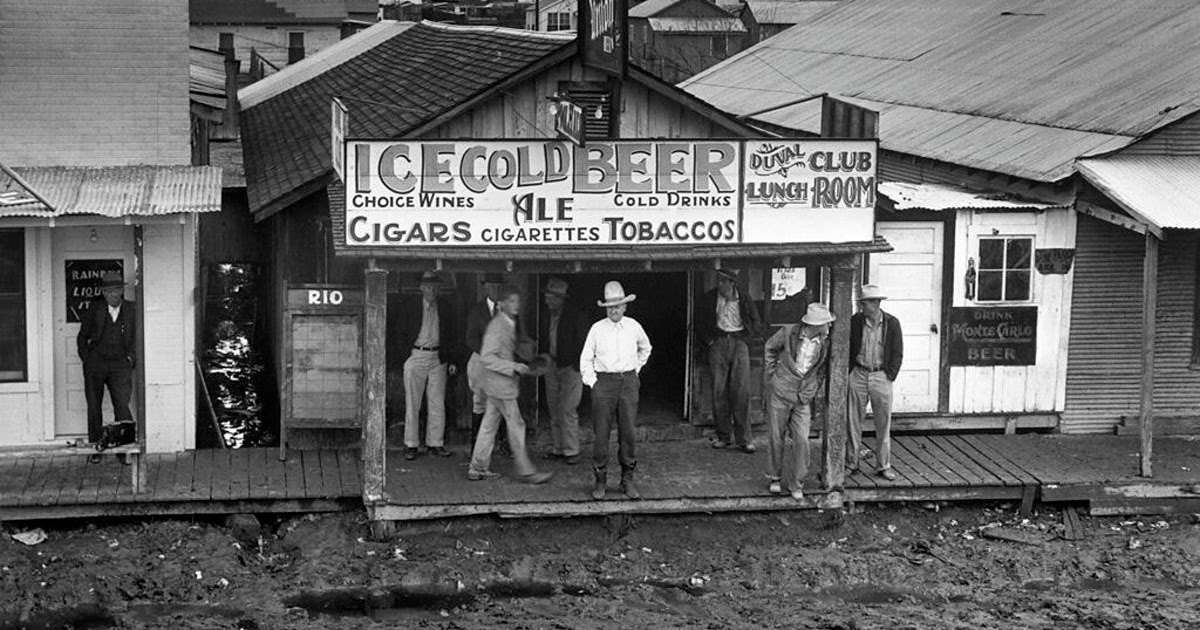 Photographs Document Daily Life in Freer, Texas, During the 1938 Oil Boom