
 Research Explores How GLP-1 Drugs Like Ozempic May Affect Brain Function
KillBait - News highlights delivered clearly and responsibly—no clickbait, no sensationalism
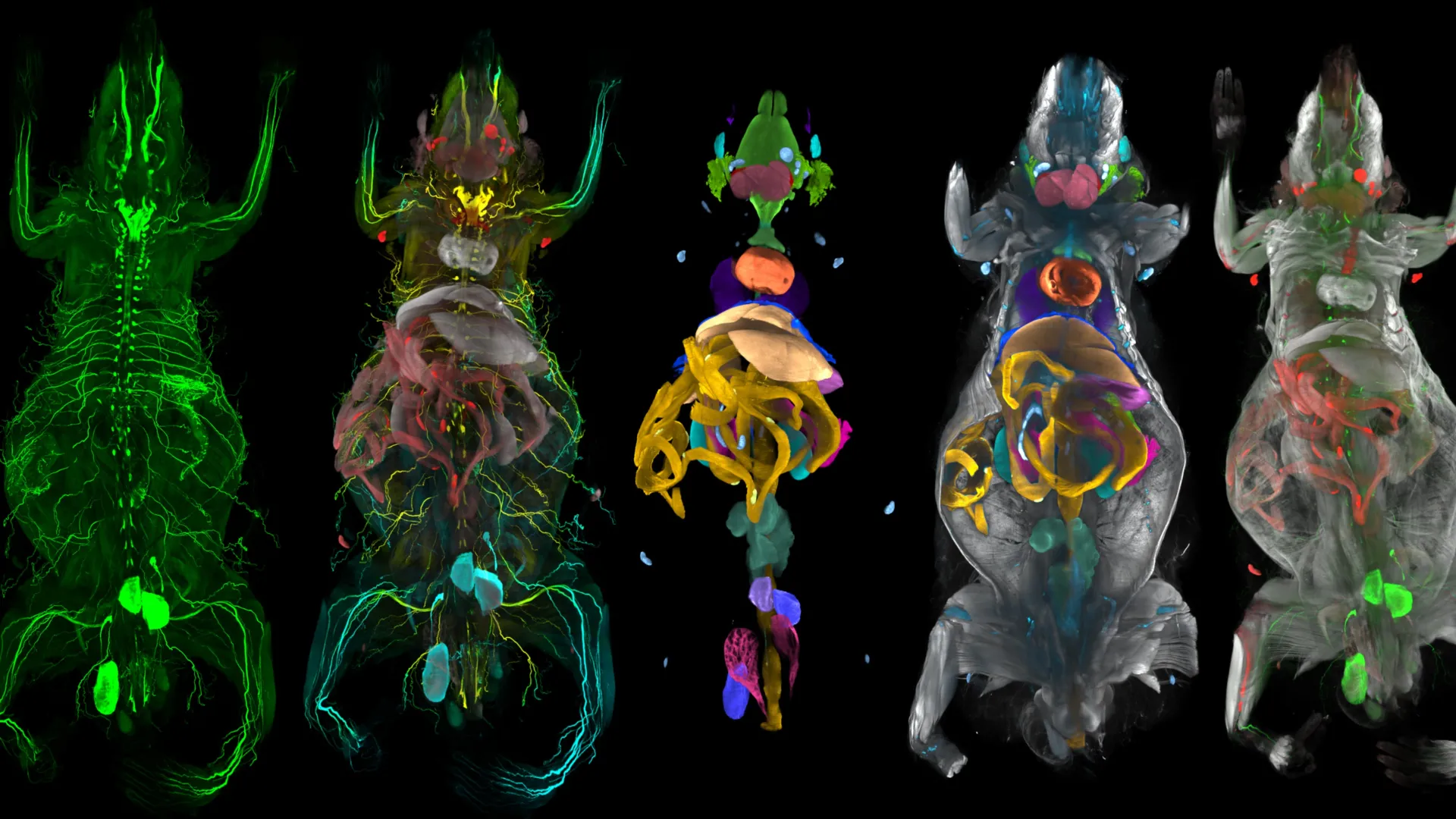
Photo: ScienceDaily
2026-05-23 22:45 Neuroscience 14 


AI whole-body mapping study links obesity to facial nerve damage and systemic inflammation
Researchers from Helmholtz Munich, Ludwig Maximilians University Munich, and partner institutions have developed an advanced artificial intelligence system called MouseMapper that can analyze and map disease-related changes across an entire mouse body at cellular resolution.
Using this technology, scientists discovered that obesity may have far more widespread effects than previously understood, including damage to facial sensory nerves and extensive inflammation throughout multiple organ systems.The study involved creating highly detailed 3D images of transparent mice whose tissues were labeled with fluorescent markers.
Advanced light-sheet microscopy captured millions of cellular structures, and the AI system automatically identified and segmented organs, nerves, and immune-cell clusters across 31 different tissue types.This allowed researchers to study how obesity affects the body as an interconnected system rather than focusing on individual organs in isolation.In mice fed a high-fat diet, the researchers observed significant changes in immune organization and nerve structure.One of the most unexpected findings was damage to the trigeminal nerve, which is responsible for facial sensation.Obese mice showed reduced nerve branching and fewer nerve endings, suggesting impaired sensory function.Behavioral testing confirmed that these mice were less responsive to touch stimuli compared to lean mice.Further molecular analysis of the trigeminal ganglion revealed inflammation-related changes and signs of nerve remodeling.
Importantly, similar molecular signatures were also found in human tissue samples, suggesting that obesity-related nerve damage may also occur in people.
The researchers emphasize that MouseMapper provides a powerful new approach for studying complex diseases affecting multiple organ systems simultaneously.
By enabling whole-body, cell-level analysis, the system could improve understanding of conditions such as diabetes, cancer, and neurodegenerative disorders.
The team also envisions future applications in creating “digital twins” of organisms to simulate disease progression and test interventions computationally, potentially reducing the need for extensive animal experimentation.
2258
Original title: New AI body map reveals obesity’s hidden attack on facial nerves
The AI system has determined that this news is not clickbait/sensationalist: : The original title uses the phrase 'hidden attack,' which adds dramatic framing, but it accurately reflects a real scientific finding and is supported by the article content, so it is not strongly clickbait. This has coincided with the opinion of the majority of users.
You may also be interested in...
Research Explores How GLP-1 Drugs Like Ozempic May Affect Brain Function
 Study finds caffeine may restore social memory circuits disrupted by sleep deprivation
 Cambridge researchers use human organoids to restore nerve regeneration