
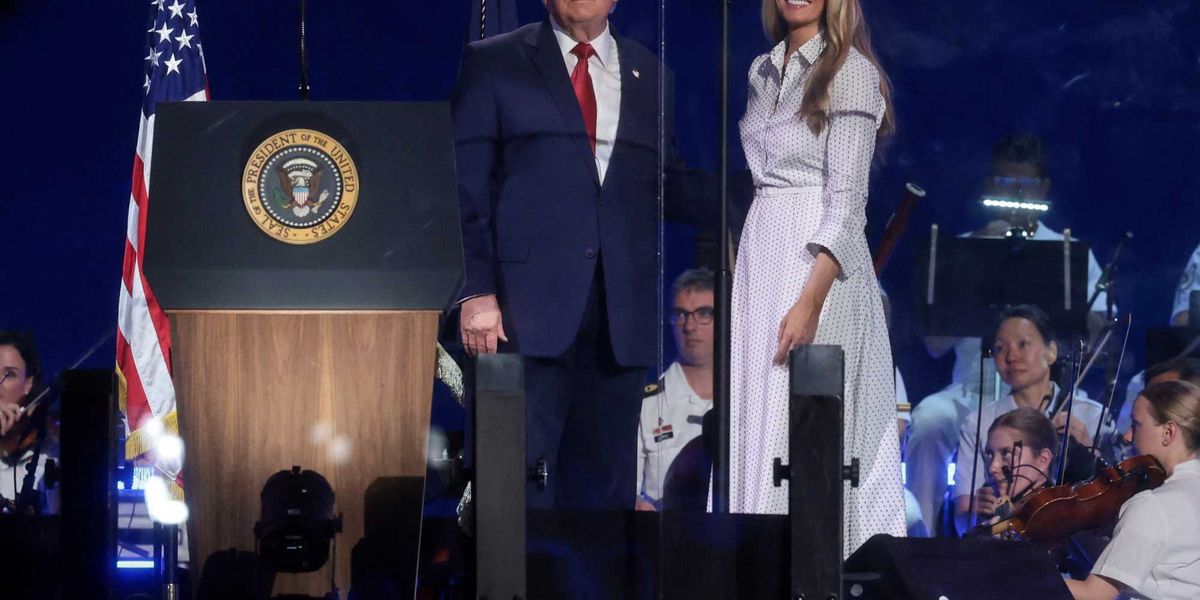
 Melania Trump Laughs as Trump Promises to Keep Family Secrets
KillBait - News highlights delivered clearly and responsibly—no clickbait, no sensationalism
Photo: Raw Story - Celebrating 20 Years of Independent Journalism
2026-07-17 05:45 Politics 12


Analysis argues White House Smithsonian report echoes historical defenses of the Chinese Exclusion Act
An analysis by Catherine Rampell, published by The Bulwark and reported on by Raw Story, argues that a recent Trump administration report criticizing the Smithsonian Institution reflects broader themes in the administration's immigration agenda.
The 162-page report accuses the Smithsonian of promoting what it describes as anti-American narratives by acknowledging that some of the nation's founders owned enslaved people and by including imagery that the administration interpreted as supportive of illegal immigration.
According to Rampell, one of the report's most notable sections is its treatment of the Chinese Exclusion Act of 1882, a law widely regarded by historians as one of the most discriminatory immigration laws in U.S.history.
She argues that the report minimizes or rejects the idea that racial prejudice motivated the law, a position she says aligns with the administration's broader immigration policies.
Rampell further contends that senior White House adviser Stephen Miller has employed rhetoric that resembles historical arguments used to justify the Chinese Exclusion Act, particularly by attributing a wide range of social and economic problems to immigration.
The analysis draws parallels between nineteenth-century claims that Chinese immigrants were responsible for economic hardship and contemporary arguments blaming undocumented immigrants for issues such as cultural change and housing affordability.
Rampell concludes that the administration's defense of the historical law is significant because it may reflect an effort to legitimize modern immigration restrictions by reframing the history of exclusionary policies.
The article presents these points as opinion and analysis rather than as independently established fact, focusing on the political and historical implications of the administration's report.
Full reading at Raw Story - Celebrating 20 Years of Independent Journalism
2224
Original title: Trump admin's museum attack resurrects ghosts of 'famously racist law': analysis
The AI system has determined that this news is clickbait/sensationalist: : The original headline uses emotionally charged language such as 'attack,' 'ghosts,' and 'famously racist law' to attract attention. While it reflects the subject of the analysis, it emphasizes provocative wording over a neutral description of the article's content. This has coincided with the opinion of the majority of users.
You may also be interested in...
Melania Trump Laughs as Trump Promises to Keep Family Secrets
 Trump's Primetime Speech Sparks Outcry Over Election Claims Amid National Crises
 Trump Promotes MAGA as Solution to Political Divisions