
 Supreme Court flags risks of unverified AI use in judiciary and sets aside NCLT-NCLAT orders over fake citations
KillBait - News highlights delivered clearly and responsibly—no clickbait, no sensationalism
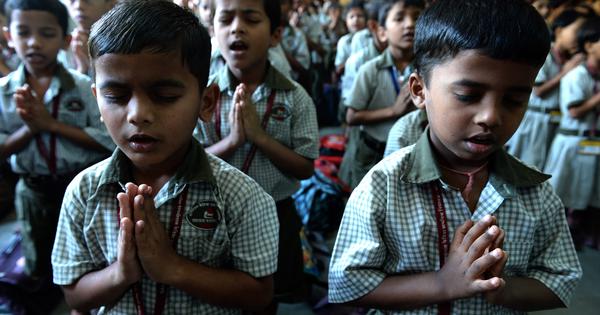
Photo: Scroll.in
2026-07-03 09:52 Justice 15 


Chhattisgarh High Court clarifies that government school students cannot be forced to recite religious prayers
The Chhattisgarh High Court has clarified that students studying in government schools cannot be compelled to recite Hindu prayers or any religious hymns, reinforcing the constitutional principle of secularism in public education.
The court was hearing a petition challenging a June 12 order issued by the state’s Bharatiya Janata Party-led government, which had directed government schools to introduce structured morning assemblies involving the recital of various hymns and mantras.
The contested circular required schools to include recitations such as the Saraswati Vandana, Gayatri Mantra, Deep Mantra, and Guru Mantra during morning assemblies.
It also instructed that the national anthem and national song be part of daily routine, and that a Bhojan Mantra be recited before midday meals, along with a Shanti Mantra before students leave school.
The petitioners, including members of the Chhattisgarh Waqf Board and civil society activists, argued that the directive violated the constitutional guarantee of secularism and infringed upon students’ fundamental rights by making participation in religious observances effectively mandatory in state-run schools.During the hearing, the state government informed the court that although the circular had been issued, it had not yet been implemented in schools.Taking this submission into account, the court disposed of the petition.
However, it granted liberty to the petitioners to approach the court again if any student is compelled to participate in such recitations in the future.The bench also indicated that appropriate action would be taken if any such violation is brought to its notice.
The ruling effectively ensures that while cultural or voluntary practices may be discussed, no student in a government institution can be forced into religious recitations, thereby upholding the secular framework of public education in India.
2274
Original title: Government school students cannot be compelled to recite Hindu prayers: Chhattisgarh HC
The AI system has determined that this news is not clickbait/sensationalist: : The original title is factual and directly describes the court ruling without sensational language or exaggeration, so it does not qualify as clickbait. This has coincided with the opinion of the majority of users.
You may also be interested in...
Supreme Court flags risks of unverified AI use in judiciary and sets aside NCLT-NCLAT orders over fake citations
 Congress seeks Supreme Court-monitored inquiry into alleged irregularities in Ram Temple donation case
 NHAI takes disciplinary action after cave-in on Delhi–Dehradun Expressway section