
 A haunting exploration of guilt and redemption through verse
KillBait - News highlights delivered clearly and responsibly—no clickbait, no sensationalism
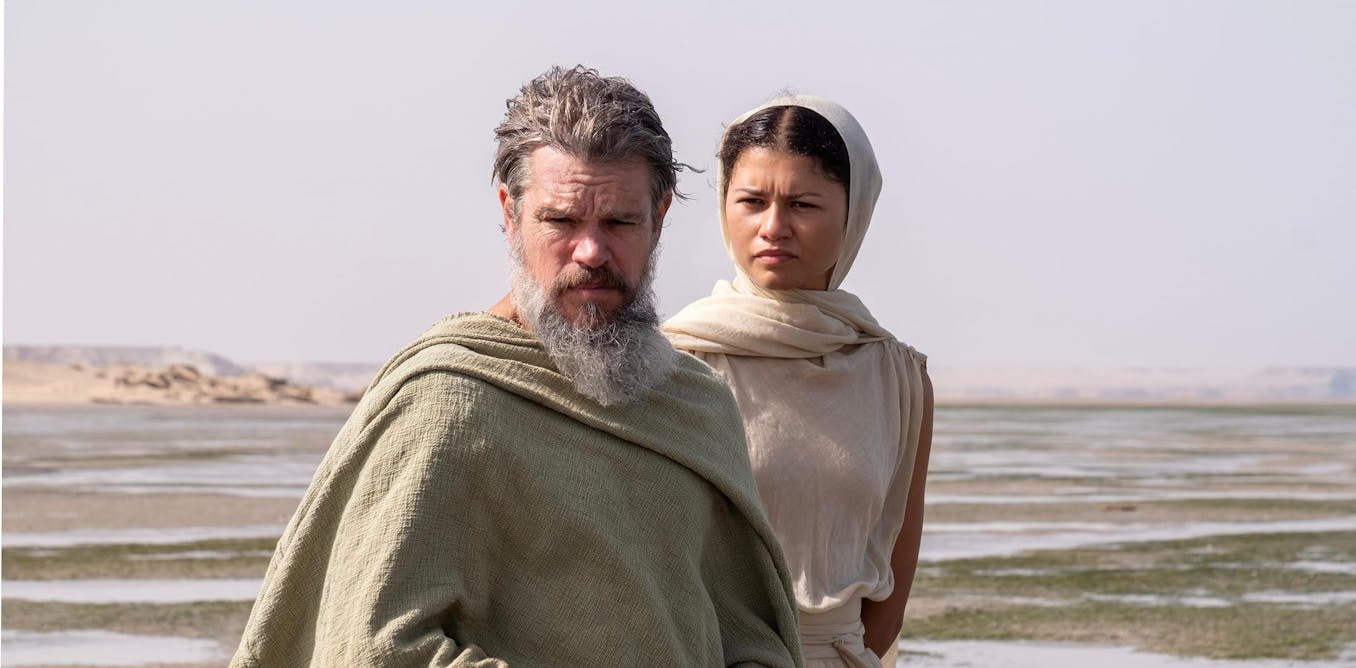
Photo: The Conversation
2026-07-21 16:19 Literature 10


Christopher Nolan's Film Captures the Flawed Heroism of Homer's Odysseus
The article examines how Christopher Nolan's 2005 film 'Odyssey' reimagines Homer's Odysseus as a complex, flawed hero rather than a traditional archetype.
It critiques the 'hero's journey' narrative, popularised by Joseph Campbell's 'monomyth,' which often reduces heroism to conquest and triumph.
Nolan's adaptation, based on Emily Wilson's feminist translation of 'The Odyssey,' highlights Odysseus's intelligence, cunning, and hubris, while also depicting his moral ambiguities.The film incorporates Penelope and Telemachus's perspectives, challenging the male-centric focus of classical heroism.However, it excludes certain scenes, like the punishment of traitorous slave girls, which Wilson's translation portrays with moral ambiguity.The article argues Nolan's film offers a more contemporary view of violence and trauma, avoiding glorification of war.While the film succeeds in portraying Odysseus's complexity, it falls short by omitting key moments that could deepen the narrative.The analysis positions Nolan's work as a nuanced exploration of heroism, contrasting with the reductive tropes of modern storytelling.
Full reading at The Conversation
2186
Original title: Homer's Odysseus was never a perfect hero. Christopher Nolan's film understands this
The AI system has determined that this news is clickbait/sensationalist: : The original title uses hyperbolic language ('never a perfect hero') to sensationalise the film's approach, which the article critiques as reductive. Australian English avoids such clickbait phrasing by focusing on the nuanced analysis of heroism. This has coincided with the opinion of the majority of users.
You may also be interested in...
A haunting exploration of guilt and redemption through verse
 A Novel Narrated by a Book: Exploring Stories' Lasting Impact
 Celebrating 50 Years of First Nations Literature in Australia