
 Review: The Odyssey's Music by Ludwig Göransson
KillBait - News highlights delivered clearly and responsibly—no clickbait, no sensationalism

Photo: Crikey
2026-07-24 05:17 Cinema 10


Christopher Nolan's Modern Take on Homer's Odyssey
Christopher Nolan's adaptation of Homer's *The Odyssey* is a tactile and immersive retelling aimed at modern audiences, though critics argue it sanitizes the original epic.
The article explores Nolan's recurring themes of fractured time, unreliable narrators, and existential journeys through his films, using *The Odyssey* as a case study.It highlights how Nolan's protagonist, like his other characters, is adrift in a labyrinth of memory and doubt, driven by unresolved grief.The review acknowledges the film's ambition but notes its departure from Homer's mythic scale, focusing instead on psychological depth.Critics may find this approach either innovative or overly sanitized, depending on their expectations.
The piece also touches on Nolan's broader cinematic preoccupations, such as doubles and fragmented narratives, positioning *The Odyssey* as both a continuation of his style and a fresh interpretation of an ancient tale.
The article underscores the tension between artistic reinterpretation and fidelity to source material, inviting debate about how classic stories should evolve for contemporary viewers.
2186
Original title: Like it or not, this is Nolan’s Odyssey, not Homer’s
The AI system has determined that this news is clickbait/sensationalist: : The original title uses hyperbolic language ('Odyssey Review') and juxtaposes Nolan with Homer, creating a sensationalist contrast that prioritizes marketing over clarity. This has coincided with the opinion of the majority of users.
You may also be interested in...
Review: The Odyssey's Music by Ludwig Göransson
 Tom Hiddleston's Pompeii docudrama: A mix of drama, history, and cringe
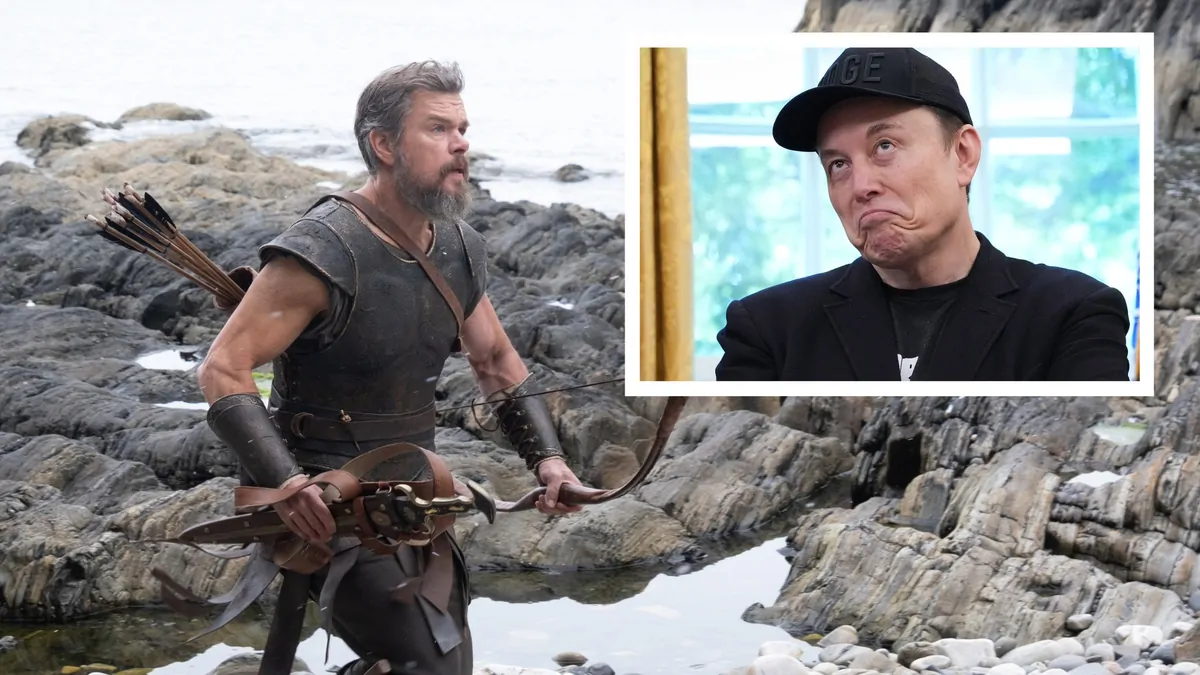 Elon Musk's Controversial AI Project Sparks Debate Over Historical Accuracy in 'Odyssey' Adaptation