
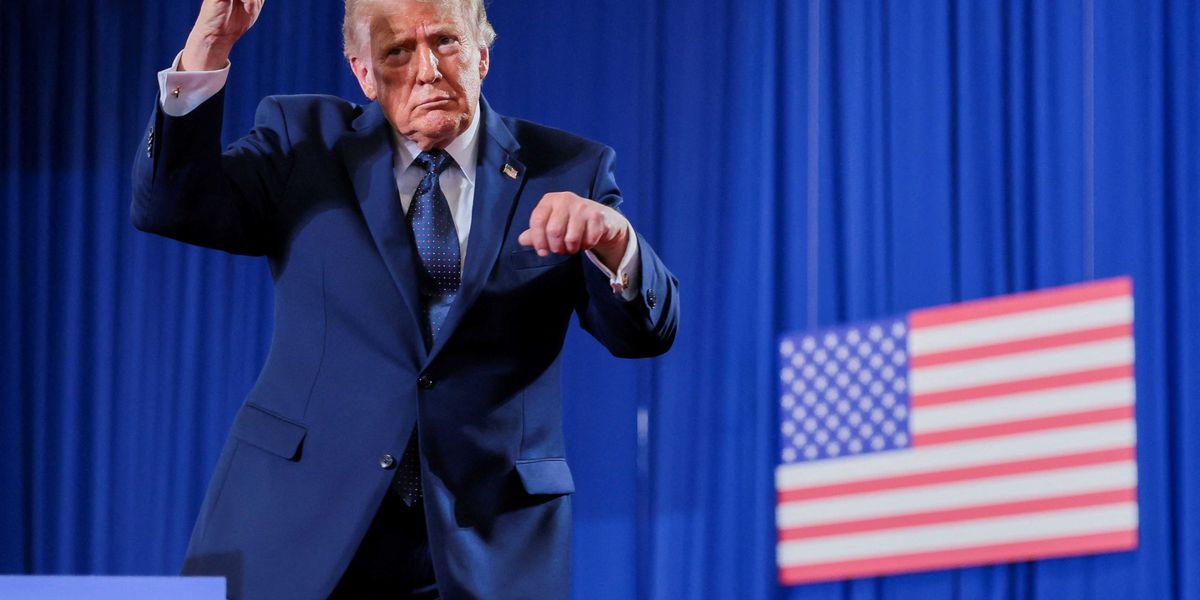
 Trump proposes to replace canceled state fair performers with himself
KillBait - News highlights delivered clearly and responsibly—no clickbait, no sensationalism

Photo: Raw Story - Celebrating 20 Years of Independent Journalism
2026-05-30 18:48 Politics 12 


CNN contributor disputes claims linking Texas Democrat James Talarico to Hezbollah during political discussion
A political discussion on CNN became tense when former Republican Congressman Peter Meijer suggested uncertainty about Texas Democratic state lawmaker James Talarico’s political alignment, prompting criticism from CNN contributor John Avlon.The exchange centered on recent Republican-aligned commentary that attempted to portray Talarico, who is running for the U.S.Senate seat in Texas, as being sympathetic to extremist groups in the Middle East.
The controversy began after conservative panelist Lydia Moynihan made remarks during a media discussion in which she contrasted political figures in Texas, suggesting she would prefer controversial state Attorney General Ken Paxton over individuals she described as “Hezbollah and Iranian sympathizers.” These comments were part of a broader rhetorical argument used to criticize Democratic candidates and to frame them as extreme.
During the CNN segment, Meijer responded by stating that Talarico had not fully clarified his political positions, saying, “We don’t know what James Talarico is.
” This prompted an immediate reaction from Avlon, who pushed back strongly against the implication that Talarico could be associated with foreign militant organizations.
Avlon dismissed the suggestion as baseless and inappropriate, emphasizing that there was no evidence supporting such claims and calling the framing irresponsible.The exchange highlights ongoing tensions in U.S.political discourse, particularly in the context of competitive Senate races and heightened partisan rhetoric.
Critics argue that associating political opponents with extremist groups without evidence contributes to misinformation and further polarizes public debate.Supporters of such rhetoric, however, often present it as political commentary or opinion.
The segment ultimately underscored the broader debate over the boundaries of political criticism and the use of foreign policy-related accusations in domestic electoral politics, especially as the 2026 election cycle approaches.
Full reading at Raw Story - Celebrating 20 Years of Independent Journalism
2224
Original title: 'Don't be ridiculous': Ex-GOP rep called out for stab at linking Talarico to Hezbollah
The AI system has determined that this news is clickbait/sensationalist: : The original title uses highly sensational phrasing and emotionally charged language such as 'Don't be ridiculous' and 'stab at linking Talarico to Hezbollah,' which exaggerates the tone of the discussion and frames a political debate in dramatic terms rather than neutrally describing the event. This has coincided with the opinion of the majority of users.
You may also be interested in...
Trump proposes to replace canceled state fair performers with himself
 Trump-linked festival struggles to replace performers after multiple withdrawals
 Trump's Latest Medical Exam Confirms He Remains in Good Health