
 Hotel reservation data exploited in targeted phishing scams affecting travelers worldwide
KillBait - News highlights delivered clearly and responsibly—no clickbait, no sensationalism
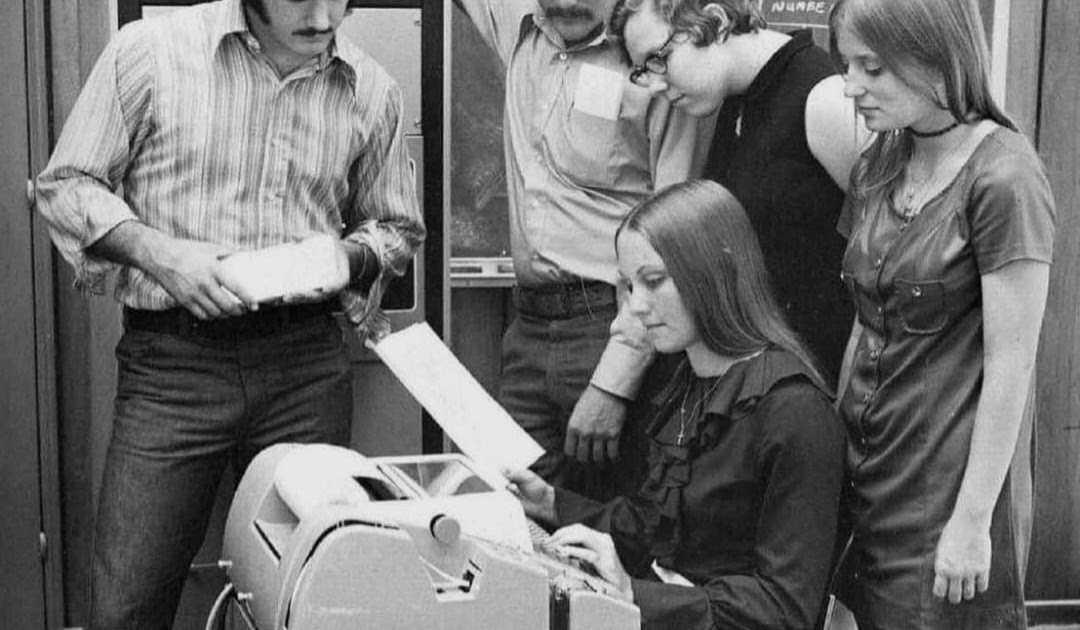
Photo: vintag.es
2026-05-25 00:33 Computing 17 


Computer Classroom Practices and Technology in 1972
The article describes what computer science education looked like in 1972, a period when computing technology was still in its early stages and largely inaccessible compared to today.Computer classes at the time were centered around large mainframe computers and the emerging use of minicomputers.
Mainframes were powerful but physically massive systems that required dedicated rooms, while minicomputers were smaller and gradually becoming more affordable for educational institutions.
Students typically did not interact directly with the mainframes themselves; instead, they used computer terminals equipped with cathode-ray tube (CRT) monitors.
These terminals allowed users to input code and receive processed results from a central machine often located elsewhere on campus or in a separate facility.
Programming education in 1972 focused heavily on foundational languages such as BASIC and FORTRAN, which played a key role in shaping early software development practices.Students frequently relied on punch cards or paper tape to enter programs, which made the process slow and error-prone.
Debugging was particularly challenging, as even small mistakes or physical issues—such as misordered punch card decks—could cause programs to fail completely.
The absence of modern tools, real-time feedback systems, or interactive development environments meant that learning to code required patience and precision.In addition, students depended almost entirely on printed textbooks and manuals since there was no internet or digital knowledge base available.Despite these limitations, computer classes in 1972 were instrumental in introducing students to computing concepts and fostering early innovation.
The experience, though often frustrating, helped lay the groundwork for the rapid evolution of computer education, which today includes user-friendly interfaces, instant access to online resources, and a wide variety of programming languages.
2298
Original title: Here’s What Computer Class Looked Like in 1972!
The AI system has determined that this news is clickbait/sensationalist: : The original title uses an attention-grabbing phrasing (“Here’s What… Looked Like”) designed to provoke curiosity rather than directly describe the subject in a neutral way, which is a mild form of clickbait but not highly sensational. This has coincided with the opinion of the majority of users.
You may also be interested in...
Hotel reservation data exploited in targeted phishing scams affecting travelers worldwide
 ASUS unveils ROG Rapture GT-BN98 Pro WiFi 8 router prototype awarded at Computex 2026
 Canonical to Retire Ubuntu Pastebin Service by End of May 2026