
 Beneficial Mutations Are More Common, but Changing Environments Limit Their Impact
KillBait - News highlights delivered clearly and responsibly—no clickbait, no sensationalism
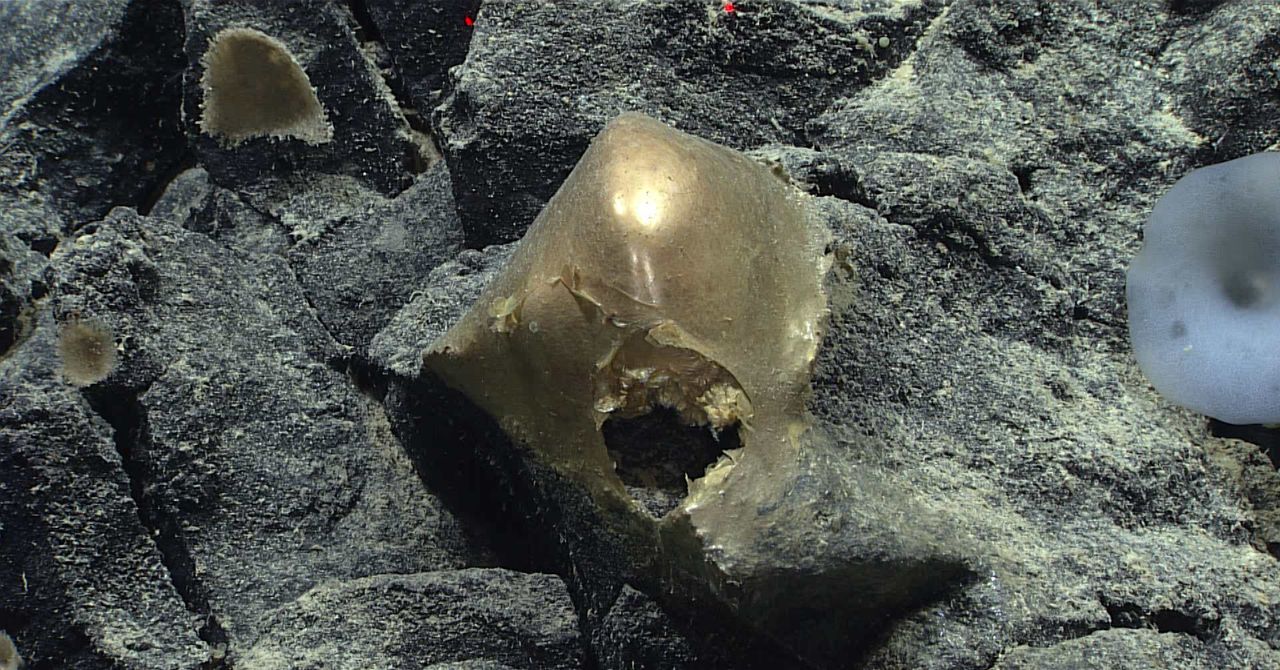
Photo: WIRED
2026-05-23 12:55 Science 12 


Deep-Sea Golden Orb Identified as Remains of Rare Anemone
A mysterious golden orb discovered on the seafloor of the Gulf of Alaska during a NOAA Ocean Exploration expedition has finally been identified after years of scientific analysis.
Initially retrieved because its smooth, shiny surface did not resemble any known marine organism, the object sparked widespread speculation, including theories that it might be an egg, a biofilm, or even an extraterrestrial artifact.
Early examinations ruled out non-biological origins after researchers detected spirocytes—specialized cells found only in cnidarians, the animal group that includes jellyfish, corals, and anemones.This finding narrowed the possibilities significantly.Subsequent genetic sequencing provided a breakthrough, revealing a 99.9 percent match with Relicanthus daphneae, a rare and poorly understood deep-sea anemone that lives at depths between 1,600 and 4,000 meters.
Despite the strong genetic link, scientists initially struggled to explain how the orb related to the known structure of the species, since it did not match any typical anatomical form.
Further investigation, including revisiting earlier specimens and observing live individuals, revealed that Relicanthus daphneae produces a multi-layered golden cuticle at its base.As the anemone moves along the seafloor, it sheds this material, which can remain intact on rocks or sink and form capsule-like shapes.The so-called golden orb was ultimately identified as this detached cuticle, a byproduct of the animal’s locomotion and biology.
The discovery not only resolves the mystery of the object but also improves scientific understanding of a species that remains difficult to classify within cnidarians.
Researchers note that deep-sea biodiversity is still largely unexplored, with more than 80 percent of the ocean remaining unmapped or unobserved in detail, suggesting many more unknown biological processes may still be awaiting discovery.
2224
Original title: A 'Golden Orb' on the Ocean Floor Came From a Mysterious Animal
The AI system has determined that this news is not clickbait/sensationalist: : The original title is intriguing but accurately reflects the scientific finding and does not exaggerate or mislead beyond the actual content of the discovery. This has coincided with the opinion of the majority of users.
You may also be interested in...
Beneficial Mutations Are More Common, but Changing Environments Limit Their Impact
 New Triassic crocodile relative reveals ostrich-like body plan and early archosaur evolution
 The Aardwolf: A Shy, Termite-Eating Relative of the Hyena