
 Broadcom Earnings and Jobs Report: Key Economic Events for Investors This Week
KillBait - News highlights delivered clearly and responsibly—no clickbait, no sensationalism
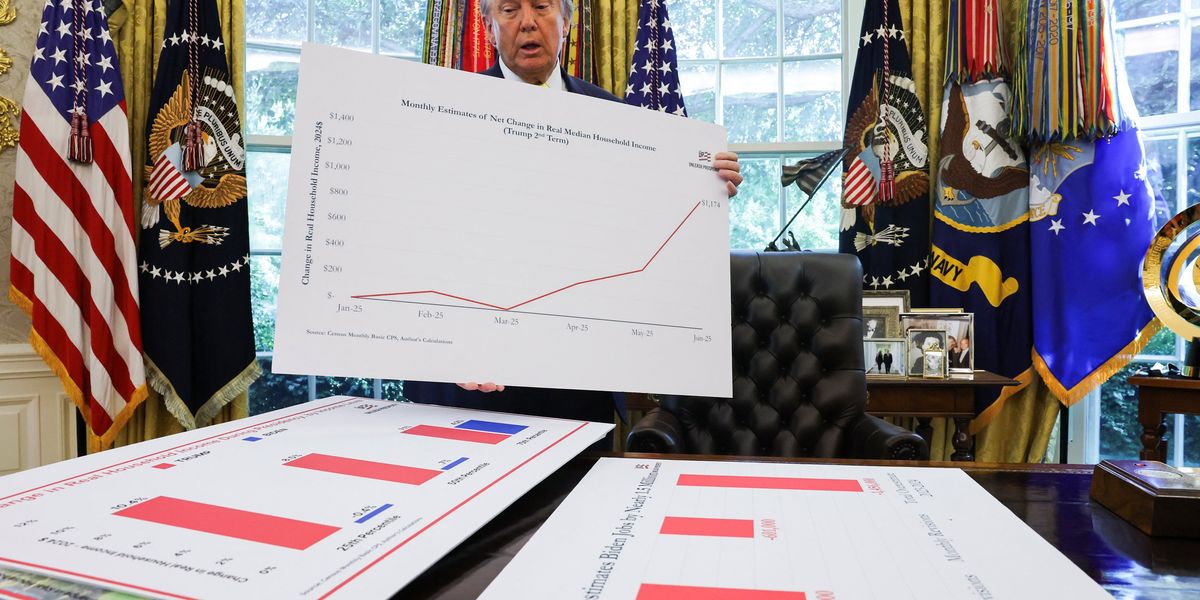
Photo: Raw Story - Celebrating 20 Years of Independent Journalism
2026-05-31 21:10 Economy 31 


Economists warn AI-driven job losses could weaken consumer demand and destabilize the economy
A warning from economist and political scientist Chris Blattman has drawn attention to a recent academic study examining the economic risks posed by rapid artificial intelligence adoption.
The study, titled “The AI Layoff Trap” and authored by researchers Brett Hemenway Falk and Gerry Tsoukalas, argues that businesses may enter an “automation arms race” in which they increasingly replace human workers with AI systems to cut costs and remain competitive.While individually rational for firms, this behavior could collectively reduce consumer purchasing power, ultimately harming the broader economy.The study’s model suggests that as companies automate more jobs, displaced workers lose income, leading to weaker demand for goods and services.This creates a feedback loop in which firms continue automating to stay competitive, even though the overall effect undermines market stability.
According to the researchers, standard economic mechanisms such as wage adjustments, increased competition, or worker retraining would not be sufficient to correct this imbalance.
Blattman highlighted the findings as strong evidence of a potentially serious economic risk, though his characterization of the study as “hard proof” reflects his interpretation rather than a consensus among economists.
The study itself proposes regulatory intervention—specifically a tax on automation—as the only effective way to counteract the negative externalities of widespread AI adoption.The article also notes that current U.S.policy under President Donald Trump has moved toward deregulation of the AI sector, including limiting states’ ability to impose their own rules.
Critics argue that such policies could accelerate the dynamics described in the study, while supporters may view deregulation as essential for innovation and competitiveness.
Overall, the debate reflects broader uncertainty about how AI will reshape labor markets and whether policy can balance technological progress with economic stability.
Full reading at Raw Story - Celebrating 20 Years of Independent Journalism
2421
Original title: Economist flags 'hard proof' of imminent economic collapse – one exacerbated by Trump
The AI system has determined that this news is clickbait/sensationalist: : The phrase 'hard proof' and 'imminent economic collapse' is highly sensationalized and overstates the certainty of an academic model, which is typically predictive rather than definitive. This has coincided with the opinion of the majority of users.
You may also be interested in...
Broadcom Earnings and Jobs Report: Key Economic Events for Investors This Week
 Jerome Powell Warns Political Interference in the Federal Reserve Threatens Public Confidence
 Kevin Hassett faces criticism after comments on credit card delinquencies in Fox News interview