
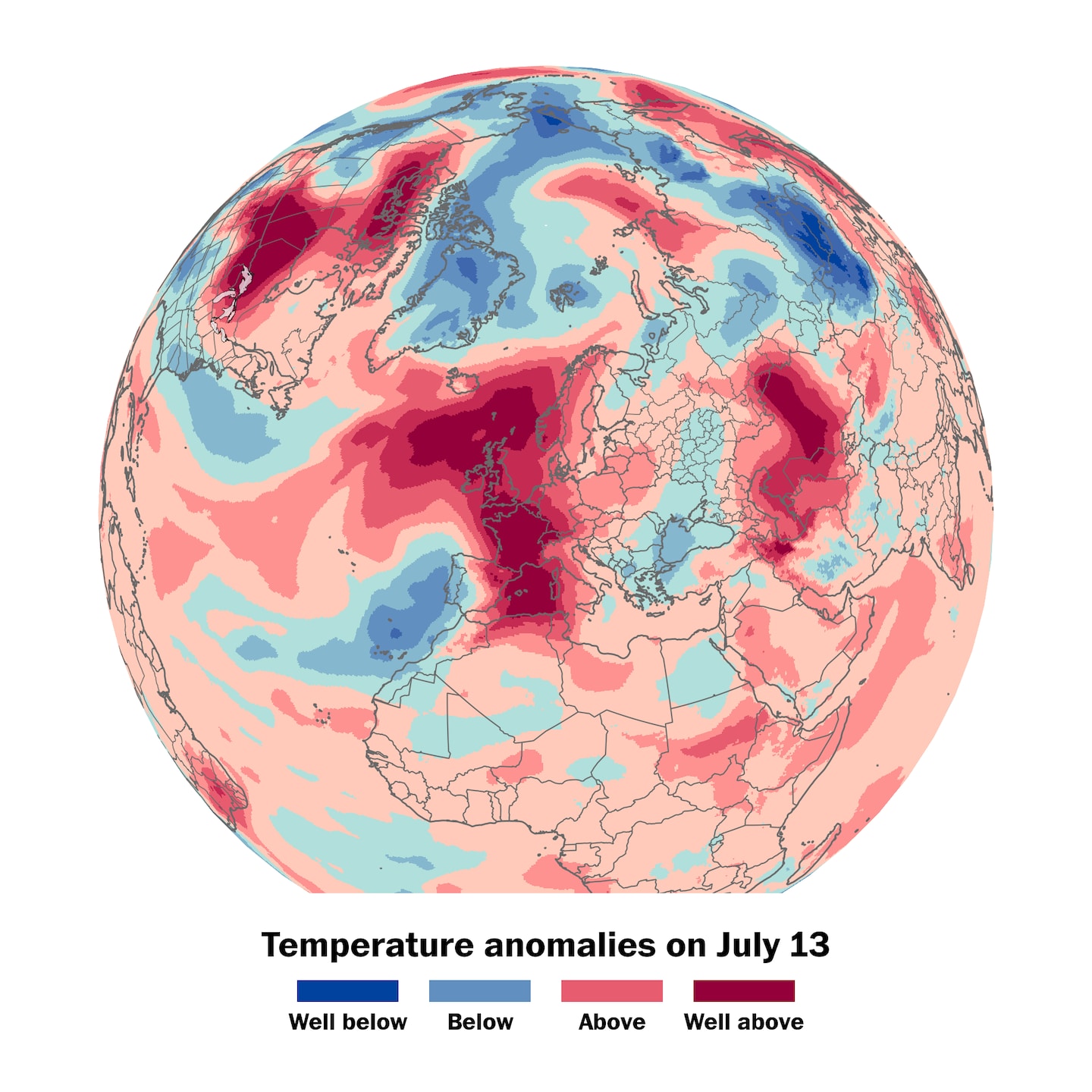
 Europe Faces Record Heat and Deadly Heat Dome in June 2026
KillBait - News highlights delivered clearly and responsibly—no clickbait, no sensationalism
Photo: WIRED
2026-07-09 23:37 Environment 11


Europe Faces Cooling Challenges Amid Climate Change and Technological Innovation
As extreme heatwaves increasingly threaten European cities, the demand for air conditioning is surging.However, this trend raises critical environmental concerns due to the energy consumption and emissions of traditional AC systems.
The article explores how political debates over infrastructure development—such as expanding district cooling networks in Paris—are shaping responses to urban overheating.Meanwhile, emerging technologies like solid-state cooling offer promising alternatives by reducing reliance on fossil fuels.
Experts emphasize the need for a 'cooling hierarchy' prioritizing passive measures such as reflective materials and green spaces before resorting to active cooling systems.
The piece highlights both the urgency of adapting infrastructure to climate change and the potential of innovative solutions to balance comfort with sustainability.
Key challenges include retrofitting dense urban areas, addressing energy grid strain, and ensuring equitable access to cooling in vulnerable communities.
While multinational corporations dominate the current market, the article suggests that breakthroughs in eco-friendly technologies could reshape the industry's future.
2206
Original title: Is an Air-Conditioning Revolution Coming to Europe?
The AI system has determined that this news is not clickbait/sensationalist: : The original title uses 'revolution' to emphasize urgency, but it accurately reflects the article's focus on systemic changes needed for climate adaptation. The content is factual and avoids sensationalism. This has coincided with the opinion of the majority of users.
You may also be interested in...
Europe Faces Record Heat and Deadly Heat Dome in June 2026
 El Niño and Warming Oceans Pose Risks for California and Global Climate
 Extreme Heat Forces Closure of Trump's State Fair