KillBait - News highlights delivered clearly and responsibly—no clickbait, no sensationalism
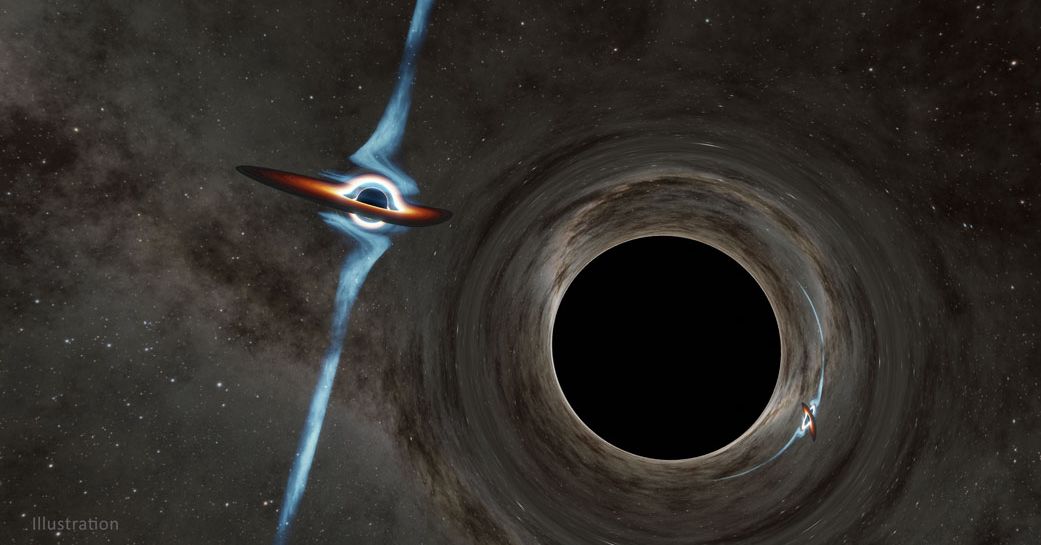
Photo: WIRED
2026-05-24 17:43 Astronomy 10 


Evidence suggests intermediate-mass black holes form through repeated mergers in dense star clusters
Astrophysicists have found new evidence explaining the origin of so-called “impossible” black holes—objects whose masses fall between roughly 40 and 100 times the mass of the Sun.
These black holes are too large to be formed by the collapse of individual stars, yet too small to be classified as supermassive black holes found at galactic centers.For years, their existence puzzled scientists because standard stellar evolution models could not account for them.A new international study analyzing gravitational wave data provides a compelling explanation.Using observations from leading gravitational wave observatories, researchers examined 153 confirmed black hole merger events.Among these, 34 involved unusually massive black holes.By comparing their properties, scientists identified two distinct populations.Lower-mass black holes—up to about 40 solar masses—tended to have aligned, low spins consistent with formation from collapsing stars.However, above roughly 45 solar masses, black holes displayed rapidly spinning, misaligned, and chaotic orientations.This pattern is considered a strong statistical signature of objects formed through previous mergers.
The findings suggest that many intermediate-mass black holes are not born directly from stars, but are instead “second-generation” objects created when smaller black holes collide and merge, often within dense stellar clusters where interactions are frequent.Each successive merger increases mass and alters spin behavior, producing the irregular characteristics observed in gravitational wave data.
While these black holes cannot be directly observed through light or X-rays, gravitational waves allow scientists to infer their existence and properties through space-time distortions caused by collisions.The study strengthens the idea that black holes evolve hierarchically, growing through repeated mergers rather than forming in a single event.
This supports a dynamic view of black hole populations in which dense cosmic environments act as breeding grounds for increasingly massive objects over time.

2189
Original title: The Universe Is Full of ‘Impossible’ Black Holes. Now Scientists Know Why
The AI system has determined that this news is not clickbait/sensationalist: : The original title uses the phrase ‘impossible black holes,’ which is attention-grabbing but reflects a real scientific term used to describe intermediate-mass black holes that are difficult to explain with standard stellar evolution. It is somewhat sensational but still grounded in the scientific content and not misleading. This has coincided with the opinion of the majority of users.
You may also be interested in...
 Shenzhou 22 Returns to Earth Carrying Shenzhou 21 Crew After Extended Tiangong Mission
 Blue Origin Rocket Explosion Expected to Delay NASA Moon Base Timeline by at Least One Year