
 Scientists Create Long-Sought Quantum Material for Room-Temperature Electronics
KillBait - News highlights delivered clearly and responsibly—no clickbait, no sensationalism
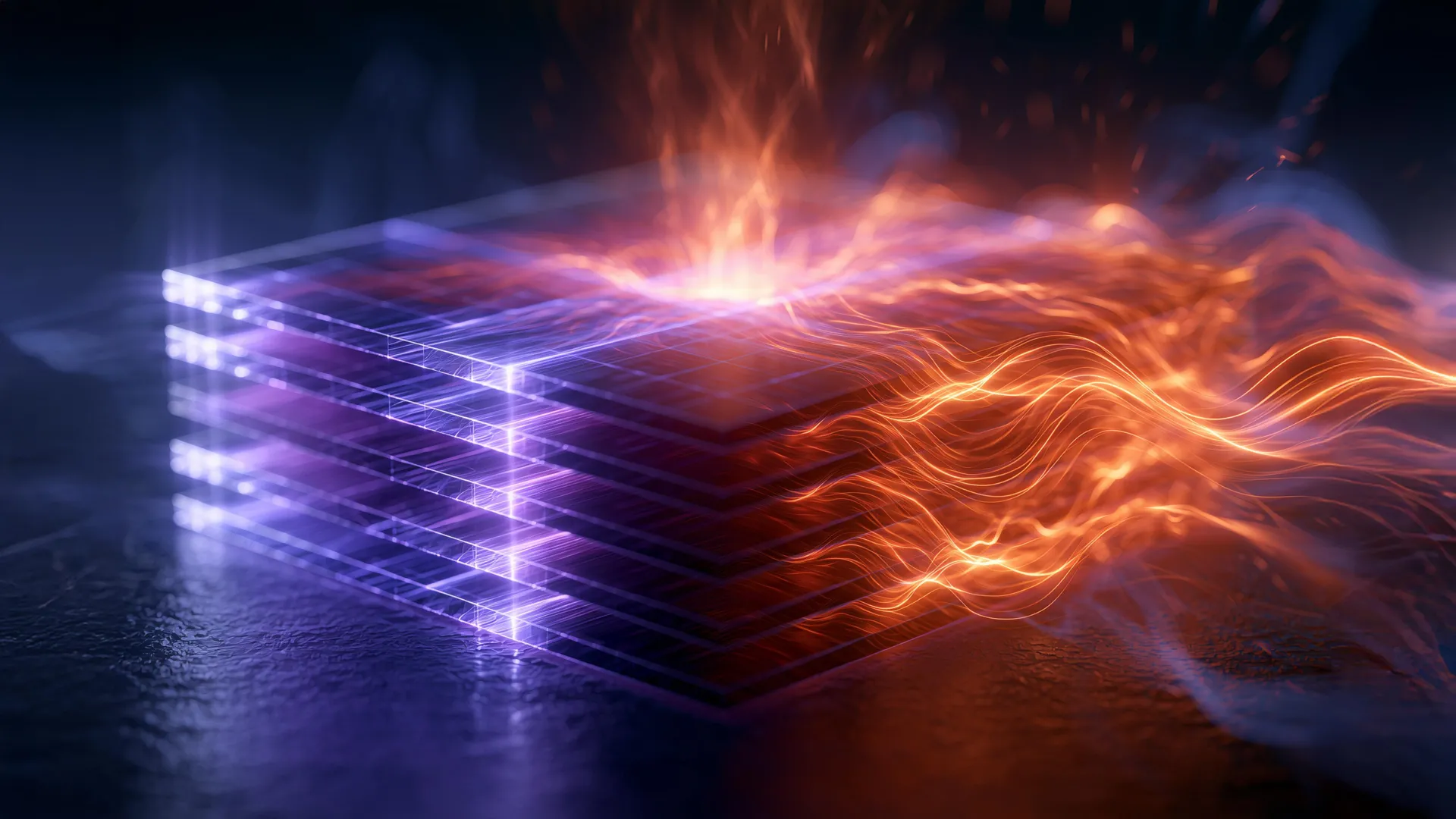
Photo: ScienceDaily
2026-07-17 04:47 Science 10


Exciton-Magnetic Interactions Pave Way for Quantum Technologies
A groundbreaking study published in Nature Materials highlights significant progress in quantum materials where light and magnetism interact in novel ways.Researchers at the City College of New York, led by physicist Vinod M.
Menon, explored how excitons—light-generated particles formed when electrons and holes bind—can directly influence magnetic behavior in atomically thin materials.
This interaction allows for controlling magnetic states using light alone, potentially revolutionizing optical memory, quantum devices, and photonic technologies.
The research focuses on van der Waals magnetic semiconductors, where excitons and magnons (magnetic waves) coexist within the same electronic orbitals.This synergy enables light to modulate magnetic order, as demonstrated through materials like chromium triiodide and nickel phosphorus trisulfide.Key findings include enhanced magneto-optical effects, applications in spintronics, and challenges in scaling these interactions for practical use.
The study underscores the potential of quantum materials to advance next-generation electronics and computing while addressing technical hurdles in stability and efficiency.
2187
Original title: Quantum breakthrough links light and magnetism in atomically thin materials
The AI system has determined that this news is not clickbait/sensationalist: : The original title is informative and accurately reflects the study's focus on quantum interactions without exaggerated language. This has coincided with the opinion of the majority of users.
You may also be interested in...
Scientists Create Long-Sought Quantum Material for Room-Temperature Electronics
 Artemisinin's Role in Combating Mastitis Through Anti-Inflammatory and Anti-Ferroptotic Mechanisms
 Scientists Discover Sugar Molecule in Interstellar Space