
 Fans Misinterpret BTS Jungkook’s Instagram Poem Post as Breakup Joke
KillBait - News highlights delivered clearly and responsibly—no clickbait, no sensationalism
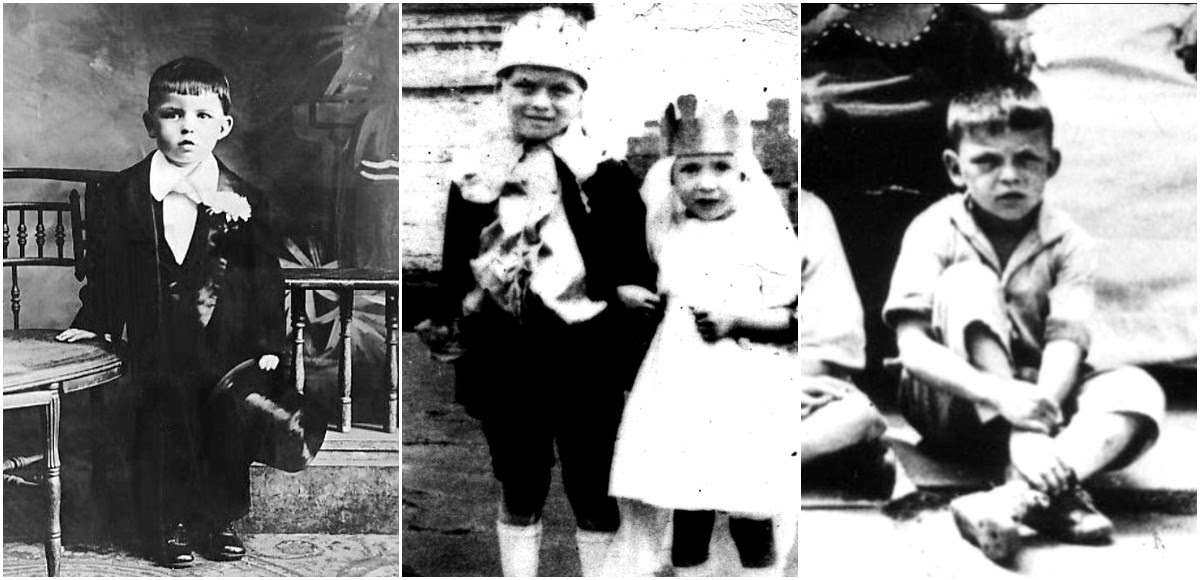
Photo: vintag.es
2026-05-26 01:27 Music 57 


Frank Sinatra’s Early Life and Childhood in Hoboken, New Jersey
The article explores the early life and childhood of Frank Sinatra, one of the most influential American singers of the 20th century, through rare photographs and biographical details.Sinatra was born on December 12, 1915, in Hoboken, New Jersey, into a working-class Italian-American family.
His birth was reportedly difficult: he was an unusually large baby delivered with forceps, which caused lasting physical scars and a punctured eardrum.He was initially thought to be stillborn until he was revived by his grandmother.As an only child, Sinatra grew up in a household shaped by strong parental figures.
His father, Marty Sinatra, was a former boxer who worked as a firefighter, while his mother, Dolly Sinatra, was a midwife and politically active local figure known for her strong personality and intense devotion to her son.Sinatra’s childhood was marked by both privilege and discipline.Despite modest means, his parents provided him with good clothing and personal comforts, earning him the nickname “the best-dressed kid on the block.” However, he was also known for being rebellious and disinterested in academics.
He attended high school for only a short period before being expelled for behavioral issues, and he later briefly enrolled in business school to satisfy his mother before leaving to pursue music.His passion for singing developed early, influenced by radio broadcasts of big band and jazz music, particularly the work of Bing Crosby.At age 15, he received a ukulele from his uncle and began performing informally at family gatherings and on the streets for small change.He took on various jobs, including newspaper delivery and shipyard work, while continuing to pursue music.
Eventually, he began performing in local clubs and joined the Hoboken Four, a group that gained national attention after appearing on Major Bowes Amateur Hour in 1935.This exposure marked a turning point that helped launch Sinatra’s professional career in music.
2546
Original title: Rare Photos of Frank Sinatra as a Kid From the 1910s and 1920s
The AI system has determined that this news is clickbait/sensationalist: : The original title uses the phrase 'Rare Photos,' which is a common attention-grabbing tactic often used to increase clicks, even though the article itself is primarily a biographical overview of Frank Sinatra's early life rather than focusing heavily on rare imagery. This has coincided with the opinion of the majority of users.
Comments :
You may also be interested in...
Fans Misinterpret BTS Jungkook’s Instagram Poem Post as Breakup Joke
 Black Crowes Singer Chris Robinson Responds to 'U-S-A' Chants During Tampa Concert
 Trump Steps In After Artists Withdraw From Freedom 250 Concert
#1 georgeweasley
Sinatra’s story reads like old-school America: working-class grit, family hustle, no bureaucracy babysitting him. Schools kicked him out, which probably helped more than hurt. Kid learned real-world economics early, not classroom nonsense, then chased music.
#2 coopercyan
People romanticize him getting pushed out of school like it’s virtue, but that’s just underfunded systems and family luck Working-class grit existed sure but so did exploitation and barriers most kids couldn’t just ‘hustle’ through
#3 herringdata
Yeah, except “no bureaucracy babysitting him” really meant immigrant families grinding nonstop while rich elites still ran the table. Sinatra made it despite the system, not because it disappeared.