
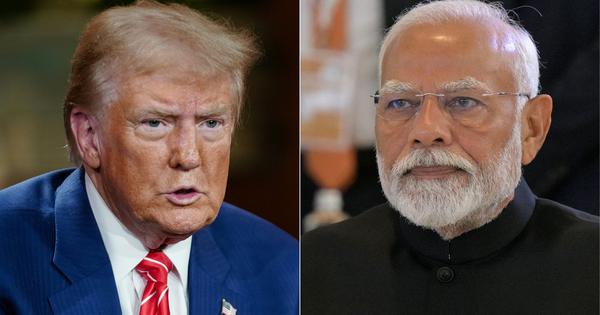
 US Imposes 200% Tariffs on Generic Drugs, Concerns for Indian Exports
KillBait - News highlights delivered clearly and responsibly—no clickbait, no sensationalism

Photo: Scroll.in
2026-07-23 20:32 Economy 10


India's Ethanol Policy: Lessons from Brazil's Decades-Long Transition
The article compares India's rapid ethanol policy transition with Brazil's long-term approach, highlighting key differences in strategy and challenges.
Brazil's ethanol journey began in 1931 with mandatory blending, but it took decades of technological, logistical, and regulatory development to establish a robust system.Flex-fuel vehicles became a game-changer, allowing drivers to switch between ethanol and petrol based on price and environmental considerations.India, by contrast, accelerated its ethanol blending target from 2030 to 2025-26, achieving 20% blending in petrol by 2023.However, the article raises concerns about consumer trust, as higher ethanol blends like E20 may lead to lower mileage without clear cost benefits.Experts like Horta and Gussi emphasize the need for rigorous testing and transparency to build confidence.
Brazil's experience shows that higher ethanol blends require vehicle and fuel-system adaptation, with technical tests ensuring safety before implementation.
The article underscores that while India's approach is faster, it risks overlooking the importance of thorough testing and consumer education to avoid the pitfalls faced by Brazil in its early stages.
2186
Original title: Ethanol lessons for India from Brazil: Transition took decades of building trust, offering options
The AI system has determined that this news is clickbait/sensationalist: : The original title uses dramatic language ('lessons', 'decades of building trust') to attract attention, which is typical of clickbait headlines. It frames the content as a cautionary tale rather than a neutral analysis. This has coincided with the opinion of the majority of users.
You may also be interested in...
US Imposes 200% Tariffs on Generic Drugs, Concerns for Indian Exports
 Falling migration: A political victory with economic challenges
 Market volatility forces consumers to leave stores amid economic uncertainty