
 Falling birthrates, ageing populations and the political debate over immigration as a demographic solution
KillBait - News highlights delivered clearly and responsibly—no clickbait, no sensationalism
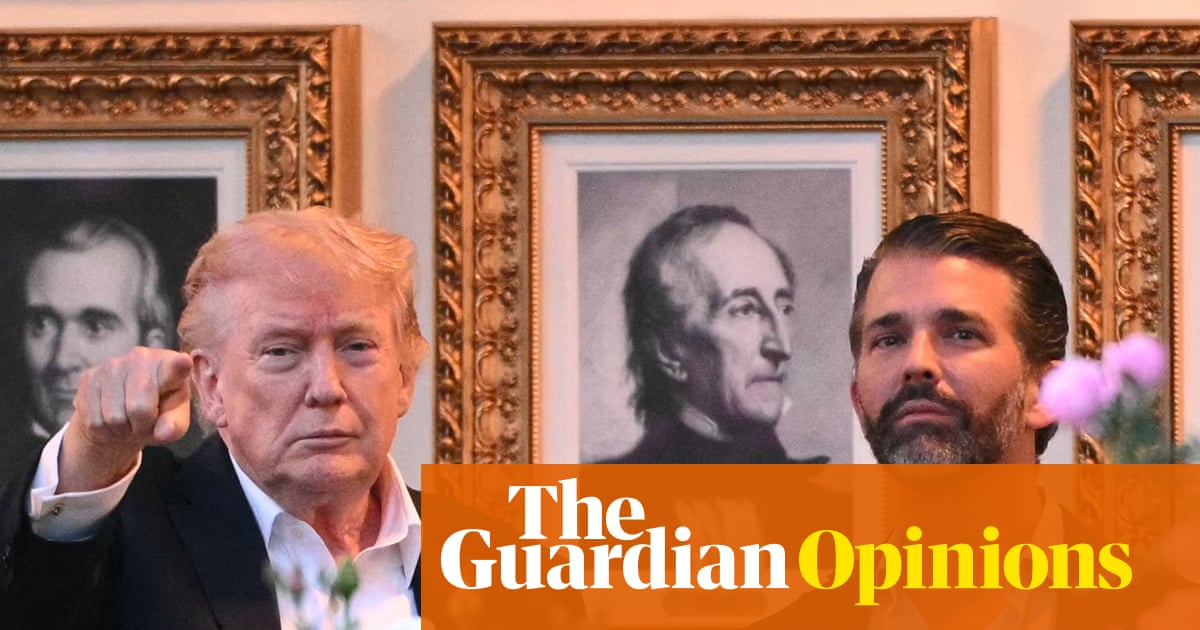
Photo: theguardian.com
2026-05-26 19:03 Opinion 27 


Marina Hyde satirises Trump’s use of Iran tensions as a pretext to miss his son’s wedding
This opinion piece by Marina Hyde offers a satirical commentary on Donald Trump, blending political critique with humour to examine how international tensions are portrayed as serving personal convenience.
The article centres on Trump’s reported decision to miss his son Don Jr’s wedding in the Bahamas, which the writer uses as a springboard to explore broader themes about his approach to governance and public messaging.
Hyde suggests, in a deliberately exaggerated tone, that the ongoing geopolitical situation involving Iran is framed within Trump’s rhetoric as a demanding and time-consuming crisis, one which conveniently provides justification for avoiding personal commitments.
The piece mocks the idea that complex international negotiations and conflict management are repeatedly described by Trump as perpetually “close” or unresolved, allowing for flexible excuses when needed.
The columnist draws a parallel between political “flaking” and everyday social avoidance, arguing humorously that the concept of an open-ended or unresolved crisis can function as a convenient alibi for missing inconvenient events.
The article also touches on the instability and consequences of US-Iran tensions, referencing potential regional destabilisation, energy market disruption, and ongoing diplomatic stalemates, though these points are presented through a satirical lens rather than as a formal analysis.
Throughout, Hyde employs irony to question Trump’s messaging, particularly his claim that he is simultaneously indispensable to national security and unable to attend family events due to “circumstances pertaining to government”.
The piece concludes by extending the metaphor to future family occasions, suggesting that ongoing political crises may continue to serve as a perpetual excuse for absence.
Overall, it is a humorous yet critical reflection on the intersection of personal narrative, political communication, and international conflict framing.
Full reading at theguardian.com
2393
Original title: War, what is it good for? Well, it’s a great way for Donald Trump to duck out of his son’s wedding
The AI system has determined that this news is clickbait/sensationalist: : The original title uses a provocative rhetorical question and humorous framing that exaggerates the connection between war and a personal family event, making it attention-grabbing rather than straightforward. This style is typical of opinion satire rather than neutral reporting. This has coincided with the opinion of the majority of users.
You may also be interested in...
Falling birthrates, ageing populations and the political debate over immigration as a demographic solution
 Calls for greater transparency over Donald Trump’s health and fitness for office
 Tony Blair criticised for outdated geopolitical and technological views in new policy essay