
 Musk Outlines Future SpaceX and Tesla Collaboration on Orbital Data Centers and Space-Based AI Infrastructure
KillBait - News highlights delivered clearly and responsibly—no clickbait, no sensationalism
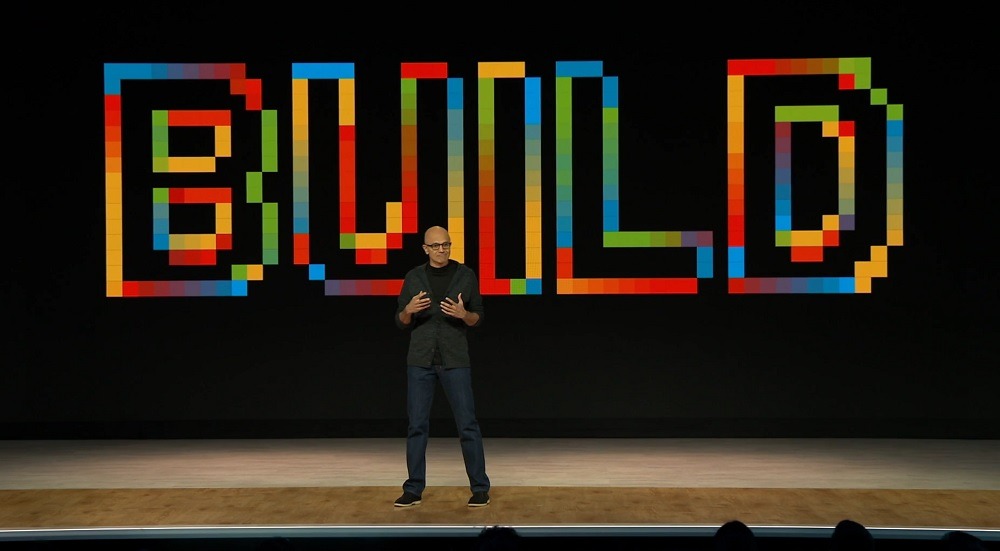
Photo: Newsbytes.PH
2026-06-06 00:34 Artificial intelligence 20 


Microsoft Expands AI Development Platform and Reveals Majorana 2 Quantum Chip at Build 2026
At its Build 2026 developer conference, Microsoft announced a broad range of new artificial intelligence, software development, and quantum computing initiatives aimed at simplifying the creation and management of AI-powered applications.
The company said its latest efforts are intended to address fragmentation in the AI ecosystem by providing developers with tools that work across different environments while supporting governance and security requirements.
Among the announcements were new AI-focused capabilities for Windows 11, including expanded Windows AI APIs, integrated agent runtimes such as OpenClaw on Windows, and the introduction of the Surface RTX Spark Dev Box.
This new hardware is designed to allow developers to run AI models and autonomous agents locally instead of depending entirely on cloud-based infrastructure.
Microsoft also introduced MAI-Thinking-1, a reasoning model with 35 billion active parameters that is designed for complex problem-solving and code generation tasks.
The company further expanded its proprietary AI portfolio with multimodal MAI models supporting image generation, voice applications, transcription, and coding.
In software development, Microsoft unveiled a new GitHub Copilot application that functions as an agent-based development environment integrated with GitHub’s collaboration platform.
To address AI safety and governance concerns, Microsoft released two open-source projects: ASSERT, a framework for evaluating AI systems against safety and policy requirements, and ACS, a specification intended to standardize controls and governance mechanisms for AI agents.The company also highlighted progress in quantum computing with Majorana 2, its newest quantum chip.
Microsoft stated that the chip offers a 1,000-fold reliability improvement over Majorana 1 and could help accelerate its goal of building a scalable quantum computer by 2029.
Additionally, Microsoft announced the general availability of Microsoft Discovery, an AI-assisted scientific research platform that supports iterative and evidence-based investigations across scientific and industrial fields.
2338
Original title: Microsoft unveils new AI tools, quantum computing advances at Build 2026
The AI system has determined that this news is not clickbait/sensationalist: : The original title accurately summarizes the main announcements discussed in the article and does not use exaggerated, sensational, or misleading language to attract clicks. This has coincided with the opinion of the majority of users.
You may also be interested in...
Musk Outlines Future SpaceX and Tesla Collaboration on Orbital Data Centers and Space-Based AI Infrastructure
 Mothers Are Using AI Tools to Manage Household Mental Load, Raising Questions About Gender Roles and Parenting
 Trump Considers Federal Equity Stakes in Major AI Firms Ahead of Industry Public Offerings