
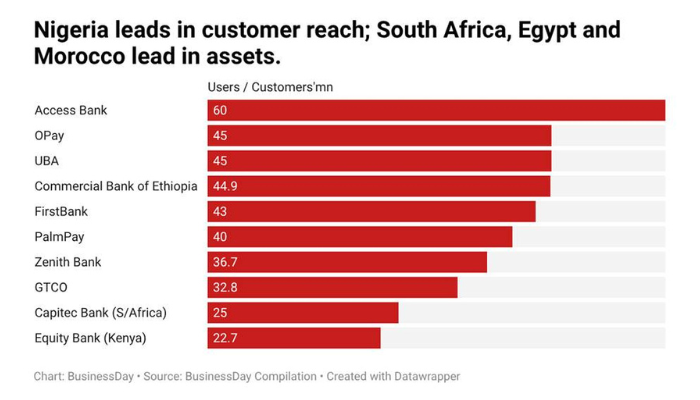
 Nigeria’s Banking Growth: Customer Base vs Asset Depth in Africa
KillBait - News highlights delivered clearly and responsibly—no clickbait, no sensationalism

Photo: Daily Trust
2026-07-28 10:47 Economy 10


Nigeria's Missed Opportunities In IMF Engagement
The article discusses how Nigeria has failed to leverage the IMF's evolved institutional frameworks to address its economic challenges.It highlights the shift from a rigid 1977 surveillance model to collaborative dialogues in 2007 and 2012, yet Nigeria remained passive.
The piece argues that Nigeria's continued reliance on IMF reports without proactive engagement has led to issues like multidimensional poverty and youth unemployment.
Solutions proposed include producing national position papers, negotiating terms of reference focused on human survival, and using legal rights under the Integrated Surveillance Decision to address global spillovers affecting Nigeria.The author emphasizes that Nigeria's agency is key to shaping its economic destiny rather than being a passive recipient of IMF assessments.
2189
Original title: How Nigeria can benefit from the IMF’s institutional evolution
The AI system has determined that this news is not clickbait/sensationalist: : The original title focuses on a specific historical event but the article's core is about institutional changes and Nigeria's current economic strategies, making it informative rather than sensational. This has coincided with the opinion of the majority of users.
You may also be interested in...
Nigeria’s Banking Growth: Customer Base vs Asset Depth in Africa
 FG’s Poverty Alleviation Efforts Fail Amid Rising Inequality
 Key Leaders Discuss Economic Resilience at Africa Forum