
 Tanzania launches digital system to monitor and fight pollution
KillBait - News highlights delivered clearly and responsibly—no clickbait, no sensationalism
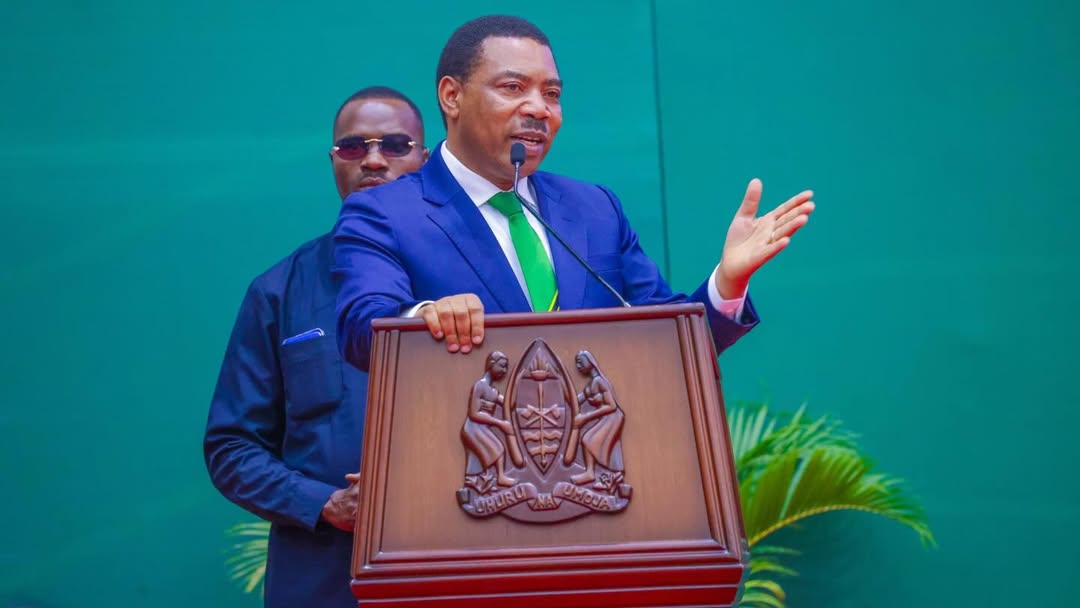
Photo: Tanzania Insight
2026-05-30 12:33 Environment 11 


Prime Minister calls for collective action on environmental conservation and launches national emissions monitoring system
Tanzania’s Prime Minister Dr.Mwigulu Nchemba has called on citizens to take active responsibility in protecting the environment, stressing that conservation should not be left only to government institutions like the National Environment Management Council (NEMC).
He made these remarks during the National Environmental Stakeholders Conference held at the Julius Nyerere International Convention Centre in Dar es Salaam, marking 40 years of NEMC’s work in environmental management.
The Prime Minister emphasized that environmental protection is essential for survival, economic growth, and national prosperity, especially as Tanzania faces increasing pressure from population growth, industrial expansion, and unsustainable land use practices.
He urged stronger environmental education in schools, households, and communities, and highlighted the need for modern technologies in agriculture, livestock, construction, and industry to support sustainability.Dr.
Nchemba also praised President Samia Suluhu Hassan’s leadership in advancing green initiatives, including major investments in irrigation, clean energy, and infrastructure such as the Standard Gauge Railway.
He noted that irrigation projects have grown from 13 at the start of her administration to more than 780, significantly boosting agricultural productivity and allowing farmers to harvest multiple times a year.
During the event, the Prime Minister launched the Tanzania Online Continuous Emission Monitoring System (TOCEMS), a digital platform designed to track pollution in real time.The government is also preparing legal reforms to strengthen NEMC’s enforcement powers and financial independence.
International recognition was highlighted, with UNEP praising Tanzania’s environmental leadership and noting $54 million in conservation projects managed in the country.
The conference also served as a platform to review progress and set future strategies for climate resilience and a green economy aligned with Vision 2050.
Full reading at Tanzania Insight
2208
Original title: Prime Minister pushes green agenda
The AI system has determined that this news is not clickbait/sensationalist: : The original title is straightforward and informational, accurately describing the Prime Minister's focus on environmental policy without exaggeration or sensational wording. This has coincided with the opinion of the majority of users.
You may also be interested in...
Tanzania launches digital system to monitor and fight pollution
 NEMC Recognizes Tanzania Editors Forum for Environmental Journalism Contributions
 Government to construct multiple dams along SGR corridor to manage floods and climate risks