
 Former defence minister Linda Reynolds presses ahead with AUKUS amid warnings of an 'imaginary' war
KillBait - News highlights delivered clearly and responsibly—no clickbait, no sensationalism
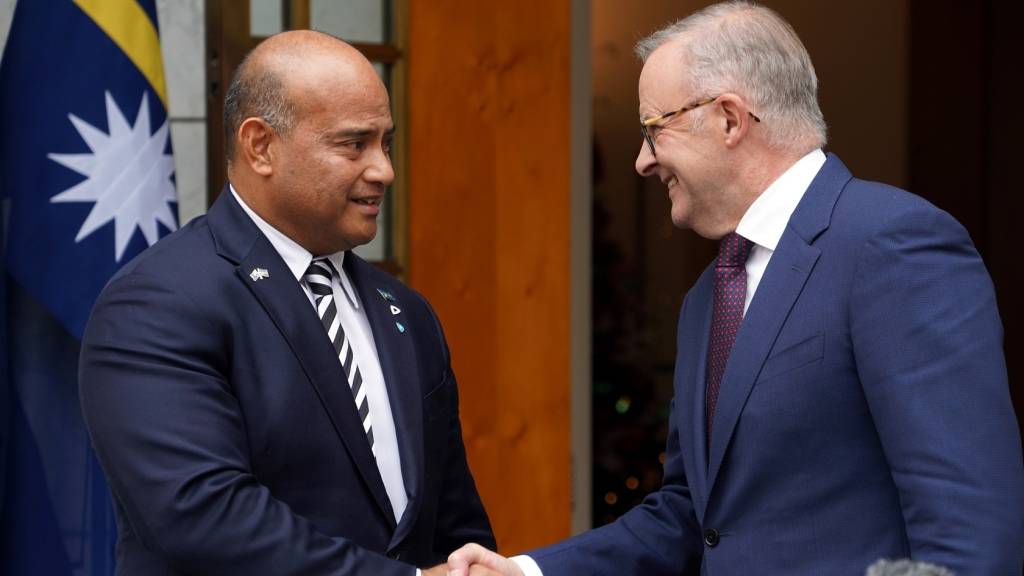
Photo: Crikey
2026-05-29 06:24 Politics 13 


Questions raised over allocation of Australian deportation funds within Nauru government
A significant share of the initial funding from Australia’s $2.5 billion deportation and resettlement agreement with Nauru has reportedly been allocated to government offices linked to Nauruan President David Adeang and his son, Damon Adeang.
Evidence presented during Australian Senate estimates hearings, alongside documents from the Nauruan government, indicates that these funds were directed towards offices either controlled by or closely associated with the president and his son.
The arrangement has drawn scrutiny because Damon Adeang is not only connected to the offices receiving funding but also serves on the two-person committee responsible for overseeing how the Australian funds are distributed.
This dual role has prompted concerns among Australian officials about potential conflicts of interest and whether appropriate governance and accountability measures were followed.During the Senate estimates session, officials questioned whether safeguards were in place to ensure transparency and prevent misuse of the funds.
The issue highlights broader concerns about how international agreements involving substantial financial transfers are monitored, particularly when oversight structures may include individuals with direct ties to beneficiaries.
The deportation deal itself forms part of Australia’s broader offshore processing and resettlement policy, which has long been politically contentious.
Critics argue that such agreements risk enabling weak oversight or governance practices in partner countries, while supporters maintain they are necessary for managing migration flows.
The revelations are likely to intensify political debate in Australia about the integrity of offshore arrangements and whether stricter conditions or independent monitoring mechanisms should be imposed on funding agreements with smaller partner nations like Nauru.
2249
Original title: Nauru directs most of Australian deportation deal funds toward offices controlled by president and his son
The AI system has determined that this news is not clickbait/sensationalist: : The title is direct and descriptive, accurately reflecting the core issue of fund allocation without exaggeration or sensational language. This has coincided with the opinion of the majority of users.
You may also be interested in...
Former defence minister Linda Reynolds presses ahead with AUKUS amid warnings of an 'imaginary' war
 Labor pushes ahead with tax overhaul despite business backlash
 Australian woman subject to exclusion order remains in Syria as other Islamic State-linked women and children return