
 Kodachrome Photographs Document Daily Life and Landmarks in San Francisco During 1965
KillBait - News highlights delivered clearly and responsibly—no clickbait, no sensationalism

Photo: Historias de la Historia
2026-05-30 17:53 History 29 


Rethinking Sexuality in Prehistory: Cooperation, Social Bonds, and Evolutionary Strategy
This article challenges the stereotypical image of prehistoric humans as brutish, violence-driven beings who engaged in purely force-based relationships.Instead, it argues that sexual behavior in prehistory was deeply embedded in social cooperation, group cohesion, and evolutionary strategy.
Early human groups were small, likely consisting of around twenty individuals, where survival depended less on physical dominance and more on maintaining stable social bonds.Individuals who disrupted group harmony risked isolation, which in prehistoric contexts often meant death.Rather than chaotic or purely instinctive encounters, sexual interactions are described as part of a broader system of social negotiation.
Evidence of interbreeding between Homo sapiens, Neanderthals, and Denisovans suggests sustained contact and stable relationships between groups rather than random encounters.
The article also highlights the role of sexual selection and status signaling, where crafted objects such as necklaces made from animal teeth or shells functioned as costly signals of skill, energy, and social value.These objects communicated desirability in a way comparable to modern displays of status.
Prehistoric attraction is framed as closely tied to reputation, cooperation, and practical survival skills, such as resource sharing, navigation, and caregiving.
The article further discusses how bipedalism and frontal sexual interaction may have increased visual communication during intimacy, adding complexity to social dynamics.It also connects human emotional traits like jealousy to evolutionary pressures surrounding investment in offspring and resource allocation.
Ultimately, the piece argues that human evolutionary success was not based on physical aggression but on the ability to build and maintain complex social networks.
Modern behaviors such as status signaling and social comparison are interpreted as continuations of ancient evolutionary strategies rather than entirely new cultural inventions.
Full reading at Historias de la Historia
2407
Original title: Ni garrotazos ni cavernas. La sorprendente (y muy civilizada) verdad sobre el sexo en la Prehistoria
The AI system has determined that this news is clickbait/sensationalist: : The original title uses provocative and attention-grabbing phrasing ('garrotazos', 'cavernas') and a contrastive, sensational structure designed to challenge stereotypes, which increases click appeal even though the content is informative and analytical. This has coincided with the opinion of the majority of users.
You may also be interested in...
Kodachrome Photographs Document Daily Life and Landmarks in San Francisco During 1965
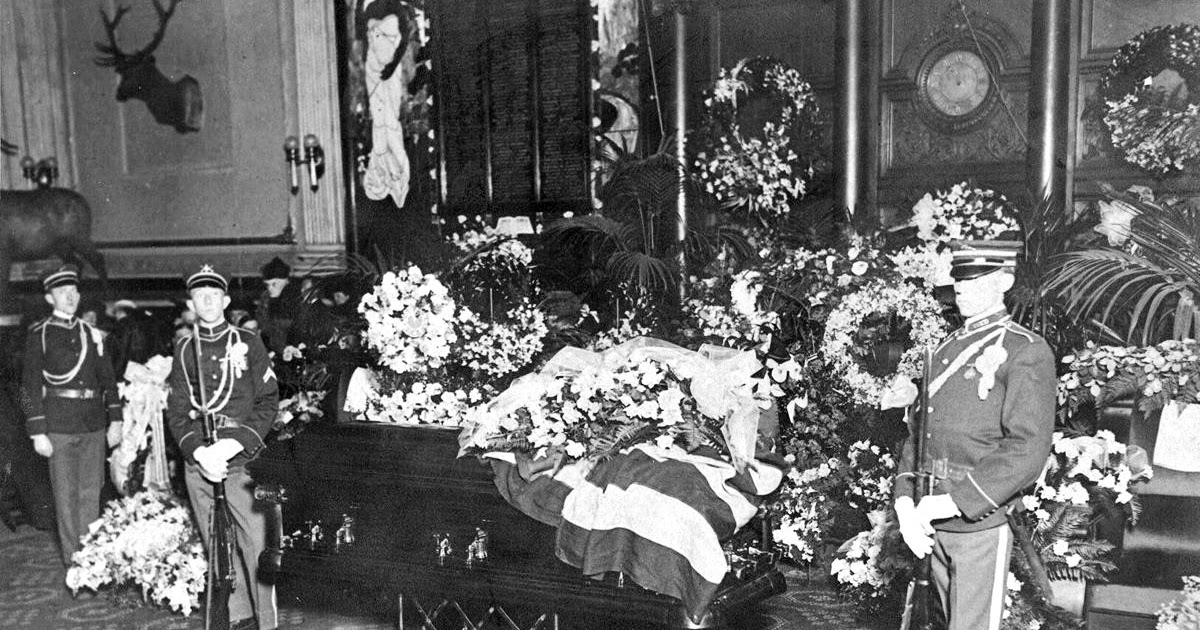 The Delayed Burial and Controversy Over Buffalo Bill Cody’s Final Resting Place
 The 1915 Simplex Crane Model 5 Tourer and Its Role as a Premier American Luxury Automobile