
 Analysis of whether President Ramaphosa’s reforms in South Africa will endure beyond his presidency
KillBait - News highlights delivered clearly and responsibly—no clickbait, no sensationalism
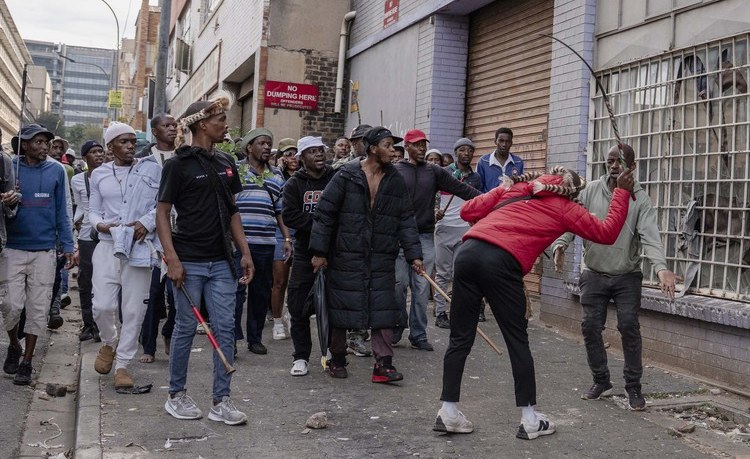
Photo: allAfrica.com
2026-05-25 12:04 Politics 23 


Rising Anti-Immigrant Protests in Durban and Johannesburg Raise Concerns Ahead of Local Elections
The article examines the growing use of anti-immigrant sentiment in South African politics, particularly in Durban and Johannesburg, where protests linked to the March and March movement have intensified.
According to the report, groups of foreign nationals recently sought refuge outside Durban Central Police Station after claiming they feared attacks and intimidation during demonstrations.Police later dispersed them, leading to scenes of distress among migrants, including women pleading for protection.
The tensions escalated further at the Diakonia Centre in Durban, where migrants attempted to engage with representatives connected to the United Nations refugee system.Shortly after, supporters linked to March and March and members associated with the MK movement arrived at the scene.A crowd quickly gathered outside the centre, waving South African flags and chanting anti-immigrant slogans.Police formed a barrier between the migrants and protesters to prevent violence.
The article argues that some political figures are increasingly exploiting public frustration over unemployment, crime and poor municipal services by blaming migrants for social and economic problems.
The writer warns that this strategy may offer short-term political gains ahead of local elections but risks deepening social division, encouraging vigilantism and undermining democratic stability.
The commentary also highlights the dangers of normalising xenophobic rhetoric in a country with a history of violent attacks against foreign nationals.
It suggests that political leaders should focus on governance failures and economic solutions instead of using migrants as scapegoats to attract voter support.
2361
Original title: South African Politicians Who Use Xenophobia to Garner Votes Are Playing a Perilous Game
The AI system has determined that this news is not clickbait/sensationalist: : The original title is direct and opinion-based but accurately reflects the content of the article. It is not excessively sensationalist or misleading. This has coincided with the opinion of the majority of users.
You may also be interested in...
Analysis of whether President Ramaphosa’s reforms in South Africa will endure beyond his presidency
 US–South Africa diplomatic tensions escalate after exchange over MAGA remarks and State Department criticism
 Gauteng MEC rules out administration for Joburg metro amid financial challenges