
 Sarah Rector: Childhood Millionaire and Trailblazer in Early 20th Century America
KillBait - News highlights delivered clearly and responsibly—no clickbait, no sensationalism
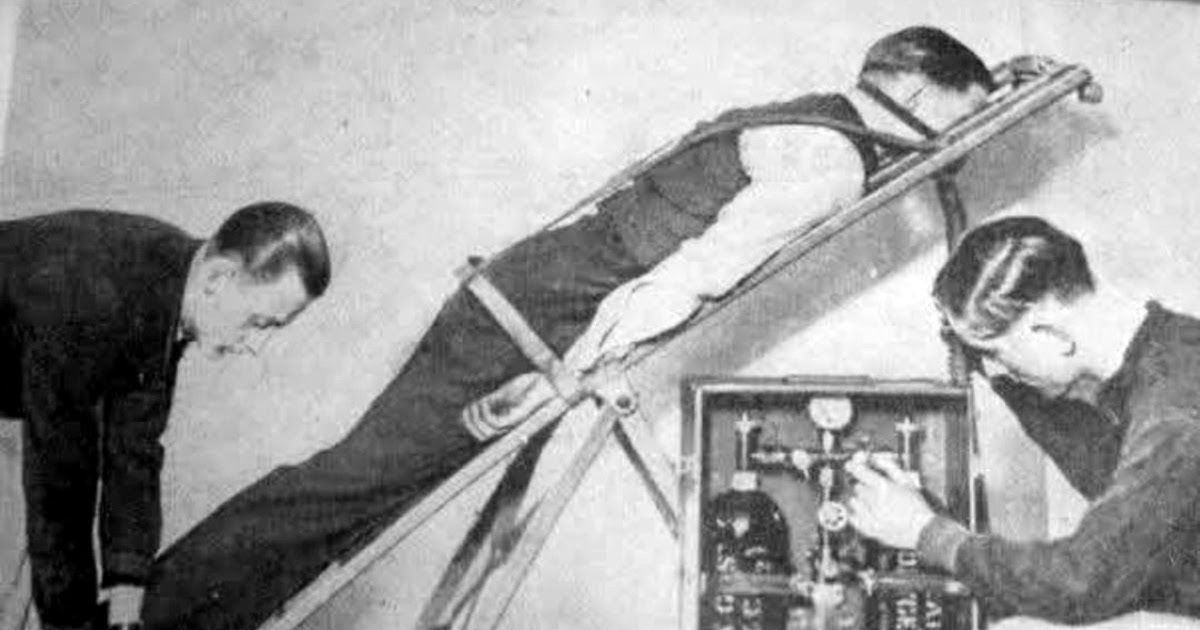
Photo: vintag.es
2026-05-13 00:26 History 21 


Robert E. Cornish and His Experimental Resuscitation Research in the 1930s
Robert Edwin Cornish, born in 1903 in California, was a prodigious scientist who, by the early 1930s, became fascinated with reversing clinical death.He believed that if circulation and oxygenation were restored quickly, death might be reversible.Cornish developed a unique method involving a large see-saw-like tilting table to artificially circulate blood in bodies whose hearts had stopped.
Subjects were strapped to the table, which was rocked back and forth, while he injected stimulants such as epinephrine, anticoagulants, and oxygenated saline.
Cornish initially attempted human resuscitation but later focused on dogs, claiming to revive multiple animals, though often with severe neurological impairments.His experiments drew both sensational media coverage and public criticism over animal treatment, eventually forcing him out of university labs.He appeared in the 1935 film 'Life Returns,' portraying his work.Later, he sought to experiment on a freshly executed human, which was denied.By the late 1950s, Cornish largely retired from mainstream research, living quietly in California until his death in 1963.
While his techniques were crude and ethically controversial, Cornish’s work reflected early scientific curiosity about life, death, and resuscitation, predating modern methods like CPR, defibrillators, and ECMO.His story remains a striking example of ambition, scientific curiosity, and the ethical boundaries of experimentation.
2343
Original title: In the 1930s, Robert E. Cornish Constructed a Bizarre Tilting Table to Reverse Death
The AI system has determined that this news is clickbait/sensationalist: : The original title emphasizes 'bizarre' and 'reverse death,' which sensationalizes Cornish's work and makes it seem more shocking than the historical account justifies. This has coincided with the opinion of the majority of users.
You may also be interested in...
Sarah Rector: Childhood Millionaire and Trailblazer in Early 20th Century America
 Everyday Life in the Dutch East Indies: Vintage Photos from Early 20th-Century Indonesia
 Portrait of William Casby, a Formerly Enslaved American, With His Great-Great-Granddaughter