
 South Australia warned of severe weather with heavy rain and strong winds
KillBait - News highlights delivered clearly and responsibly—no clickbait, no sensationalism
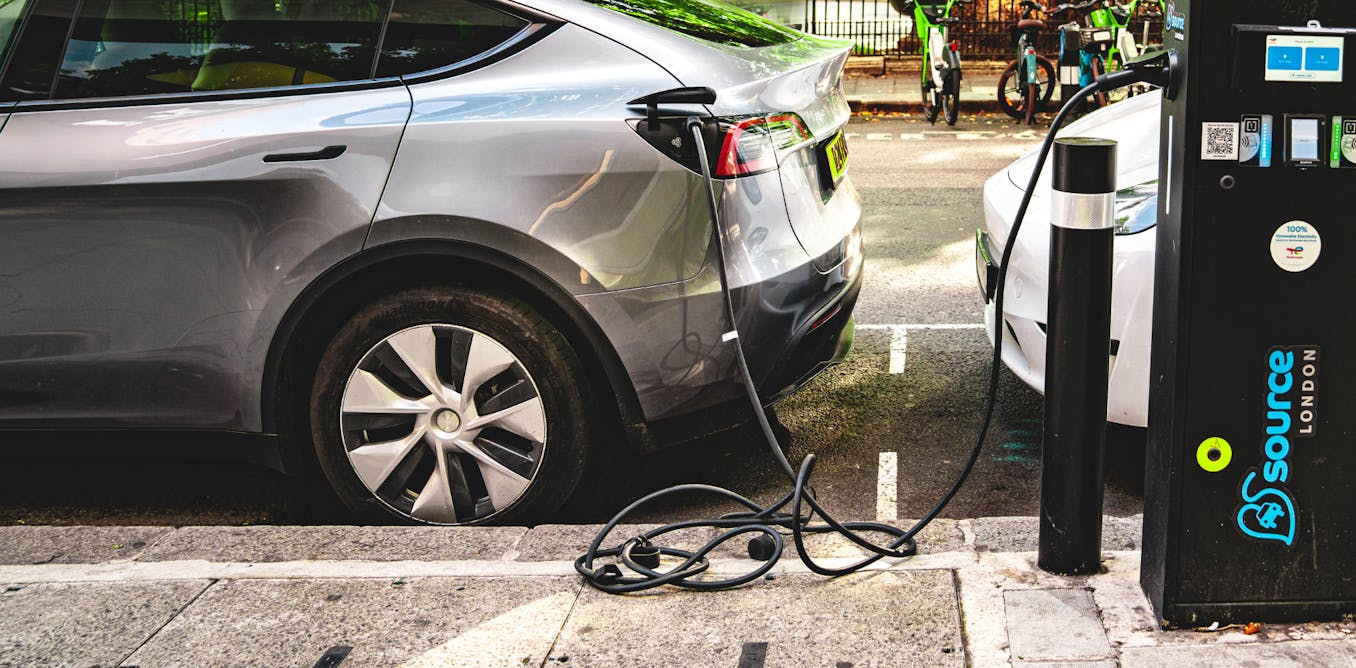
Photo: The Conversation
2026-05-25 03:03 Environment 13 


Scaling up kerbside EV charging in Australia: ensuring a fast, fair and practical rollout
Electric vehicle adoption in Australia is accelerating as petrol prices remain high and federal incentives continue, creating urgent demand for supporting charging infrastructure.
While fast and ultra-fast chargers are expanding rapidly and are attractive for long-distance travel due to their 10–15 minute recharge times, they are costly, place strain on EV batteries and the electricity grid, and are not well suited to everyday charging needs.They may also deepen regional inequalities by prioritising infrastructure for intercity travellers rather than local communities.
The article highlights kerbside EV chargers as a more practical solution for daily use, particularly for apartment residents and renters without private parking.
These chargers, which can be installed on power poles or at the kerb, typically provide a full charge within 2–8 hours and are better aligned with routine urban charging needs.
Based on analysis of 27,000 kerbside charging sessions, researchers found that while some sites are profitable, there are not enough profitable locations to make the entire network commercially self-sustaining.This raises key policy questions about funding models.
Current proposals involve a mix of taxpayer funding, electricity distributor investment funded through consumer bills, and private sector involvement.
However, there is concern that allowing private operators to select only profitable sites could increase long-term costs for consumers by leaving less profitable but necessary locations underfunded.
An alternative model suggested by researchers involves a blended approach using public subsidies combined with modest user fees, alongside stronger involvement from local councils to identify suitable locations and support planning.
The article argues that kerbside charging should be treated as essential public infrastructure, with funding mechanisms designed to ensure fairness across taxpayers and electricity users while supporting rapid EV adoption and a smoother transition to widespread electrification of Australia’s vehicle fleet.
Full reading at The Conversation
2246
Original title: Australia needs thousands more kerbside EV chargers. Here's how to roll them out fast and fairly
The AI system has determined that this news is not clickbait/sensationalist: : The original title is descriptive and accurately reflects the article’s focus on kerbside EV charger rollout strategies in Australia. It does not use sensational language or exaggeration, so it is not considered clickbait. This has coincided with the opinion of the majority of users.
You may also be interested in...
South Australia warned of severe weather with heavy rain and strong winds
 Concerns raised over Queensland’s stalled progress on expanding single-use plastic bans
 Concerns raised over Queensland’s slowdown in single-use plastic bans