
 Bena Sareen on Book Design Evolution and AI's Role
KillBait - News highlights delivered clearly and responsibly—no clickbait, no sensationalism
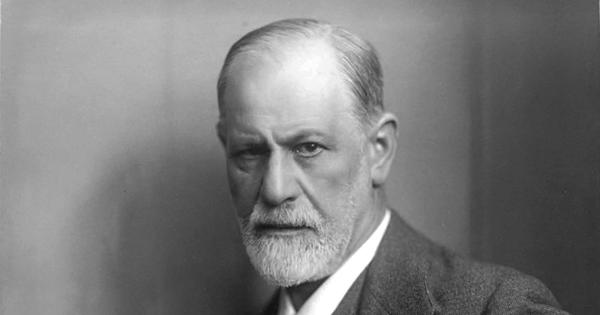
Photo: Scroll.in
2026-07-05 20:42 Literature 17


Sigmund Freud's 'The Interpretation of Dreams' and the Foundations of Psychoanalysis
Sigmund Freud's 'The Interpretation of Dreams' (1900) revolutionized psychology by introducing the concept of the unconscious mind.The article explores how Freud's work established psychoanalysis as a field, emphasizing his theories on dreams as disguised wish fulfillments and the distinction between manifest (surface) and latent (hidden) content.Key ideas include the unconscious as a 'true reality of the psyche,' the Oedipus complex, and primary/secondary process thinking.
While Freud's theories faced criticism from neuroscience—such as the discovery of REM sleep and the 'compulsion to repeat'—his legacy endures.Modern dream research acknowledges the significance of dreams without strictly adhering to Freud's framework.
The article highlights Freud's lasting impact on psychology, culture, and the understanding of human behavior, even as scientific advancements refine his theories.His work remains foundational, bridging literature, philosophy, and science in exploring the human mind.
2299
Original title: Re-reading classics: Sigmund Freud’s ‘The Interpretation of Dreams’ gave us psychoanalysis
The AI system has determined that this news is clickbait/sensationalist: : The original title uses hyperbolic language like 'gave us psychoanalysis,' which sensationalizes Freud's contribution. It also employs clickbait tactics by framing his work as a revolutionary 'classic' re-reading. This has coincided with the opinion of the majority of users.
You may also be interested in...
Bena Sareen on Book Design Evolution and AI's Role
 Centre Appoints New Chiefs for BPR&D, NCRB, and SVPNPA
 Study warns of potential risks of zero-sugar diets in mice