
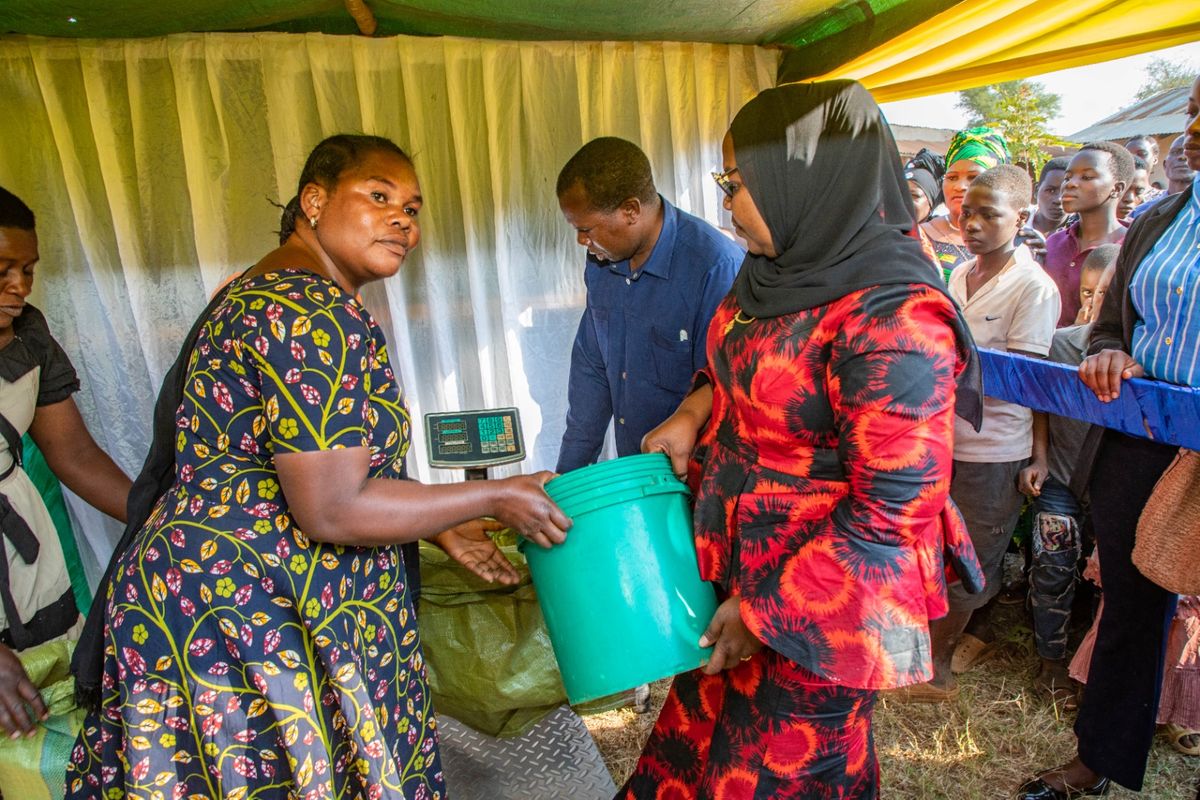
 Ileje District Council Unveils Plan to Enhance Agricultural Markets
KillBait - News highlights delivered clearly and responsibly—no clickbait, no sensationalism

Photo: Tanzania Insight
2026-07-21 11:59 Economy 12


Tanzania's agriculture struggles with slow growth and low productivity
Tanzania's agricultural sector, which employs most of the country's workforce and ensures food security, continues to underperform despite decades of policy reforms and investments.
Two main challenges—insufficient growth rates and stagnant productivity—are preventing the sector from becoming a key driver of economic transformation.While agricultural GDP grew at an average of 3.5% annually between 2006 and 2016, this falls short of the 6% target needed for structural change.Low productivity remains a critical issue, with crop yields far below potential.Smallholder farmers face limited access to modern technologies like improved seeds, fertilizers, and mechanization, hindering productivity gains.Medium-scale farmers, though a minority, contribute significantly to land cultivation and demonstrate higher yields through better practices.
The shift of labor from agriculture to non-farm sectors is also creating spillover effects, improving access to markets and services for smallholders.
Addressing these challenges requires accelerated tech adoption, stronger extension services, and policies supporting all farmers to enhance competitiveness.
Full reading at Tanzania Insight
2224
Original title: Two reasons agriculture still underperforms
The AI system has determined that this news is not clickbait/sensationalist: : The original title is straightforward and directly reflects the article's content without sensationalism. This has coincided with the opinion of the majority of users.
You may also be interested in...
Ileje District Council Unveils Plan to Enhance Agricultural Markets
 Tanzania's Central Bank Projects Interest Rate Stability Through 2026
 Zanzibar's Blue Economy Gains Momentum with Financial Training for Seaweed Farmers