
 A Review of Abdulrazak Gurnah's 'Admiring Silence': Exploring Postcolonial Themes and Identity
KillBait - News highlights delivered clearly and responsibly—no clickbait, no sensationalism
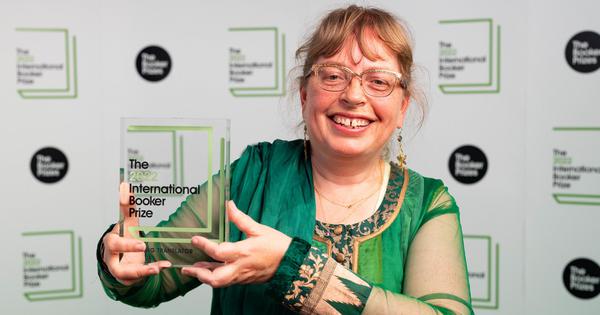
Photo: Scroll.in
2026-07-19 20:30 Literature 10


Translator Daisy Rockwell discusses translation, Partition literature, Palestine, and the enduring influence of AK Ramanujan
In an extensive interview with Scroll, International Booker Prize-winning translator Daisy Rockwell reflects on her work as a translator, writer and artist, explaining how themes such as Partition, communal violence, displacement and religious extremism have consistently shaped the books she chooses to translate from Hindi and Urdu into English.
She says her intellectual engagement with these subjects began after reading Yashpal's Jhutha Sach and has since expanded to include literature examining the long-term consequences of colonial borders and ethnic conflict.
Rockwell discusses Geetanjali Shree's short story collection Once Elephants Lived Here, highlighting its allegorical treatment of segregation, communal violence and displacement, while noting that readers may draw parallels with Palestine and other regions affected by conflict.
She also speaks candidly about her long-standing support for Palestinian rights, her participation in the Boycott, Divestment and Sanctions (BDS) movement, and her criticism of institutions such as PEN America, arguing that cultural organisations should provide greater support to Palestinian writers and translators.
Recalling her years at the University of Chicago, Rockwell credits scholar AK Ramanujan with shaping her practical philosophy of translation, especially his famous observation that 'every footnote is a confession of failure', which she describes as a guiding principle in her work.
She also comments on controversies surrounding Ramanujan's scholarship, self-censorship in publishing, the limited interest of the American publishing industry in South Asian literature in translation, and the challenges faced by translators seeking publication in the United States.Throughout the interview, Rockwell argues that literature remains an essential means of understanding injustice and preserving human experience.
2189
Original title: ‘This one line is my bible – every footnote is a confession of failure’: Translator Daisy Rockwell
The AI system has determined that this news is not clickbait/sensationalist: : The original title quotes a memorable statement by Daisy Rockwell that accurately reflects a significant part of the interview. While it is attention-grabbing, it is not misleading or sensationalist because the quotation is discussed in detail within the article. This has coincided with the opinion of the majority of users.
You may also be interested in...
A Review of Abdulrazak Gurnah's 'Admiring Silence': Exploring Postcolonial Themes and Identity
 Tamil Writer D Ravikumar's Stories Explore Contemporary Dalit Struggles
 A Novella's Bold Exploration of Resistance Against Caste and Patriarchy