
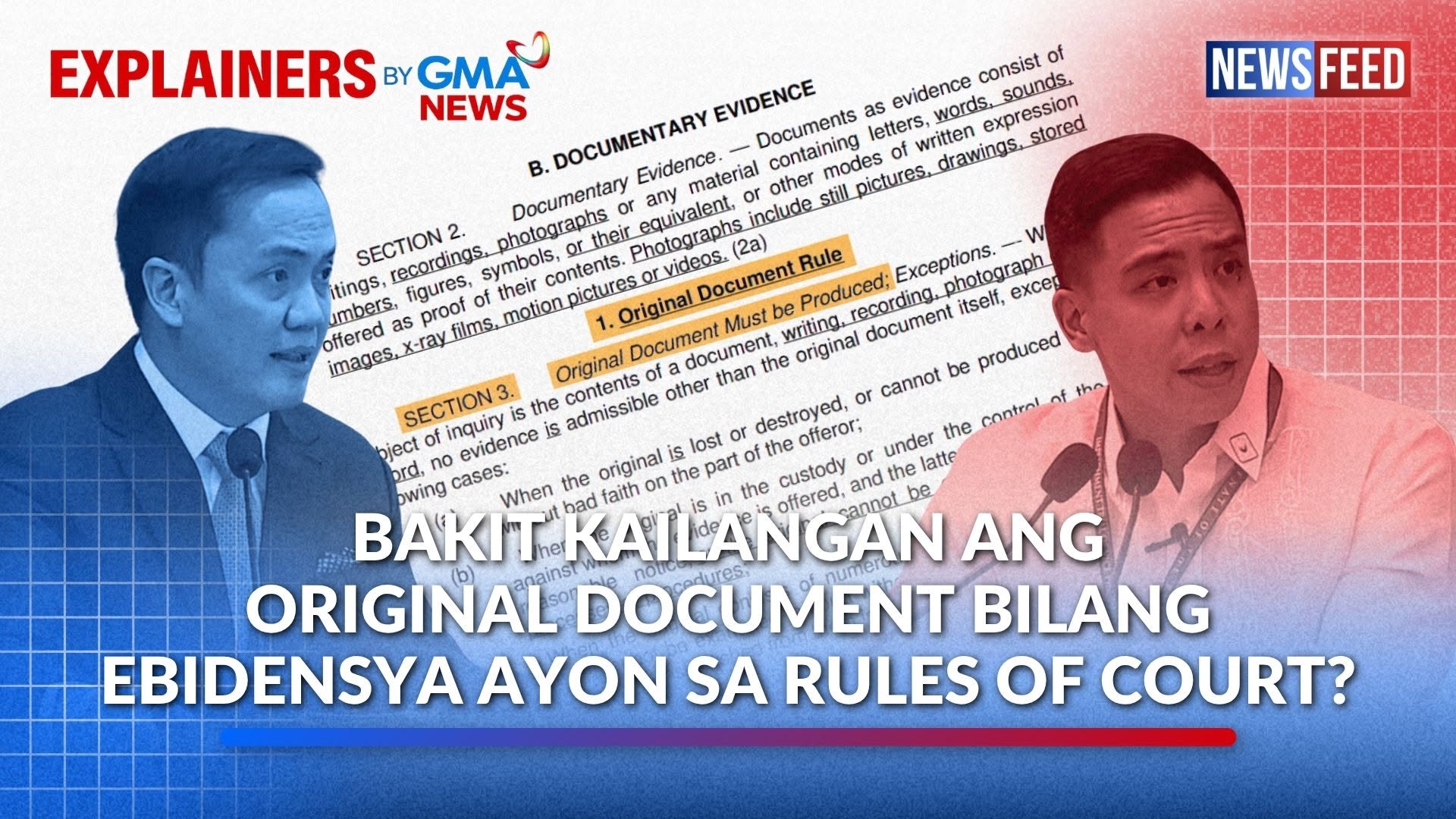
 Supreme Court Rules on Admissibility of Electronic Evidence in Duterte Impeachment Trial
KillBait - News highlights delivered clearly and responsibly—no clickbait, no sensationalism
Photo: gmanetwork.com
2026-07-08 18:09 Justice 10


Understanding Legal Objections in Trials and Their Importance in Due Process
The article explains the legal mechanisms of objections during trials, emphasizing their role in safeguarding due process.It highlights how lawyers from both prosecution and defense interrupt each other's questioning with 'Objection!' to challenge the admissibility of evidence.National Union of Peoples Lawyers (NUPL) president Atty.
Ephraim Cortez outlines that objections are arguments against the admission of testimonial or documentary evidence, which must conform to the Rules of Evidence.
These rules state that only relevant and material evidence is admissible, witnesses must testify based on personal knowledge, and documents must be authenticated.Cortez stresses that objections protect individuals' rights by ensuring convictions are based on competent evidence.
The article also details when objections can be made, such as under Section 36 of the Rules on Evidence, and notes penalties for disruptive objections.It underscores that objections are integral to fair trials, preventing the use of inadmissible evidence and upholding judicial integrity.
Full reading at gmanetwork.com
2187
Original title: EXPLAINER: Objections in a trial and their role in due process
The AI system has determined that this news is not clickbait/sensationalist: : The original title is informative and straightforward, explaining the article's purpose without sensationalism or exaggerated language. This has coincided with the opinion of the majority of users.
You may also be interested in...
Supreme Court Rules on Admissibility of Electronic Evidence in Duterte Impeachment Trial
 Legal Debate Over Public Access to BIR Tax Records in Duterte's Impeachment Case
 Sara Duterte's Impeachment Trial: Legal Team Overview