
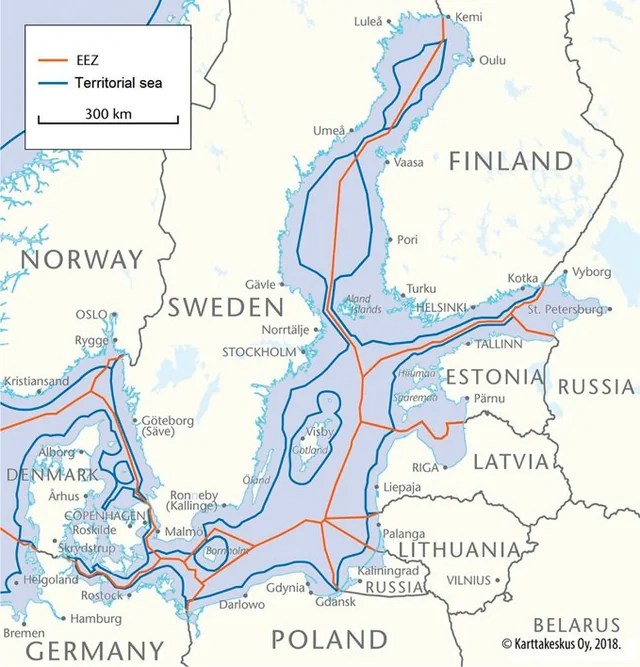
 Escalating Geopolitical Tensions in the Baltic Sea Region Between NATO and Russia
KillBait - News highlights delivered clearly and responsibly—no clickbait, no sensationalism
Photo: WIRED
2026-05-28 21:53 Geopolitics 17 


Adversaries are exploiting commercial phone location data to track US troops after years of Pentagon warnings
For nearly a decade, US defense officials, contractors, and intelligence analysts repeatedly warned the Pentagon that commercially available smartphone location data could expose the movements of American military personnel.Despite these alerts, the Department of Defense adopted only limited safeguards, leaving a broad ecosystem of data brokers largely untouched.
Now, US Central Command (Centcom) has officially acknowledged receiving multiple threat reports indicating that adversaries are actively exploiting commercial location data to surveil or target US personnel deployed in conflict zones.Investigations show that this risk was long understood within the military and intelligence community.As early as 2016, demonstrations revealed that purchased location data could track elite units from domestic bases to covert overseas operations.
Later reporting and research confirmed that data brokers were openly selling sensitive datasets tied to military personnel, including home addresses, movement patterns, and even health and financial information.In some cases, researchers were able to buy such data for as little as 12 cents per record.The US military itself has also used commercially acquired location data, including datasets that may involve US persons, sometimes without warrants.
Meanwhile, academic and defense-funded studies found that commercial trackers and advertising systems were deeply embedded in government networks and could expose sensitive operational information.
Recent findings also highlight that data tied to military and government personnel has flowed through major advertising platforms, and that location traces of US forces abroad can be reconstructed from massive datasets sold by brokers.
Despite recommendations from internal research groups—such as disabling advertising IDs, restricting certain browsers, and adopting stronger privacy protections—many of these measures were not implemented widely or quickly.
A bipartisan group of lawmakers has now urged the Pentagon to adopt long-recommended fixes, including disabling mobile advertising identifiers and restricting data broker access.
Critics argue that years of inaction have allowed a commercial surveillance industry to become a national security vulnerability, effectively enabling adversaries to track troop movements using legally purchased consumer data rather than hacking tools.
2300
Original title: The Pentagon Knew Enemies Could Track Troops’ Phones for Years. Now They Are
The AI system has determined that this news is not clickbait/sensationalist: : The headline is attention-grabbing but accurately reflects the article’s content without exaggeration or misleading claims, so it is not considered strongly clickbait. This has coincided with the opinion of the majority of users.
You may also be interested in...
Escalating Geopolitical Tensions in the Baltic Sea Region Between NATO and Russia
 Oil analyst warns U.S. fuel inventories may fall below critical levels amid Strait of Hormuz disruption
 Report Claims Trump Has Limited Public Appearances Amid Strained Iran Negotiations and Policy Criticism