
 Sebastian Kris eyes contract extension as Canberra Raiders prepare for Bulldogs clash
KillBait - News highlights delivered clearly and responsibly—no clickbait, no sensationalism
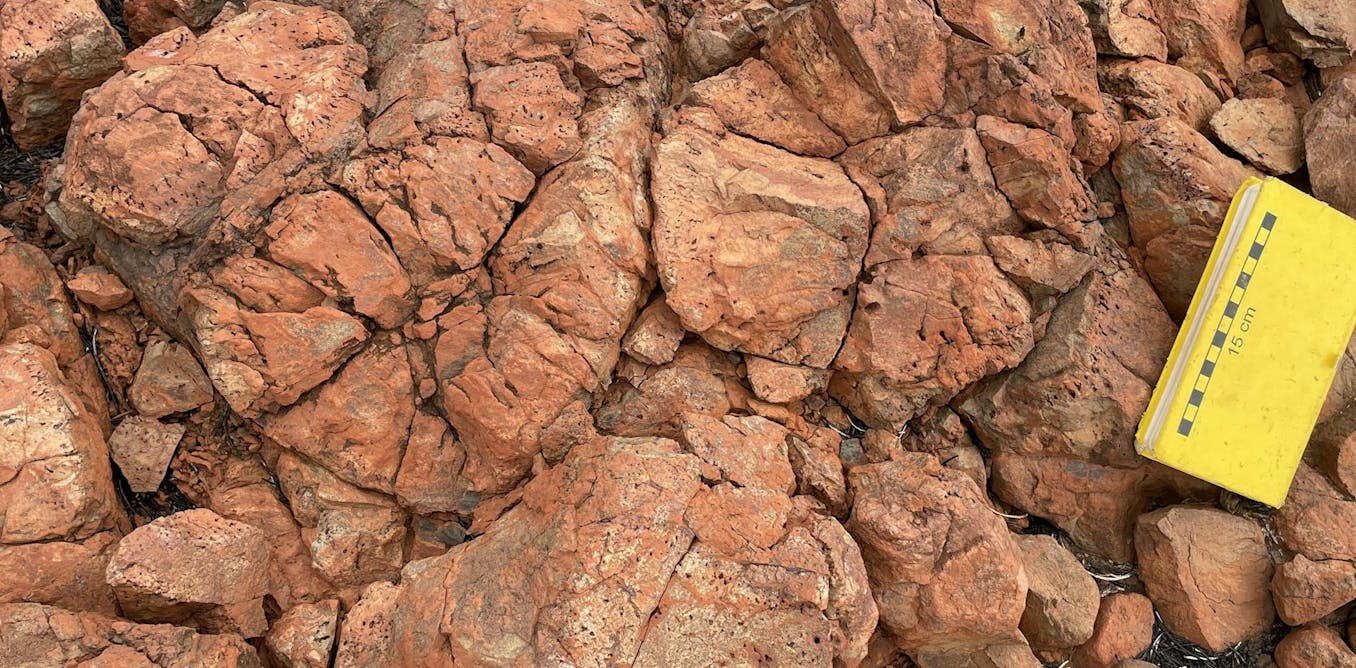
Photo: The Conversation
2026-07-07 22:24 Geology 10


Ancient Australian rocks shed light on Earth's early water recycling processes
A groundbreaking study of 3.1 billion-year-old rocks in Western Australia's Pilbara Craton has uncovered evidence of an ancient water cycle operating before modern plate tectonics.
Researchers from Adelaide University, Monash University, and the Geological Survey of Western Australia analysed lavas from the Whundo Group, which preserve a rare type of thin crust.
These rocks show chemical signatures similar to modern subduction zone volcanoes, indicating Earth was recycling surface water into its interior over 3 billion years ago.
The findings challenge previous assumptions about when Earth's deep water cycle began, revealing a process called 'dripduction' where soft crust sections sank into the mantle.
This discovery suggests Earth's water management systems were more advanced than previously thought, with implications for understanding planetary evolution.
The study, published in Nature Communications, highlights how ancient geological processes shaped our planet's water budget, offering new insights into Earth's early geology.
Full reading at The Conversation
2186
Original title: 3.1 billion-year-old rocks in Australia reveal a forgotten chapter of Earth's water cycle
The AI system has determined that this news is clickbait/sensationalist: : The original title uses hyperbolic language like 'forgotten chapter' and 'reveal' to create sensationalism, implying a major discovery that may not be fully substantiated by the article's content. This has coincided with the opinion of the majority of users.
You may also be interested in...
Sebastian Kris eyes contract extension as Canberra Raiders prepare for Bulldogs clash
 New Zealand's Fossil Record Offers Clues to Marine Extinction Risks
 Indian steel giant Jindal seeks to revive Whyalla steelworks with decarbonization plan