
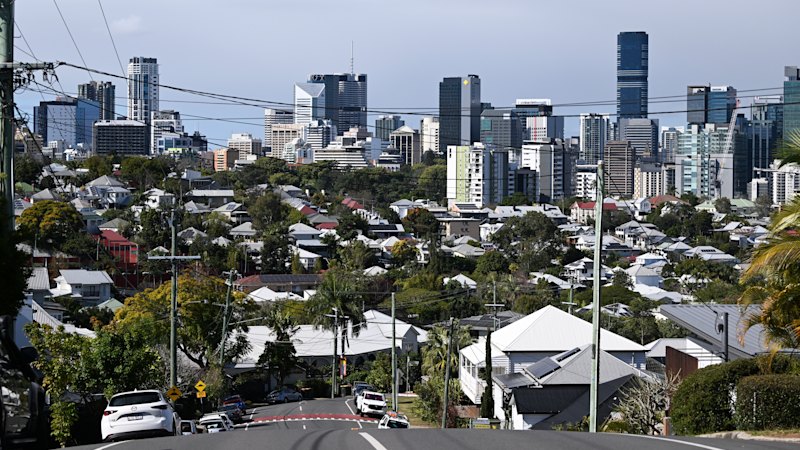
 Brisbane property prices continue rising as market momentum slows amid supply shortages and affordability pressures
KillBait - News highlights delivered clearly and responsibly—no clickbait, no sensationalism
Photo: The Nightly
2026-06-01 10:57 Economy 12 


Experts warn Brisbane housing market may face increased downside risks amid tax changes and weaker buyer demand
A property auction in Brisbane's affluent suburb of Ascot, where a house listed at $3.4 million failed to attract a single bid, has raised concerns about the strength of Australia's housing market.
The result contributed to a low auction clearance rate across Queensland and has intensified debate about whether Brisbane could be particularly vulnerable to a broader property downturn.
Economist Shane Oliver argues that several factors are creating challenging conditions for housing prices, including higher interest rates, recent tax changes affecting property investors, elevated property valuations, and growing political pressure to reduce immigration levels.
According to his analysis, Brisbane houses are significantly overvalued relative to rental yields, making the city one of the most exposed markets if conditions deteriorate.
While some Australian cities such as Brisbane, Adelaide, Perth and Darwin recently recorded price highs, other markets including Sydney, Melbourne, Canberra and Hobart have already experienced price declines.Real estate agents in Brisbane report reduced buyer activity, although they have not yet seen widespread price falls.
The Federal Budget's changes to investment property taxation are expected to discourage some investors from purchasing existing homes, potentially reducing demand.Immigration policy is also emerging as a key factor because population growth has contributed to housing shortages and rising rents.Lower migration targets proposed by political parties could reduce housing demand over time.
Despite these concerns, experts note that future outcomes will depend on inflation, interest rates, employment conditions, investor behaviour and global economic developments.Property prices could either weaken further or stabilise if economic conditions improve.
2224
Original title: Brisbane could be ground zero for a horror year in property
The AI system has determined that this news is clickbait/sensationalist: : The original title uses highly dramatic and emotive language such as 'ground zero' and 'horror year', which exaggerates uncertainty and implies a severe market collapse that remains speculative within the article. The content discusses risks and expert opinions rather than confirmed catastrophic outcomes. This has coincided with the opinion of the majority of users.
You may also be interested in...
Brisbane property prices continue rising as market momentum slows amid supply shortages and affordability pressures
 Fair Work Commission increases minimum wage by 4.75% following annual review amid economic pressures
 Fugitive wanted over 1999 Sydney nightclub stabbing arrested in Greece after 27 years