
 Exploring Hypocrisy and Poverty Through Poetry: A Reflection on Language Extinction
KillBait - News highlights delivered clearly and responsibly—no clickbait, no sensationalism
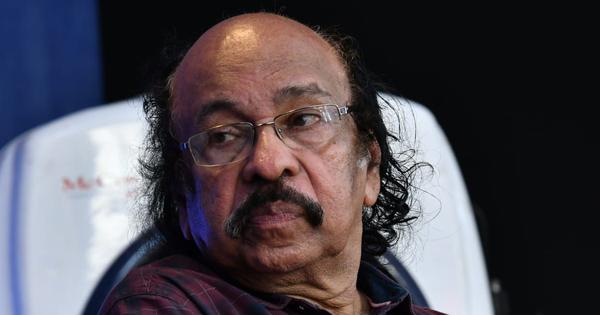
Photo: Scroll.in
2026-07-11 18:03 Literature 10


Exploring Sachidanandan's Poetic Resistance Against Social Inequality
The text delves into the socio-political dimensions of Sachidanandan's poetry, emphasizing its role in amplifying subaltern voices and challenging oppressive structures.
It highlights how his work transcends traditional aesthetics to engage with themes like class struggle, cultural identity, and resistance against hegemonic power.
Drawing parallels between Gandhi's vision of inclusive society and modern poetic practices, the analysis underscores the transformative potential of art in fostering dialogue between marginalized communities and mainstream discourse.
Sachidanandan's use of diverse linguistic forms—ranging from folk idioms to avant-garde styles—reflects his commitment to democratizing cultural expression.
The text also critiques the commodification of language under globalization, advocating for a politics of aesthetics that prioritizes inclusivity over exclusivity.
His poems, such as 'Pieta' and 'Noah looks back,' interrogate religious dogma and institutionalized power, positioning poetry as a tool for subversion rather than mere artistic expression.
The emphasis on 'impurity' in art—symbolizing resistance against homogenization—aligns with his belief that creativity thrives in the margins.
This synthesis of literary analysis and socio-political critique positions Sachidanandan's work as a vital contribution to contemporary discourses on cultural resistance.
2186
Original title:
The AI system has determined that this news is not clickbait/sensationalist: : The original title is absent, so no clickbait assessment can be made. The generated title and summary focus on the article's core themes of poetic resistance and socio-political engagement. This has coincided with the opinion of the majority of users.
You may also be interested in...
Exploring Hypocrisy and Poverty Through Poetry: A Reflection on Language Extinction
 A Novel Exploring Resilience Amid Bengal's Partition
 Sigmund Freud's 'The Interpretation of Dreams' and the Foundations of Psychoanalysis