
 Three residents still living in Granville SRO after end-of-June relocation deadline
KillBait - News highlights delivered clearly and responsibly—no clickbait, no sensationalism
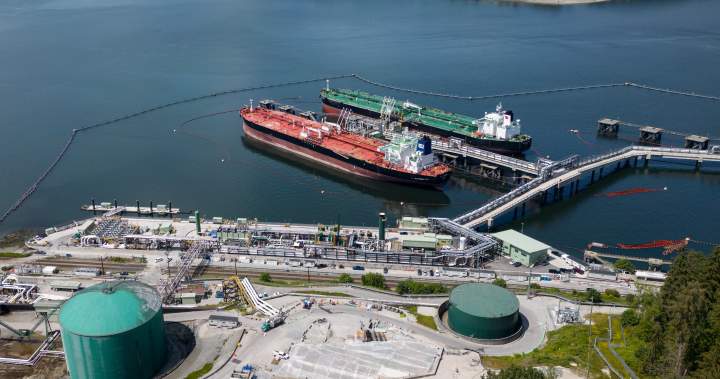
Photo: Global News
2026-07-02 20:09 Politics 10 


Federal government confirms continuation of B.C. North Coast oil tanker ban alongside new energy and infrastructure agreement
The federal government has confirmed it will fully maintain the North Coast oil tanker ban off the coast of northern British Columbia, according to Prime Minister Mark Carney and B.C.Premier David Eby.
The policy, originally implemented in 2019, restricts oil tankers carrying more than 12,500 metric tonnes of crude oil from operating in sensitive northern coastal waters.
The announcement comes amid renewed attention on the ban following a memorandum of understanding between the federal government and Alberta aimed at advancing plans for a new trans-provincial oil pipeline to Canada’s West Coast.
Despite earlier concerns that the pipeline discussions could weaken environmental protections, both Carney and Eby emphasized that the tanker ban remains firmly in place and aligned with any proposed pipeline route.
They framed the agreement as a balance between expanding Canada’s energy export capacity and safeguarding the ecological integrity of British Columbia’s northern coast, which supports a multibillion-dollar economy.The broader agreement also includes significant infrastructure and economic commitments for British Columbia.
These include $3 billion in funding for the Fraser River Tunnel Project, as well as support for the Red Chris mine expansion and the North Coast Transmission Line.
Federal officials estimate that these initiatives could help catalyse more than $200 billion in investment, while strengthening trade links with Asian markets.
The deal also highlights efforts to accelerate approvals for liquefied natural gas projects in the province, with a focus on working alongside private proponents, local communities, and First Nations.
Overall, the agreement is positioned as part of a broader strategy to diversify Canada’s energy exports while maintaining environmental protections in sensitive coastal regions.
2186
Original title: Ottawa will ‘fully’ maintain B.C. tanker ban, Carney and Eby say
The AI system has determined that this news is not clickbait/sensationalist: : The original title is factual and descriptive, clearly summarising the main point of the article without sensational language or misleading framing, so it is not considered clickbait. This has coincided with the opinion of the majority of users.
You may also be interested in...
Three residents still living in Granville SRO after end-of-June relocation deadline
 Poilievre criticizes Carney’s economic record, calling public perception an ‘illusion’
 Severe Ottawa storms force cancellation of Prime Minister Carney’s Canada Day speech in Edmonton