
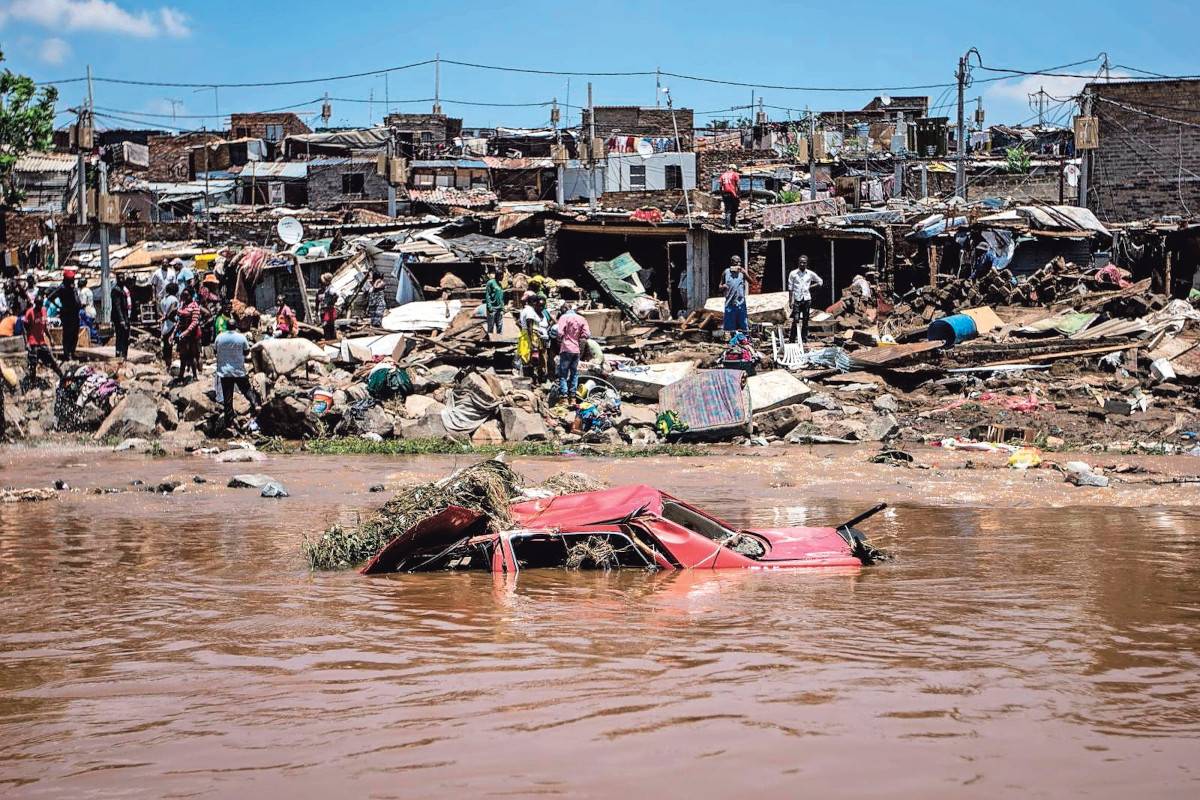
 Study urges overhaul of climate models to better incorporate inequality, power dynamics and Global South perspectives
KillBait - News highlights delivered clearly and responsibly—no clickbait, no sensationalism
Photo: TimesLIVE
2026-05-29 20:57 Climate change 10 


Free State soil study uses nematodes to monitor ecosystem health and climate change
Researchers at the University of the Free State (UFS) are investigating microscopic nematodes, also known as roundworms, found in soil across protected nature reserves in the Free State to better understand climate change and ecosystem health.
The project, led by Dr Candice Jansen van Rensburg from the department of zoology and entomology, received funding from the National Research Foundation-Foundational Biodiversity Information Programme for research running from 2026 to 2028.
The study forms part of an international collaboration between South African and Australian scientists focusing on soil biodiversity and environmental monitoring.
Although nematodes are tiny organisms, they are among the most abundant life forms on Earth and play a major ecological role by recycling nutrients in the soil.Their activity helps release nitrogen and other nutrients that plants require, improving soil quality and reducing reliance on fertilisers.
Scientists regard nematodes as important indicators of environmental conditions because their populations react quickly to changes in temperature, moisture, nutrients and ecological disturbances.
By analysing which nematode species are present and how their populations shift over time, researchers can identify broader environmental changes linked to climate variability.The latest phase of the project will focus on mononchida, a poorly studied group of predatory nematodes in South Africa.Researchers will also use DNA barcoding technology to improve species identification through genetic analysis.The collected data will be added to international biodiversity databases such as GenBank and the Barcode of Life Data System.
According to the researchers, Free State nature reserves are valuable research sites because much of the province has been altered by farming and development.
Long-term monitoring of nematode biodiversity in these protected areas could provide an early-warning system for climate-related environmental changes in sensitive grassland and savanna ecosystems.
2186
Original title: Roundworms under Free State soil could help scientists track climate change
The AI system has determined that this news is not clickbait/sensationalist: : The original title accurately reflects the subject of the article and does not exaggerate or sensationalise the findings. It clearly states that roundworms could assist scientists in tracking climate change. This has coincided with the opinion of the majority of users.
You may also be interested in...
Study urges overhaul of climate models to better incorporate inequality, power dynamics and Global South perspectives
 KZN police on high alert ahead of planned trucking protest and possible road blockades
 POPIA and PAIA Compliance in South Africa: A Human Rights Imperative for Businesses