
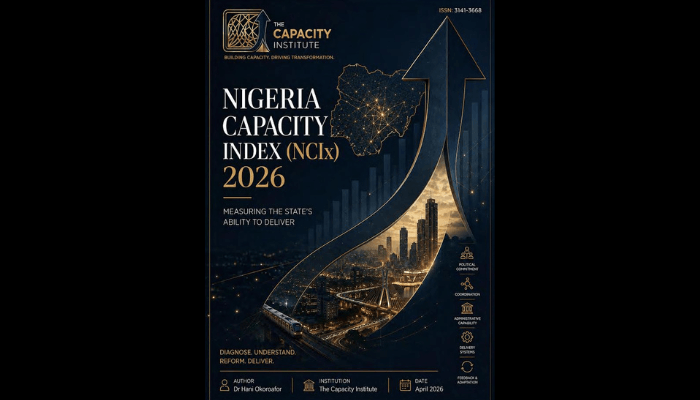
 Nigeria Capacity Index 2026 Says Stronger Institutions and Better Coordination Are Key to National Development
KillBait - News highlights delivered clearly and responsibly—no clickbait, no sensationalism

Photo: Businessday NG
2026-07-21 13:08 Opinion 10


Guidance on Implementing IFRS S1 & S2 for Sustainability Reporting in Nigeria
This article discusses the challenges and guidance needed for implementing IFRS S1 & S2 sustainability standards in Nigeria.The Financial Reporting Council (FRC) requires entities to identify and assess materiality of sustainability-related risks and opportunities (SRRO), especially under Phase 2 of the implementation roadmap.
While IFRS S2 focuses on climate-related risks, there's a gap in standards for other sustainability topics, leading to confusion among reporting entities.
The author emphasizes that materiality assessment under these standards should prioritize financial impacts over social/environmental impact, aligning with investor interests.
Entities previously focused on corporate social responsibility (CSR) but now face clarity issues in distinguishing between financial and impact materiality.The article highlights the need for clear guidelines to avoid double-reporting practices and ensure compliance with FRC requirements.Key concepts like integrated reporting's six capitals are also mentioned as part of the materiality framework.
Full reading at Businessday NG
2186
Original title: A guide to IFRS S1 & S2 sustainability implementation in Nigeria
The AI system has determined that this news is not clickbait/sensationalist: : The original title is straightforward and informative without sensational language or exaggerated claims, making it suitable for a professional audience. This has coincided with the opinion of the majority of users.
You may also be interested in...
Nigeria Capacity Index 2026 Says Stronger Institutions and Better Coordination Are Key to National Development
 Decisions Shape Your Destiny
 Strong Institutions, Not Short-Term Fixes, Are Key to Africa's Long-Term Development