
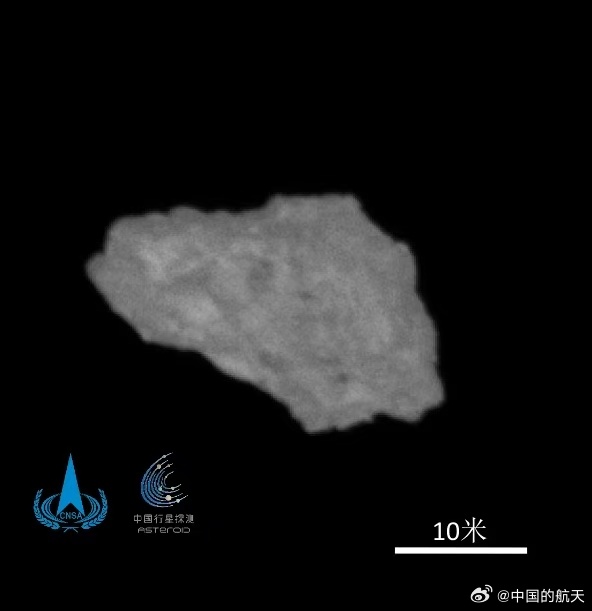
 China's Tianwen 2 Probe Begins Sample Collection Mission on Asteroid Kamo‘oalewa
KillBait - News highlights delivered clearly and responsibly—no clickbait, no sensationalism
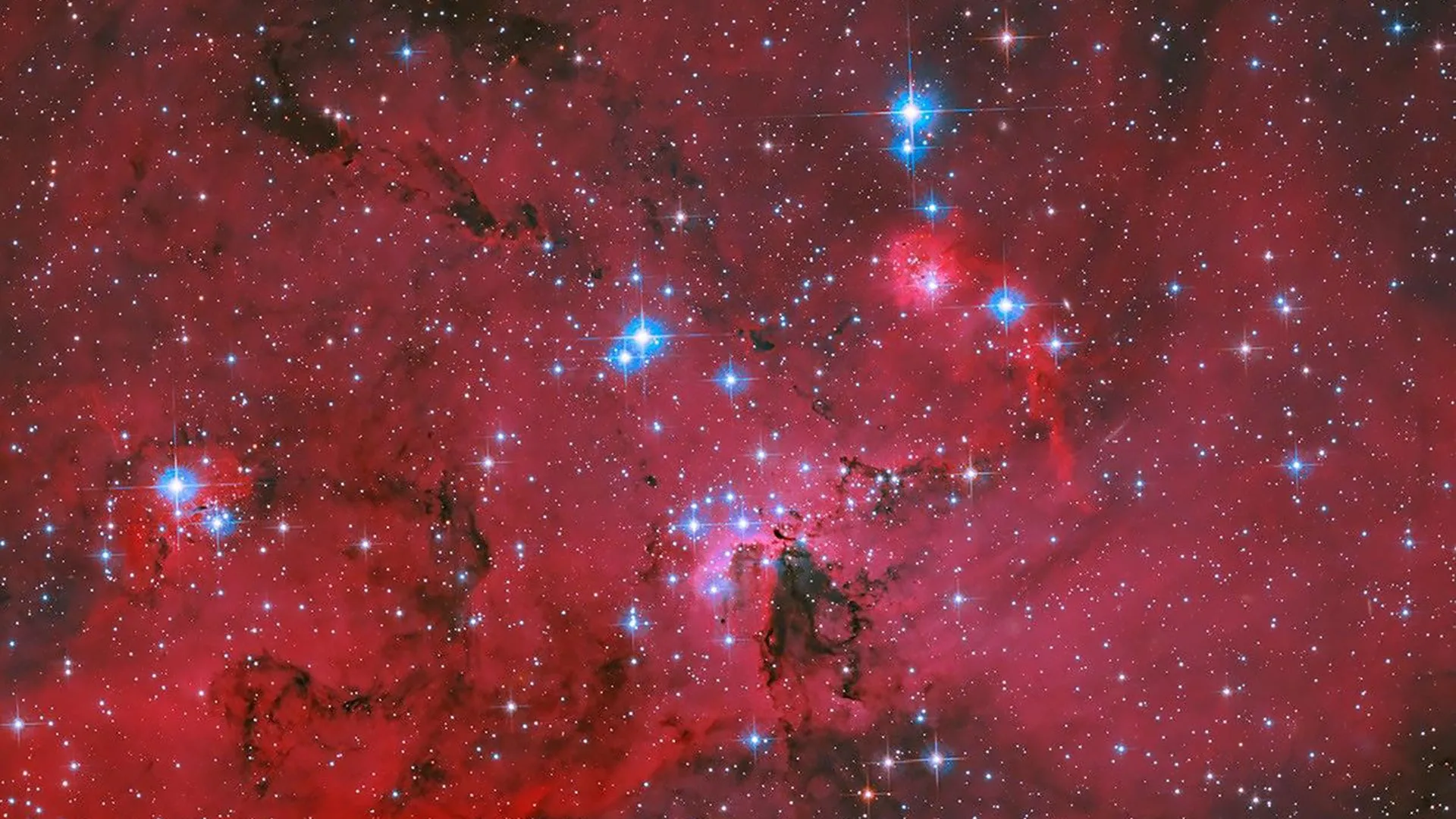
Photo: ScienceDaily
2026-07-06 02:08 Astronomy 12


Hubble observations of LH 95 provide new insights into the long-term growth of young stars
NASA's Hubble Space Telescope has produced a detailed image of LH 95, a large star-forming region located in the Large Magellanic Cloud, a dwarf galaxy that orbits the Milky Way.
The image reveals brilliant blue and white massive stars embedded within glowing clouds of hydrogen gas, along with dark dust filaments that have resisted erosion from intense stellar radiation.
Scientists used these observations to study approximately 2,500 pre-main-sequence stars, which are young stellar objects that have accumulated most of their mass but have not yet begun hydrogen fusion in their cores.
By analyzing the hydrogen-alpha emission produced in the region, researchers found that these developing stars continue to accrete gas and dust from their surrounding disks for several million years.
The results indicate that the rate of material accretion gradually decreases over time but lasts longer than some previous models had suggested, improving astronomers' understanding of how stars reach their final masses.The observations also show that LH 95 contains multiple generations of stars rather than a single burst of star formation.
One particularly massive star, estimated to contain 60 to 70 times the Sun's mass, appears to be roughly one million years younger than neighboring stars that are around four million years old.
Because LH 95 is relatively nearby and less obscured by dust than many similar regions within the Milky Way, it provides an excellent laboratory for studying stellar evolution.
The findings also demonstrate how Hubble continues to complement newer observatories, including the James Webb Space Telescope, in advancing knowledge of how stars form and evolve.
2226
Original title: NASA's Hubble captures a crimson stellar nursery sparkling with blue and white stars
The AI system has determined that this news is not clickbait/sensationalist: : The original title accurately describes the primary subject of the article without using exaggerated, misleading, or sensational language. While it is descriptive and visually engaging, it faithfully reflects the content of the research. This has coincided with the opinion of the majority of users.
You may also be interested in...
China's Tianwen 2 Probe Begins Sample Collection Mission on Asteroid Kamo‘oalewa
 NASA's Hubble Reveals 500,000 Stars in Ancient Globular Cluster
 LIGO Detects Possible Primordial Black Hole Linked to Dark Matter