KillBait - News highlights delivered clearly and responsibly—no clickbait, no sensationalism
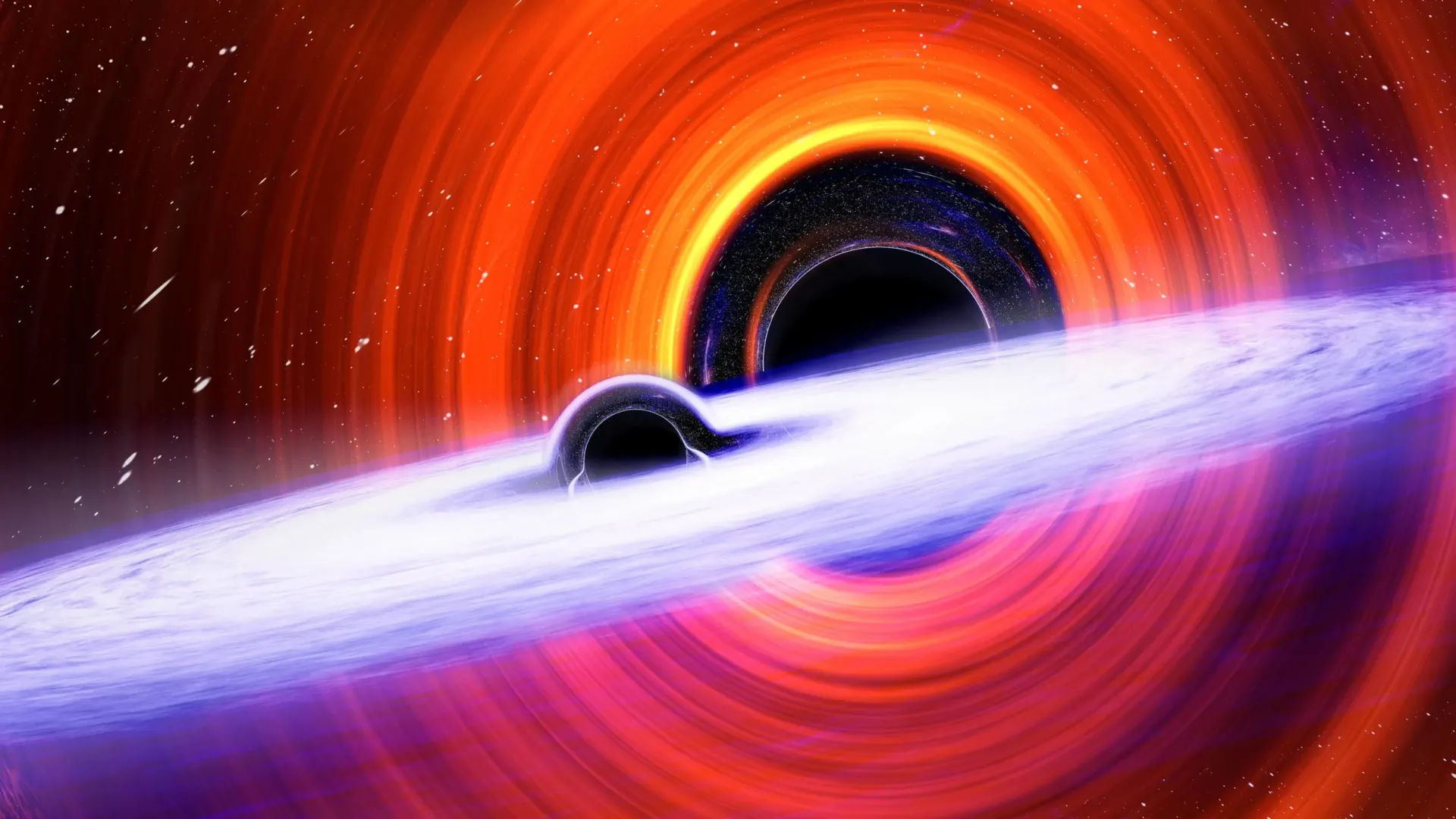
Photo: ScienceDaily
2026-07-04 13:30 Astronomy 10 


LIGO Detects Possible Primordial Black Hole Linked to Dark Matter
A recent LIGO signal has sparked scientific intrigue, potentially pointing to a primordial black hole that could explain dark matter's elusive nature.
Researchers suggest the signal might originate from a black hole formed in the universe's early moments, offering a novel approach to understanding dark matter.The study, published in ScienceDaily, highlights how gravitational wave detections could bridge gaps in cosmic mysteries.While the signal's origin remains unconfirmed, its implications challenge existing theories about dark matter's composition.
Scientists emphasize the need for further observations to validate the hypothesis, as this discovery could redefine our understanding of cosmic structure and fundamental physics.The research underscores the role of advanced gravitational wave detectors in unraveling the universe's deepest enigmas.

2186
Original title: A strange LIGO signal could reveal the missing link behind dark matter
The AI system has determined that this news is clickbait/sensationalist: : The original title uses sensational language like 'strange' and 'missing link,' which exaggerate the significance of the discovery to attract attention. This has coincided with the opinion of the majority of users.
You may also be interested in...
 NASA's PROMISE rover: A Mars prototype repurposed for lunar exploration
 Scientists warn that massive satellite constellations could threaten astronomical observations and dark skies