
 Socrates' Unusual Habit: Standing Still for Hours in Deep Thought
KillBait - News highlights delivered clearly and responsibly—no clickbait, no sensationalism
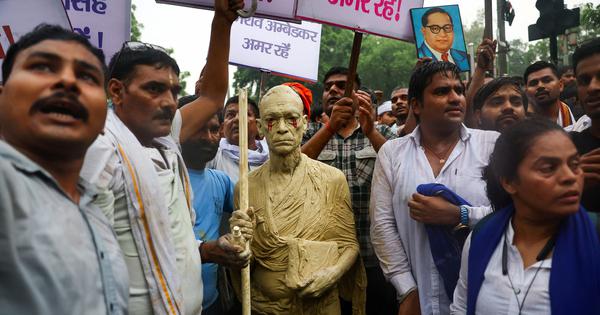
Photo: Scroll.in
2026-07-24 05:53 History 10


Hunger Strikes in India: From Gandhi to Wangchuk, A Historical Perspective
The article explores the historical significance of hunger strikes in India, comparing the methods of Mahatma Gandhi with the recent fast of environmental activist Sonam Wangchuk.It highlights how hunger strikes have been a powerful tool for social and political change, despite their limited direct success.
The piece discusses key historical events like Gandhi's 1919 Rowlatt Satyagraha, Potti Sriramulu's 1952 fast for Andhra Pradesh, and modern movements such as Anna Hazare's anti-corruption protests.
The article argues that while hunger strikes may not always achieve their immediate goals, they play a crucial role in mobilizing public support and raising awareness.Wangchuk's 26-day fast against the NEET-UG exam leak and its aftermath is analyzed as a continuation of this tradition.The piece emphasizes that the true success of hunger strikes lies in their ability to galvanize the public, not just in changing policies.It concludes that the enduring relevance of hunger strikes in India is a testament to their power as a form of non-violent resistance.
2186
Original title: Gandhi to Wangchuk, what history says about the success of hunger strikes in India
The AI system has determined that this news is clickbait/sensationalist: : The original title uses sensational language like 'Off Centre' and implies a direct comparison between Gandhi and Wangchuk, which is more attention-grabbing than informative. This has coincided with the opinion of the majority of users.
You may also be interested in...
Socrates' Unusual Habit: Standing Still for Hours in Deep Thought
 India's Sovereignty: A Brutal Struggle Against Fragmentation
 Myths and Real-World Locations Intersect in Ancient Maps of Odysseus's Journey