
 EU lawmaker investigating Pegasus spyware was later targeted with the same surveillance tool
KillBait - News highlights delivered clearly and responsibly—no clickbait, no sensationalism
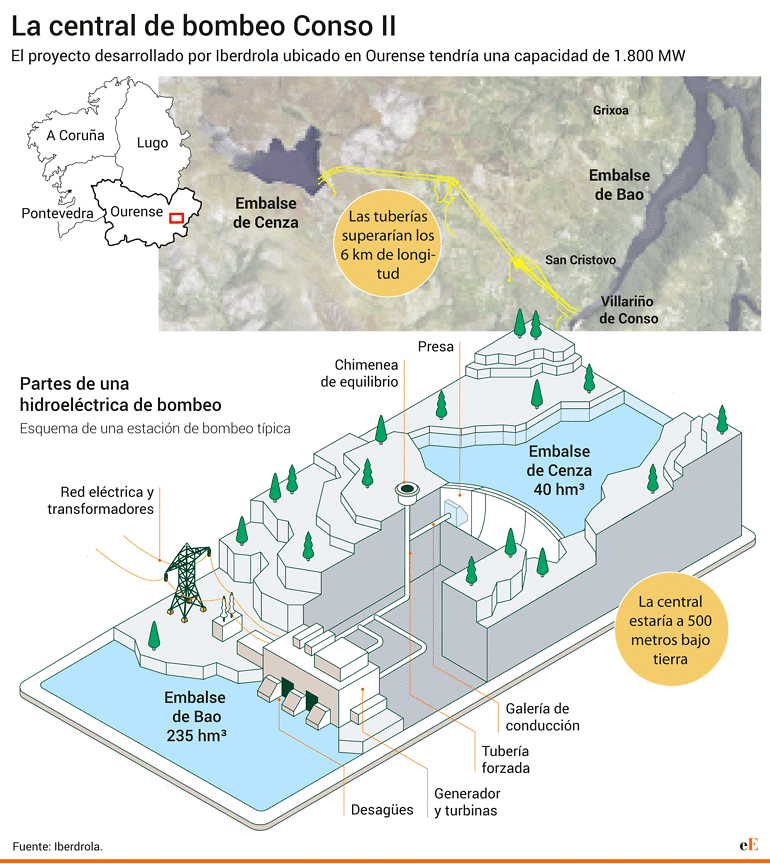
Photo: La mirada del mendigo
2026-07-03 11:47 Technology 10 


Hydropower Reservoirs as Seasonal Energy Storage for a Renewable Grid
This article explores the role of Spain’s existing hydroelectric reservoirs as a form of large-scale, long-duration energy storage in a future renewable-based electricity system.
It argues that, although Spain has limited rainfall across much of its territory, it possesses significant water storage capacity in reservoirs—about 56,043 hm³.In energy terms, this corresponds to approximately 23,011 GWh, which is roughly equivalent to one month of winter electricity demand.
The author suggests that if a large portion of existing hydroelectric infrastructure were converted to reversible pumped-storage operation, these reservoirs could function as seasonal energy buffers.
In such a system, water would be pumped uphill during periods of surplus electricity—particularly when wind and solar generation exceeds demand—and released during periods of low renewable output, especially in winter when solar irradiation is weaker.
This would help stabilize a grid with high penetration of renewables and reduce dependence on fossil-fuel-based combined cycle plants, potentially enabling a near-zero direct CO2 electricity system.
The article also compares pumped hydro storage efficiency (around 75%) with other proposed technologies such as green hydrogen (around 35%), which the author criticizes as inefficient.An example investment is cited: €1.
5 billion for an 1,800 MW pumped-storage project (Conso II), presented as economically viable due to electricity price arbitrage—buying electricity cheaply to pump water uphill and generating during high-price periods.
The piece emphasizes that much of the environmental impact of reservoirs has already occurred, so optimizing existing infrastructure is preferable to building entirely new systems.
It also touches on broader debates about energy markets, regulation, and whether private operators prioritize social needs such as water supply or purely financial incentives.Overall, it presents pumped hydro as a practical, scalable, and underused tool for long-term renewable energy storage.
The comment section expands the discussion to regulatory responsibility, drought risks, market behavior, and the tension between public interest and private profit in energy infrastructure.
Overall, the article is an analytical and opinion-driven argument in favor of expanding pumped hydro storage as a key component of Spain’s future energy system.
Full reading at La mirada del mendigo
2186
Original title: La batería a largo plazo: los embalses
The AI system has determined that this news is not clickbait/sensationalist: : The title is descriptive and directly reflects the article’s topic about reservoirs used as long-term energy storage, without sensational language or misleading framing. This has coincided with the opinion of the majority of users.
You may also be interested in...
EU lawmaker investigating Pegasus spyware was later targeted with the same surveillance tool
 Meta Introduces Paid Subscription Plan for Advanced Smart Glasses Features
 Last day of Amazon Prime Day features over 140 tech deals across categories