
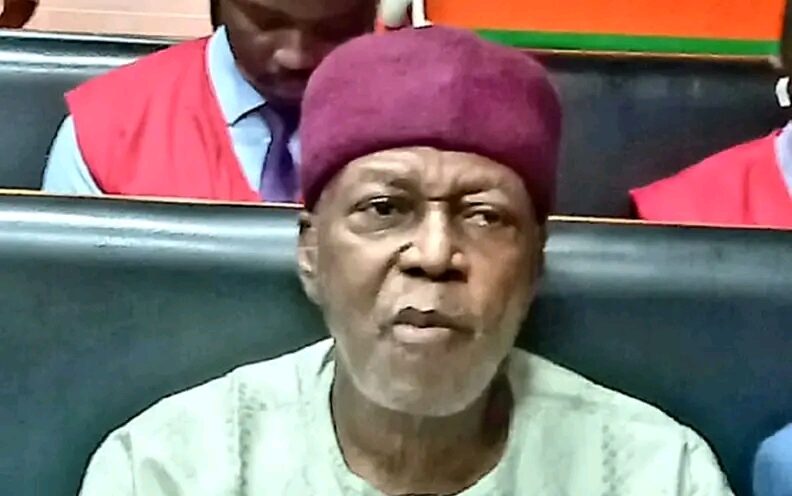
 Former Taraba Governor's Official Testifies to Misuse of State Funds
KillBait - News highlights delivered clearly and responsibly—no clickbait, no sensationalism
Photo: Daily Trust
2026-07-16 14:58 Justice 10


Legal Process and Accountability in Nigeria's Anti-Corruption Efforts
The article discusses the legal journey of Ibrahim Magu, former head of the Economic and Financial Crimes Commission (EFCC), who was suspended without charge in 2020 amid allegations of misconduct.His counsel argued for due process, which was not fully met, leading to his eventual reinstatement.
Six years later, the Federal High Court ordered the forfeiture of 48 properties linked to former Attorney-General Abubakar Malami, whose case built on the initial accusations against Magu.The court's decision highlights a non-conviction-based asset forfeiture process, emphasizing proof of lawful origins for disputed assets.While Malami faces ongoing money laundering charges, the ruling underscores the importance of institutional accountability over personal vendettas.The piece critiques how political power can manipulate legal systems but also celebrates the judiciary's role in ensuring fairness.It concludes that true accountability requires transparent processes and adherence to the rule of law, not just punitive actions.
2187
Original title: Magu’s travail and Malami’s forfeiture: The Wheel of accountability turns
The AI system has determined that this news is not clickbait/sensationalist: : The original title uses metaphorical language ('wheel of accountability turns') but doesn't exaggerate facts. It's more analytical than sensationalist. This has coincided with the opinion of the majority of users.
You may also be interested in...
Former Taraba Governor's Official Testifies to Misuse of State Funds
 Federal High Court Denies Bail to Man Accused of Planning School Attacks in Abuja
 28-Year-Old Man Gets 7-Year Sentence for Social Media Cannabis Ad