
 NASA’s Nancy Grace Roman Space Telescope Nears August Launch to Map the Universe and Study Dark Energy
KillBait - News highlights delivered clearly and responsibly—no clickbait, no sensationalism
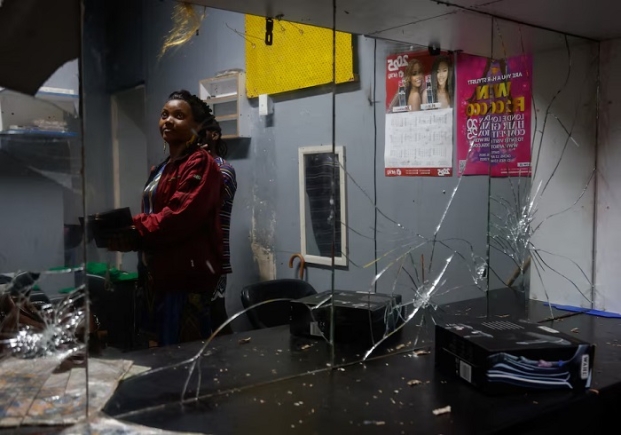
Photo: com.gh
2026-06-17 04:34 Conflict 10 


Long-term African migrants in Durban displaced amid xenophobic violence
A wave of xenophobic violence in Durban, South Africa, has forced many African migrants, including long-term residents, to flee their homes and businesses.Among them is Princess Adjei, a 33-year-old Ghanaian-born woman who moved to South Africa as a child and built her life in Durban.She ran a hair salon downtown, having lived in the country for most of her life, attended local schools, and spoken Zulu.
However, during an anti-migrant protest in May, demonstrators looted her salon, destroying equipment and inventory worth thousands of dollars and leaving her without income.
Unable to pay rent, Adjei and her teenage son now sleep on the street alongside hundreds of other displaced migrants outside a government office, hoping for assistance with residency verification and protection.
The unrest, linked to an anti-immigration movement known as March and March, has led to widespread displacement and at least five deaths, according to reports.
The group denies responsibility for violence, claiming it only protests illegal immigration, but many migrants and observers say protests often coincide with looting and attacks on foreign nationals.Some migrants report being moved between shelters and then expelled, with limited police protection.Others describe being chased away or dispersed using tear gas and rubber-coated projectiles.
Authorities and political leaders in KwaZulu-Natal acknowledge tensions over migration but differ on causes, with some blaming illegal immigration rather than xenophobia.
Migrants, many of whom have lived in South Africa since childhood, describe feeling increasingly unsafe and targeted despite long-standing community ties.
As tensions escalate, a deadline issued by protest organizers for undocumented migrants to leave the country has deepened fear among affected communities.
2186
Original title: African migrants with deep roots in South Africa flee xenophobic attacks
The AI system has determined that this news is not clickbait/sensationalist: : The original title is factual and descriptive, typical of Reuters-style international reporting. It does not use sensational language, exaggeration, or emotional baiting designed to artificially increase clicks. This has coincided with the opinion of the majority of users.
You may also be interested in...
NASA’s Nancy Grace Roman Space Telescope Nears August Launch to Map the Universe and Study Dark Energy
 Collection of 35 Mid-Century American Beach Travel Posters Showcasing Coastal Tourism Destinations
 Political analyst criticizes use of JD Vance to defend Trump’s inflation remarks