
 New targeted daily pill shows significant survival improvement for advanced pancreatic cancer patients
KillBait - News highlights delivered clearly and responsibly—no clickbait, no sensationalism
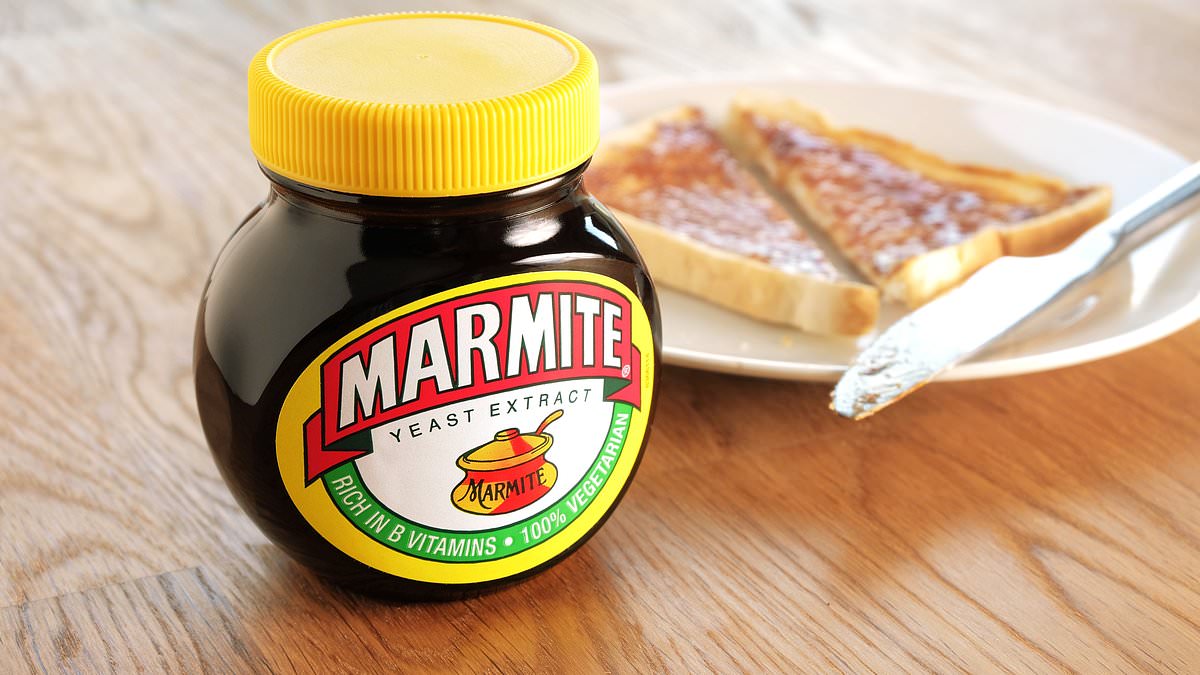
Photo: Mail Online
2026-05-29 16:48 Health 13 


Marmite: health benefits and cautions of a divisive favourite
Marmite, the long-standing British yeast extract spread, is examined for its nutritional profile and potential health benefits.The article outlines Marmite’s origin, noting its production in Burton-upon-Trent and its fortification with B vitamins such as thiamin (B1), riboflavin (B2), niacin (B3), folic acid and vitamin B12.
Nutritionist Rob Hobson explains that these B vitamins support energy metabolism and nervous system function, making Marmite particularly valuable for vegetarians and vegans who may struggle to obtain B12 from plant-based diets.A standard 8g serving contains around 21 calories, no sugar or fat, and roughly 2.7g of protein, but it is relatively high in sodium, with about 0.86g per 8g serving.Health professionals advise mindful consumption, especially for those on low-sodium diets.The NHS recommends limiting salt to 6g per day, with Marmite contributing a meaningful fraction of that limit.
The piece also discusses how Marmite can be incorporated into meals—spreading on wholegrain toast with eggs for a balanced option, or using a small amount to enhance soups and gravies.
While the product can support energy and nervous system health due to B vitamins, experts caution against relying on Marmite alone for nutrient intake and highlight that many Marmite-based ready-meals and snacks tend to be high in calories, salt and saturated fats.The article closes with practical serving ideas and notes that Marmite can be enjoyed in moderation as part of a varied, fibre-rich diet.
2241
Original title: Is Marmite good for you? Experts reveal the surprising health perks of the iconic love-it-or-hate-it spread
The AI system has determined that this news is clickbait/sensationalist: : The original title uses sensational phrasing to provoke strong reactions ('love-it-or-hate-it') and promises health perks in a clickbait tone. This has coincided with the opinion of the majority of users.
You may also be interested in...
New targeted daily pill shows significant survival improvement for advanced pancreatic cancer patients
 UK MPs to Debate NHS Single Patient Record Aiming to Improve Care Coordination
 Nottingham maternity services face scrutiny over unsafe care, poor culture and systemic failures