
 Schmigadoon! wins Best Musical as Death of a Salesman and Ragtime collect multiple honours at the 2026 Tony Awards
KillBait - News highlights delivered clearly and responsibly—no clickbait, no sensationalism
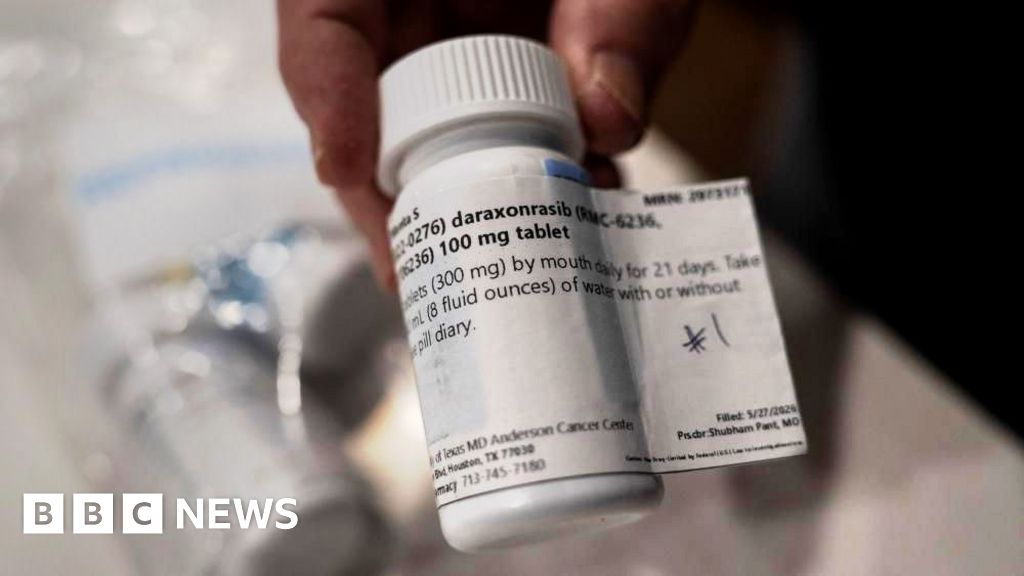
Photo: BBC
2026-06-01 09:51 Health 13 


New targeted daily pill shows significant survival improvement for advanced pancreatic cancer patients
A new clinical trial has shown that a once-daily pill called daraxonrasib can significantly extend the survival of patients with advanced pancreatic cancer, offering what experts have described as a major breakthrough in treatment.
The study involved 500 patients across North America, Europe, and Asia, many of whom had tumours containing KRAS gene mutations, which are present in over 90% of pancreatic cancers and drive tumour growth.Results from the trial demonstrated that patients receiving standard chemotherapy had an average survival time of 6.6 months, whereas those treated with daraxonrasib survived for an average of 13.2 months, nearly doubling life expectancy in this group.In addition to improved survival outcomes, the drug was associated with fewer severe side-effects compared with chemotherapy, with 43.6% of patients experiencing serious adverse effects versus 57.5% in the chemotherapy group.Daraxonrasib works by targeting and inhibiting the KRAS mutation, effectively blocking a key mechanism that allows cancer cells to grow and spread.The trial was led by American researchers and presented at a major oncology conference in Chicago.Experts have described the findings as potentially “landscape-changing” for patients with metastatic pancreatic cancer carrying KRAS mutations.
Pancreatic cancer remains one of the deadliest major cancers, often diagnosed late due to vague early symptoms such as jaundice, weight loss, fatigue and digestive changes.
In the UK alone, around 11,500 people are diagnosed each year, with approximately 10,200 deaths, highlighting the urgency for more effective treatments.
Charities and clinicians have welcomed the results, though they emphasise the need to ensure rapid access to promising therapies such as this within the UK healthcare system.
While further evaluation and regulatory review are still required, the findings represent a hopeful step forward in improving outcomes for a disease that has historically had very limited treatment options.
2243
Original title: Daily pill doubles survival time for pancreatic cancer patients
The AI system has determined that this news is not clickbait/sensationalist: : The original title is straightforward and accurately reflects the main finding of the article without exaggeration or sensational language beyond standard medical reporting. This has coincided with the opinion of the majority of users.
You may also be interested in...
Schmigadoon! wins Best Musical as Death of a Salesman and Ragtime collect multiple honours at the 2026 Tony Awards
 Brighton reject two Tottenham bids for centre-back Jan Paul van Hecke
 Lammy challenges JD Vance over remarks linking UK murder to migration