
 NASA Announces Artemis III Test Mission Crew Featuring ESA Astronaut Luca Parmitano
KillBait - News highlights delivered clearly and responsibly—no clickbait, no sensationalism
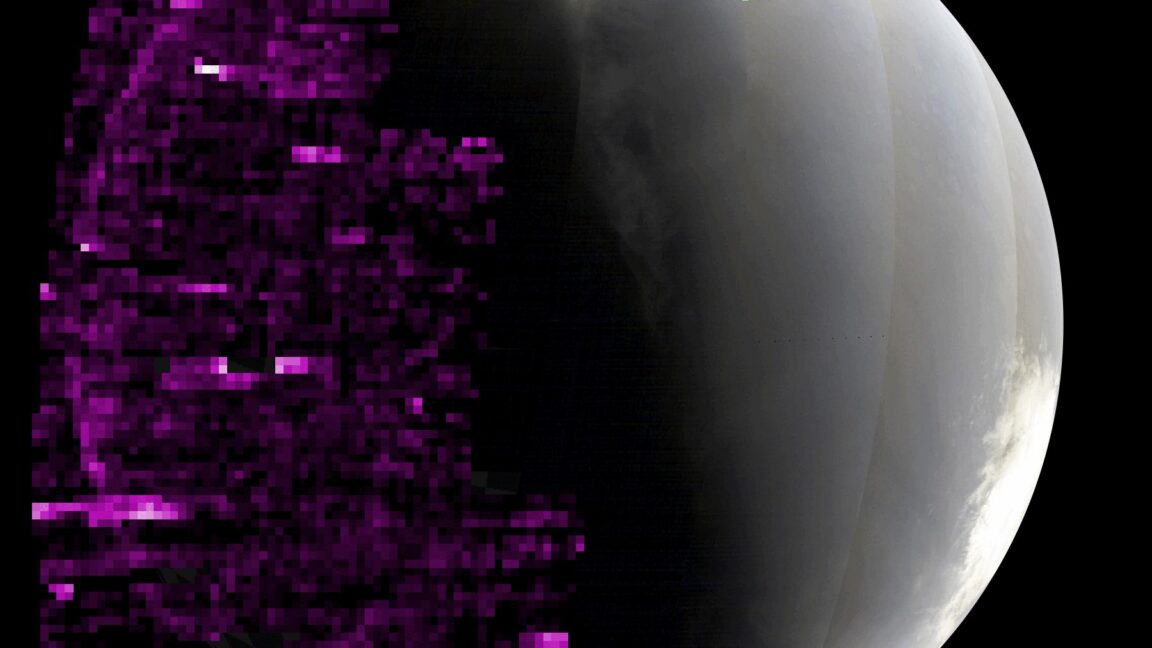
Photo: Ars Technica
2026-06-05 13:09 Astronomy 16 


NASA Ends MAVEN Mission After Loss of Contact With Mars Orbiter Following 11 Years of Scientific Operations
NASA has officially ended efforts to recover the MAVEN (Mars Atmosphere and Volatile Evolution) spacecraft after losing contact with it in December 2025.
The spacecraft, which had been operating successfully around Mars since 2014, disappeared after a routine occultation event when it passed behind the planet and failed to re-establish communications with Earth.Engineers attempted for months to restore contact by listening for weak signals and transmitting commands, but recovery efforts were unsuccessful.Analysis of limited telemetry recovered after the anomaly suggests that MAVEN was spinning at approximately 2.7 revolutions per minute, an unexpected rate indicating a serious spacecraft malfunction.
Investigators believe the loss of stable orientation likely prevented the solar arrays from properly facing the Sun, causing the spacecraft to lose power and become permanently inoperative.The exact cause of the failure may never be determined.Despite its sudden end, MAVEN is considered a highly successful mission.Its primary objective was to study how Mars lost much of its atmosphere over billions of years.
The spacecraft provided valuable evidence about atmospheric escape processes, including sputtering, and observed how solar storms influence the Martian atmosphere.
Scientists credit MAVEN with significantly improving understanding of the planet’s climatic evolution and its transition from a wetter, warmer world to the cold, dry environment seen today.
MAVEN also played an important role as a communications relay for Mars surface missions, supporting data transmission from rovers such as Curiosity and Perseverance.Although NASA still has four relay orbiters available, MAVEN handled a disproportionately large share of returned science data.
The agency is now pursuing a next-generation commercial Mars Telecommunications Network, which it hopes to deploy during the 2030s to support future exploration missions.
2296
Original title: After 11 years at Mars, NASA's MAVEN spacecraft went out with a whisper
The AI system has determined that this news is not clickbait/sensationalist: : The title accurately reflects the main event reported in the article—the end of the MAVEN mission after 11 years at Mars. While the phrase 'went out with a whisper' is somewhat poetic, it is not misleading or sensationalized and correctly describes the quiet loss of communication with the spacecraft. This has coincided with the opinion of the majority of users.
You may also be interested in...
NASA Announces Artemis III Test Mission Crew Featuring ESA Astronaut Luca Parmitano
 Space-Qualified 6 mm Metasurface Lens Demonstrates Satellite-Level Solar Magnetic Field Measurements
 China Begins Infrastructure Development for the CZ-9 Super Heavy Rocket with Potential Support for Extremely Large Payload Fairings