
 NASA Announces Artemis III Test Mission Crew Featuring ESA Astronaut Luca Parmitano
KillBait - News highlights delivered clearly and responsibly—no clickbait, no sensationalism
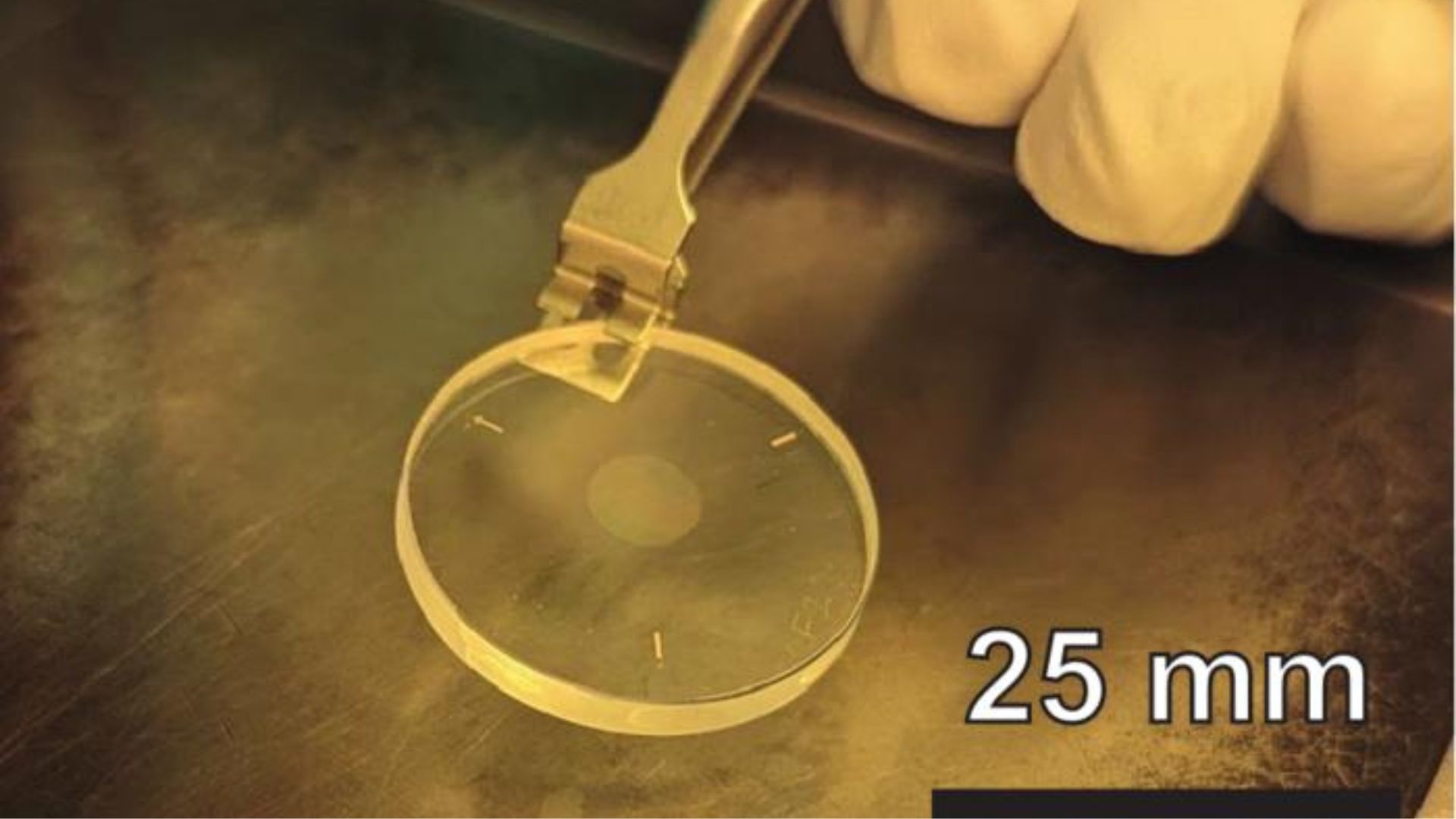
Photo: Interesting Engineering
2026-06-11 02:45 Astronomy 10 


Space-Qualified 6 mm Metasurface Lens Demonstrates Satellite-Level Solar Magnetic Field Measurements
Researchers at the University of California San Diego, working with BAE Systems Space & Mission Systems, have developed a space-qualified optical metasurface measuring only six millimeters in diameter that could significantly reduce the size, complexity, and cost of future space-based solar observation instruments.
Metasurfaces use nanoscale structures to manipulate light in ways that traditional lenses and mirrors cannot, allowing multiple polarization measurements to be captured simultaneously.
The device was designed to improve the monitoring of solar magnetic fields, which are critical for predicting space weather events such as coronal mass ejections that can disrupt satellites, communications systems, and power grids on Earth.
Conventional space telescopes often rely on moving optical components to collect polarization data in multiple exposures, requiring expensive stabilization systems to compensate for spacecraft vibrations.
The new metasurface eliminates moving parts by splitting incoming sunlight into several polarization channels at the same time, enabling all necessary measurements to be captured in a single image.To validate the technology, the researchers integrated the component into a custom telescope and tested it at the Dunn Solar Telescope in New Mexico.The instrument successfully mapped magnetic fields within active sunspots.
When the results were compared with observations from NASA’s Solar Dynamics Observatory satellite, the measurements were found to be nearly identical.The metasurface also passed rigorous vibration and temperature testing conducted by BAE Systems, achieving space-qualified status.
Supported by five years of NASA-funded development, the team has submitted a proposal for a mission concept study and hopes to eventually deploy the technology on a space mission.The research was published in Science Advances on June 10, 2026.
Full reading at Interesting Engineering
2187
Original title: Tiny 6mm device matches NASA satellite accuracy in sunspot mapping
The AI system has determined that this news is not clickbait/sensationalist: : The title accurately reflects the article's main finding and does not rely on exaggerated or misleading claims. While it emphasizes the small size of the device, that detail is central to the technological achievement described. This has coincided with the opinion of the majority of users.
You may also be interested in...
NASA Announces Artemis III Test Mission Crew Featuring ESA Astronaut Luca Parmitano
 China Begins Infrastructure Development for the CZ-9 Super Heavy Rocket with Potential Support for Extremely Large Payload Fairings
 Recurring Air Leaks in ISS Russian Zvezda Module Prompt Temporary Precautionary Shelter in Crew Dragon