
 BTS Member Teases Samsung's Galaxy Z Fold 8 Ahead of Unpacked Event
KillBait - News highlights delivered clearly and responsibly—no clickbait, no sensationalism
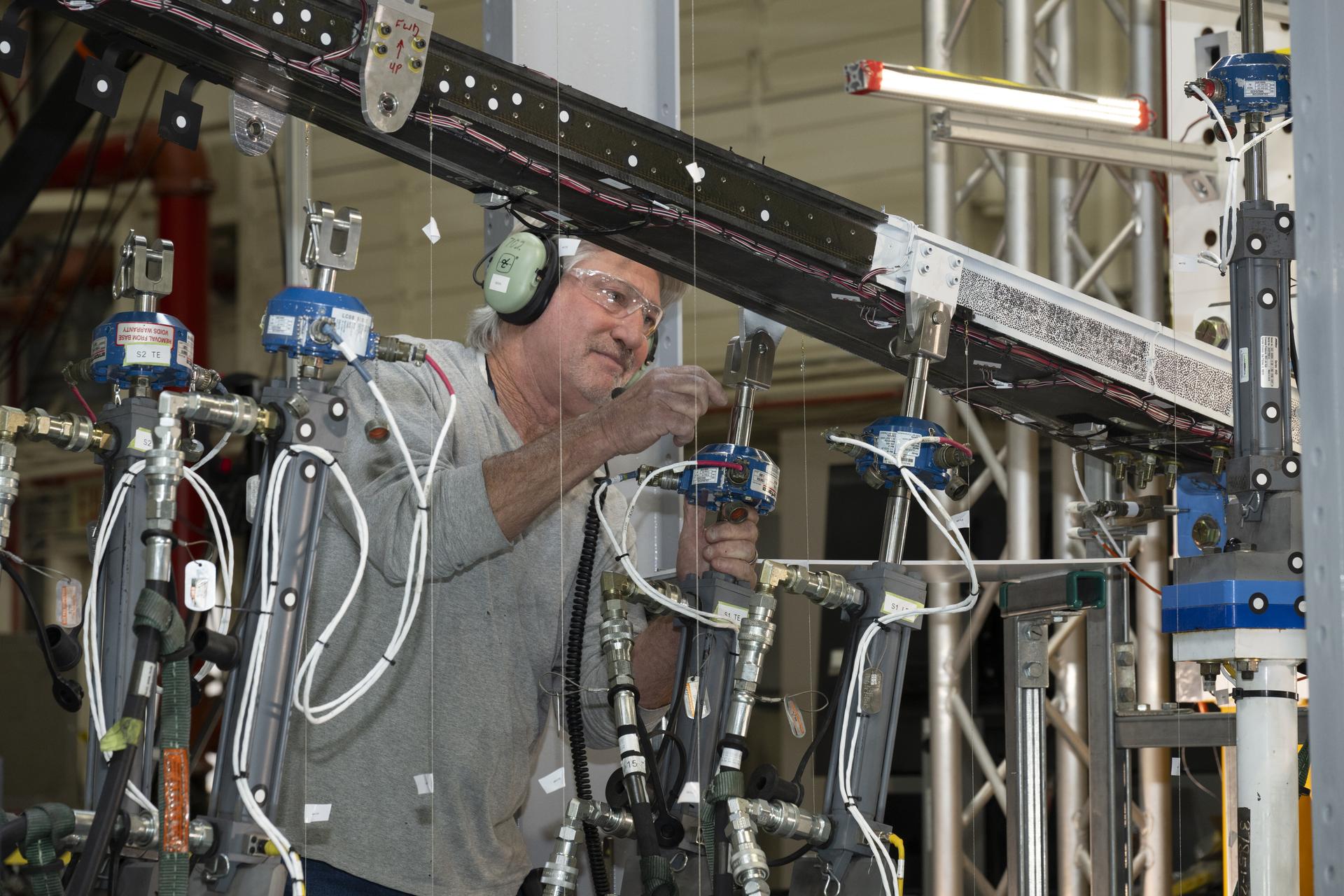
Photo: NASA
2026-07-18 04:30 Technology 10


NASA Tests Advanced Wing Design for Fuel Efficiency
NASA researchers conducted extensive tests on a new wing design called SWEET-15 to evaluate its structural limits and potential for improving aircraft efficiency.The 15-foot-long wing, developed using advanced composite manufacturing technologies, was tested at NASA’s Armstrong Flight Research Center.Engineers subjected the wing to extreme forces, including bending tests and load simulations, to assess its performance beyond design limits.The results confirmed the wing's ability to withstand anticipated in-flight stresses, validating NASA’s computer models.The test also revealed how the wing's joints behave under excessive loads, providing critical insights for future aircraft design.This research supports NASA’s Subsonic Flight Demonstrator project, aiming to develop more fuel-efficient aviation technologies.
The collaboration between NASA centers and the use of innovative tools like fiber-optic sensors highlight the agency’s commitment to advancing aeronautics.The findings could lead to lighter, stronger aircraft structures, reducing fuel consumption and emissions.This milestone marks progress in NASA’s efforts to innovate sustainable aviation solutions.
2187
Original title: NASA Pushes New Wing Design to Find Structural Limits
The AI system has determined that this news is not clickbait/sensationalist: : The original title is factual and straightforward, focusing on NASA's technical research without sensationalism or exaggerated claims. This has coincided with the opinion of the majority of users.
You may also be interested in...
BTS Member Teases Samsung's Galaxy Z Fold 8 Ahead of Unpacked Event
 Dyson Hot+Cool HF1: A Year-Round Smart Appliance Review
 Strategies for Securing Pre-Seed Funding Without a Product: Insights from Disrupt 2026 Panel