
 Scientists Officially Identify New Deep-Sea Octopus Species Near the Galápagos Islands
KillBait - News highlights delivered clearly and responsibly—no clickbait, no sensationalism
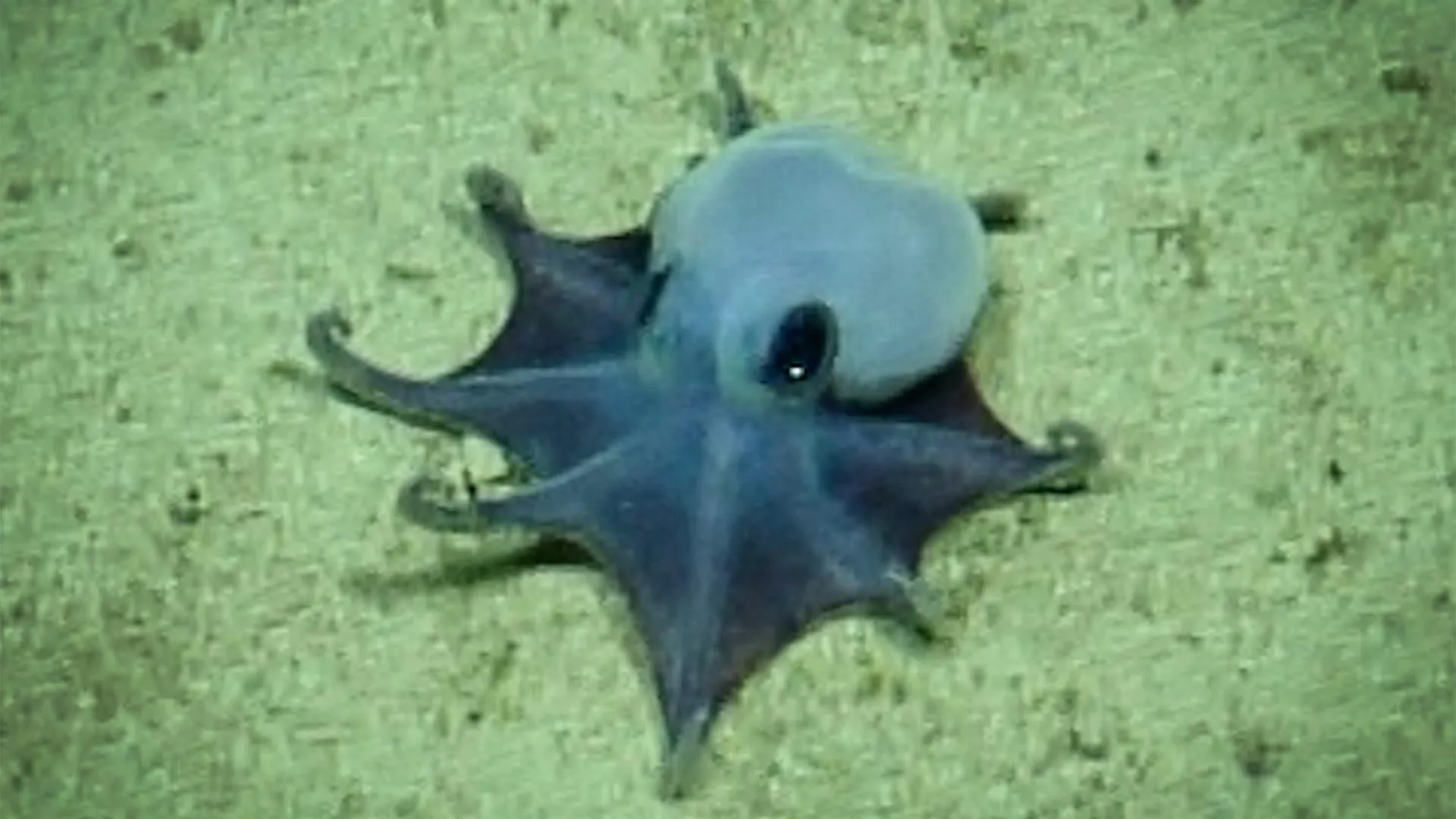
Photo: ScienceDaily
2026-05-25 11:53 Science 11 


New deep-sea octopus species discovered near the Galápagos Islands at extreme depth
Scientists have identified a new species of deep-sea octopus discovered nearly 6,000 feet (about 1,773 meters) beneath the ocean surface near the Galápagos Islands.
The tiny organism, about the size of a golf ball, was first observed during a 2015 deep-sea expedition conducted using a remotely operated underwater vehicle exploring the seafloor near an underwater mountain close to Darwin Island.
Researchers were surprised when the bright blue octopus appeared on camera moving across the ocean floor, leading to its collection and further study.
After the expedition, multiple deep-sea specimens were examined at the Charles Darwin Research Station, but the unusual octopus stood out immediately due to its distinctive coloration and morphology.Because only one confirmed specimen was available, scientists avoided traditional dissection methods to preserve the rare sample.
Instead, they relied on micro-computed tomography (micro-CT) scanning to create detailed 3D models of its internal anatomy, including organs and mouth structures.This non-destructive imaging technique allowed researchers to study key features without damaging the specimen.The analysis confirmed that the octopus represented a previously undescribed species, later named Microeledone galapagensis.The discovery was formally published in the scientific journal Zootaxa.
Experts involved in the study emphasized the importance of advanced imaging tools in modern taxonomy, especially when dealing with rare deep-sea organisms.Researchers also highlighted how little is known about deep ocean ecosystems, noting that vast regions remain unexplored.
The discovery underscores both the biodiversity of the Galápagos marine environment and the importance of continued deep-sea exploration to better understand and protect fragile ocean habitats.
2206
Original title: Adorable tiny blue octopus found nearly 6,000 feet beneath the Galápagos
The AI system has determined that this news is not clickbait/sensationalist: : The headline uses descriptive and mildly engaging language such as 'adorable tiny blue octopus,' but it remains factual and closely reflects the scientific discovery without exaggeration or misleading claims. This has coincided with the opinion of the majority of users.
You may also be interested in...
Scientists Officially Identify New Deep-Sea Octopus Species Near the Galápagos Islands
 Solar-Powered Desalination Produces Drinking Water and Recovers Valuable Minerals
 Sea cucumber tissue survives independently for years, revealing unusual regenerative behavior