
 Pacific Fusion advances pulser module prototype toward demonstration fusion power plant
KillBait - News highlights delivered clearly and responsibly—no clickbait, no sensationalism
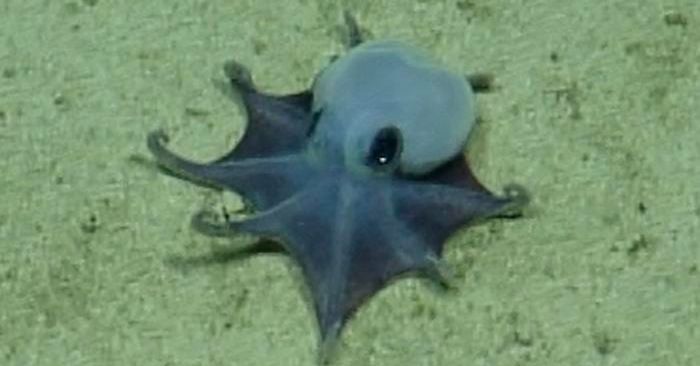
Photo: WIRED
2026-05-27 18:31 Science 17 


Scientists Officially Identify New Deep-Sea Octopus Species Near the Galápagos Islands
Researchers coordinated by Chicago's Field Museum have officially identified and named a new species of deep-sea octopus discovered near the Galápagos Islands.
The species, named Microeledone galapagensis, is a tiny blue octopus about the size of a golf ball that lives at depths of nearly 1,800 meters below the ocean surface.
The animal was first observed in 2015 during an expedition aboard the research vessel E/V Nautilus near Darwin Island in the northern Galápagos archipelago.Using a remotely operated underwater vehicle, scientists explored the seafloor and encountered the small octopus with striking blue coloration.Researchers managed to recover one specimen and record footage of two additional individuals.
However, experts initially struggled to determine whether it belonged to a known species because its appearance differed from previously documented octopuses.
Field Museum scientist Janet Voight immediately recognized the animal as highly unusual, but confirming a new species required a detailed anatomical study.Since only one physical specimen existed, scientists avoided traditional dissection methods that could damage it permanently.
Instead, they used advanced x-ray computed tomography technology to generate thousands of micro-CT scans and create a complete three-dimensional model of the octopus.
The scans allowed researchers to study the creature’s internal and external structures in exceptional detail, including its short arms, limited number of suckers, smooth skin, and specialized funnel-shaped organ.These findings confirmed that the octopus represented an entirely new species of cephalopod.
The discovery also highlights how little scientists still know about deep-ocean ecosystems and emphasizes the importance of continued marine exploration and conservation efforts in remote regions such as the Galápagos.
2304
Original title: A New Species of Tiny Octopus Was Discovered in the Galápagos Islands
The AI system has determined that this news is not clickbait/sensationalist: : The original title accurately describes the central finding of the article without exaggeration, misleading claims, or sensational language. It clearly states that a new tiny octopus species was discovered in the Galápagos Islands. This has coincided with the opinion of the majority of users.
You may also be interested in...
Pacific Fusion advances pulser module prototype toward demonstration fusion power plant
 U.S. Air Force program advances next-generation ceramic materials for aerospace and defense applications
 Solar-Powered Desalination Produces Drinking Water and Recovers Valuable Minerals