
 Anthropic Raises $65 Billion, Valued At $965 Billion Ahead Of OpenAI
KillBait - News highlights delivered clearly and responsibly—no clickbait, no sensationalism
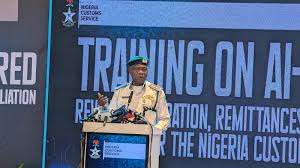
Photo: thetidenewsonline.com
2026-05-24 06:30 Artificial intelligence 14 


Nigeria Customs Says Human Oversight Remains Key as Digital Reforms Improve Revenue and Trade Efficiency
The Comptroller-General of the Nigeria Customs Service, Adewale Adeniyi, don emphasise say artificial intelligence and digital technologies must remain under strong human supervision to make sure governance, accountability and public trust no suffer.
He talk this one during the 4th Biennial International Conference organised by the University of Ilorin and RUDN University, where scholars, policymakers and technology experts gathered to discuss the impact of disruptive technologies on governance and the economy.
According to Adeniyi, the world don already enter a fully digital era where e-commerce, smart systems, AI and digital payment platforms dey reshape trade and government operations globally.
He explain say public institutions must no just rush adopt technology, but must also ensure say innovation improves transparency, efficiency and accountability.The Customs boss used the Nigeria Customs Service modernisation programme as example, especially the B’Odogwu Unified Customs Management System.He revealed say the digital platform generated more than N230 billion within its first eight months at the PTML Command.
He also noted say the system has reduced cargo clearance time significantly, with compliant traders now able to complete cargo processing in less than eight hours.
Adeniyi maintained say AI can improve risk management, operational efficiency and decision-making, but human expertise and leadership still remain very important in enforcement and governance matters.He stressed say technology alone cannot replace institutional responsibility.
He further called for stronger collaboration between universities, research institutions and government agencies to develop local digital solutions that fit African realities.
According to him, African countries should create indigenous digital governance frameworks instead of depending entirely on foreign regulatory models.
He also encouraged academic institutions to contribute more actively to policy development, innovation and institutional reforms connected to the digital economy.
Full reading at thetidenewsonline.com
2258
Original title: Customs Harps On Human-led AI Governance –As Customs Digital Reforms Generate N230Bn
The AI system has determined that this news is not clickbait/sensationalist: : The original title clearly reflects the main focus of the report, which is the Nigeria Customs Service position on human-led AI governance and the revenue generated from digital reforms. The headline is informative and not overly sensational. This has coincided with the opinion of the majority of users.
You may also be interested in...
Anthropic Raises $65 Billion, Valued At $965 Billion Ahead Of OpenAI
 Peter Obi accepts NDC presidential nomination, calls for urgent action on hunger and reforms in Nigeria
 Peter Obi Unveils Comprehensive Plan for Nigeria’s Development Ahead of 2027 Election